pixel

Open daily | Book in advance to secure your place

Visiting the Edinburgh Fringe? 40 Scottish Foods and Drinks You Should Try

🏴󠁧󠁢󠁳󠁣󠁴󠁿 The Ultimate Scottish Food & Drink Quiz

Test your knowledge before visiting Scotland!

Question 1 of 10 Score: 0

The Edinburgh Festival Fringe runs from 7–31 August 2026, bringing thousands of performers, visitors and very hungry show-goers into the city.

While you are here, why not turn your Fringe visit into a tour of Scotland’s more unusual flavours?

Scottish food goes far beyond haggis and whisky.

There are comforting soups, curious breakfast ingredients, regional pastries, extremely sugary sweets and several snacks that international visitors may never have encountered before.

Not everything below is available exclusively in Scotland. However, these foods are either Scottish creations, regional specialities or considerably more popular and easier to find here.

Essential Scottish dishes

Haggis, neeps and tatties

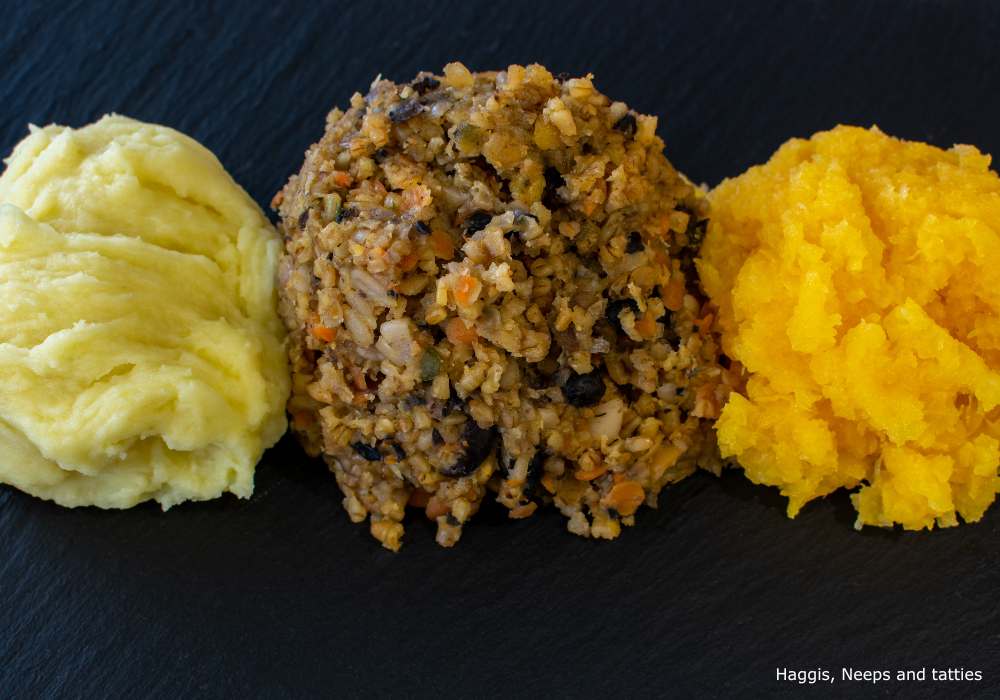
Scotland’s national dish combines seasoned offal, oatmeal, onions, suet and spices. It is traditionally served with mashed swede—known as neeps—and potatoes, or tatties.

The flavour is much closer to a peppery, crumbly sausage than its fearsome reputation suggests.

Try it at The Haggis Box, Makars Mash Bar or most traditional Scottish restaurants.

Haggis, Neeps and tatties

Vegetarian haggis

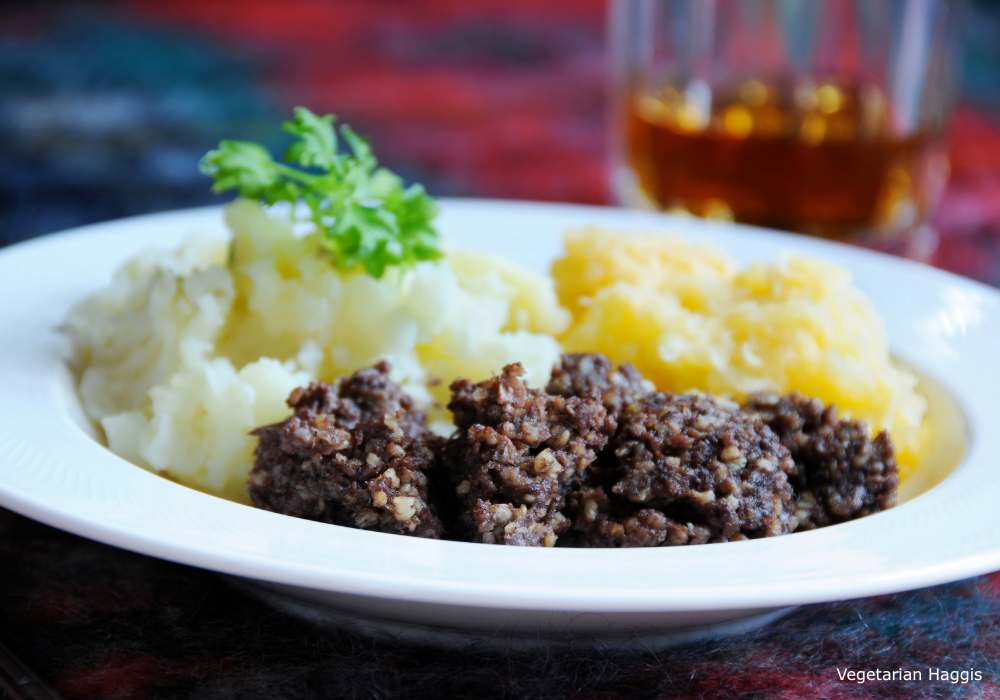
Vegetarian haggis replaces the meat with ingredients such as pulses, vegetables, seeds and oats while retaining the traditional spices and crumbly texture.

It has become widely available in Edinburgh and is much more than a consolation prize for vegetarians.

Available at The Haggis Box, Makars Mash Bar and many Edinburgh pubs and restaurants.

Vegetarian Haggis

Haggis bonbons

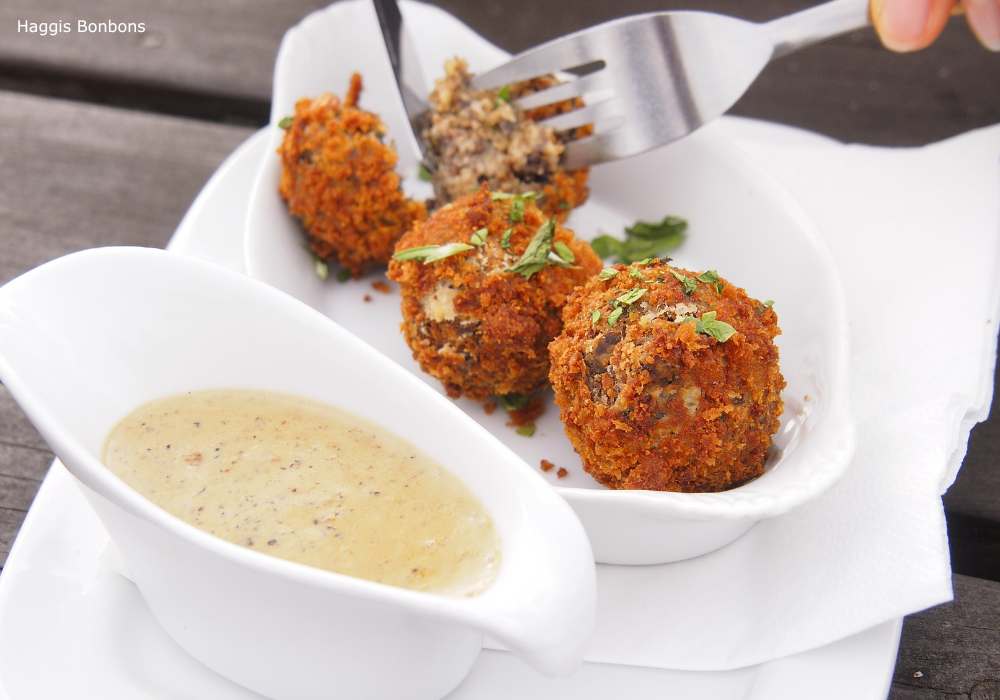
This modern pub and restaurant favourite turns haggis into small breaded or battered bites. They are often accompanied by mustard, peppercorn or whisky sauce.

They are ideal if you want to try haggis without committing to a full plate.

Look for them on pub menus, including haggis croquettes at the Tolbooth Tavern.

Haggis bonbons

Cullen skink

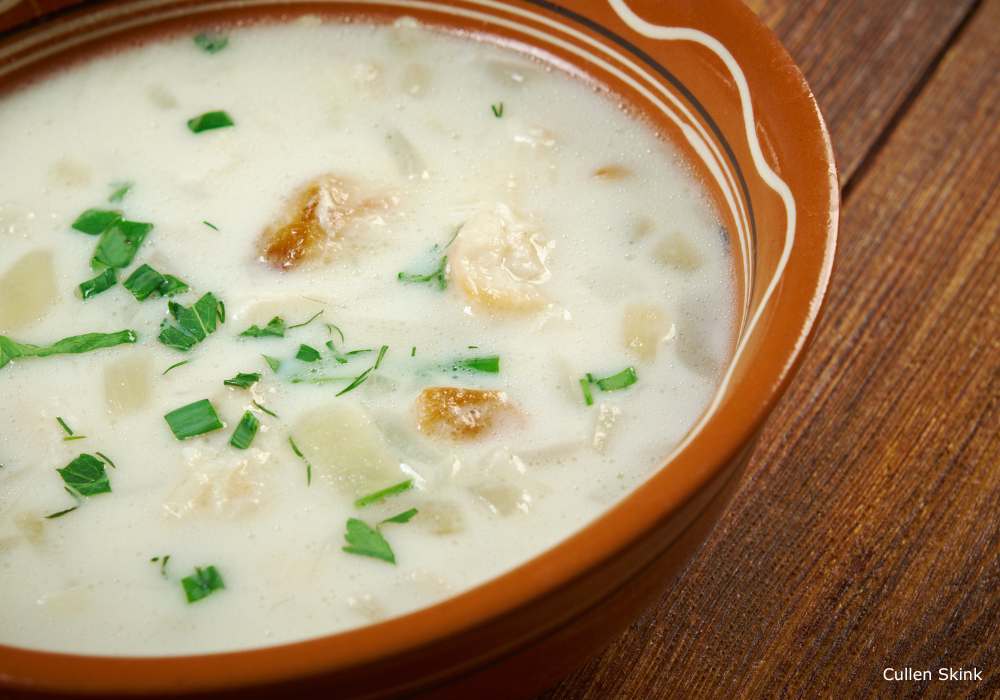
Despite its unusual name, Cullen skink is a rich soup made with smoked haddock, potatoes, onions and milk or cream.

It originated in Cullen, a coastal town in Moray, and is one of Scotland’s most comforting traditional dishes.

Try it at Whiski Rooms, Howies or the Tolbooth Tavern; it is also sold by some Scottish delis.

Cullen Skink

Scotch broth

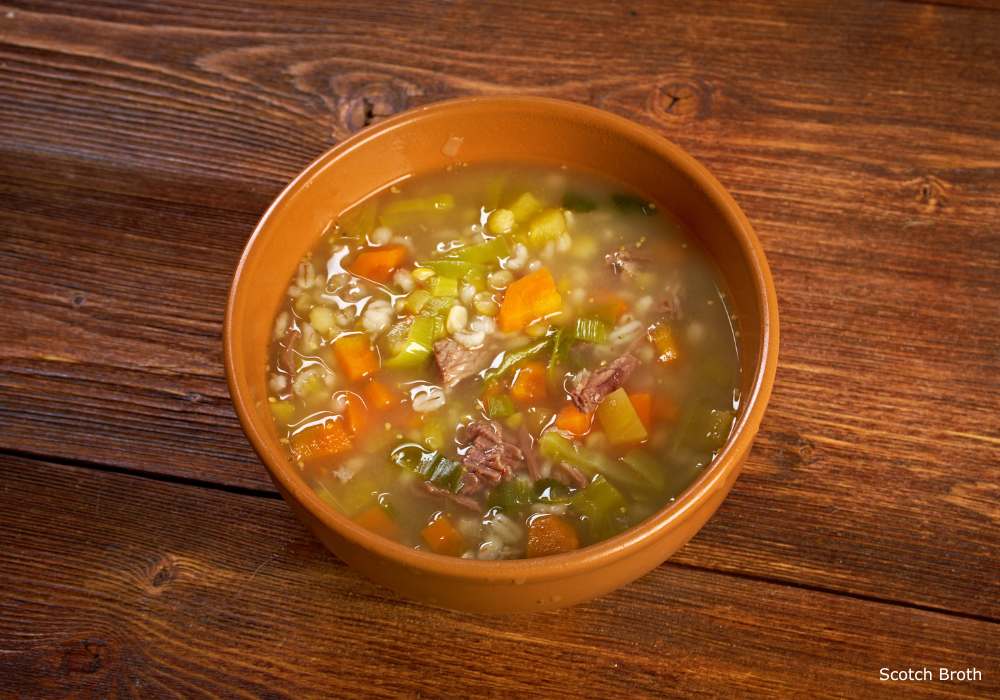
Scotch broth is a hearty soup traditionally made with barley, root vegetables and mutton or lamb. It is exactly the sort of warming dish you might appreciate after getting caught in an Edinburgh downpour.

Usually found in traditional cafés, pubs and supermarket soup aisles, particularly during colder months.

Scotch Broth

Cock-a-leekie soup

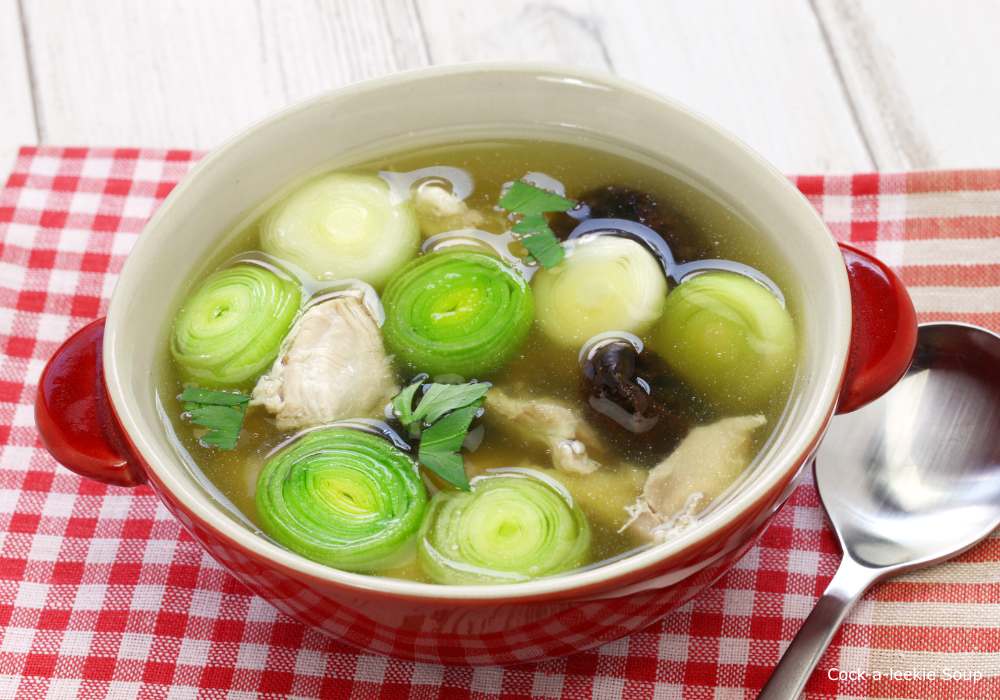
This old Scottish recipe combines chicken and leeks with barley or rice. Some traditional versions also contain prunes—a surprisingly sweet addition to an otherwise savoury broth.

Look for it as a seasonal soup in Scottish restaurants, hotels and traditional cafés.

Cock-a-leekie Soup

Stovies

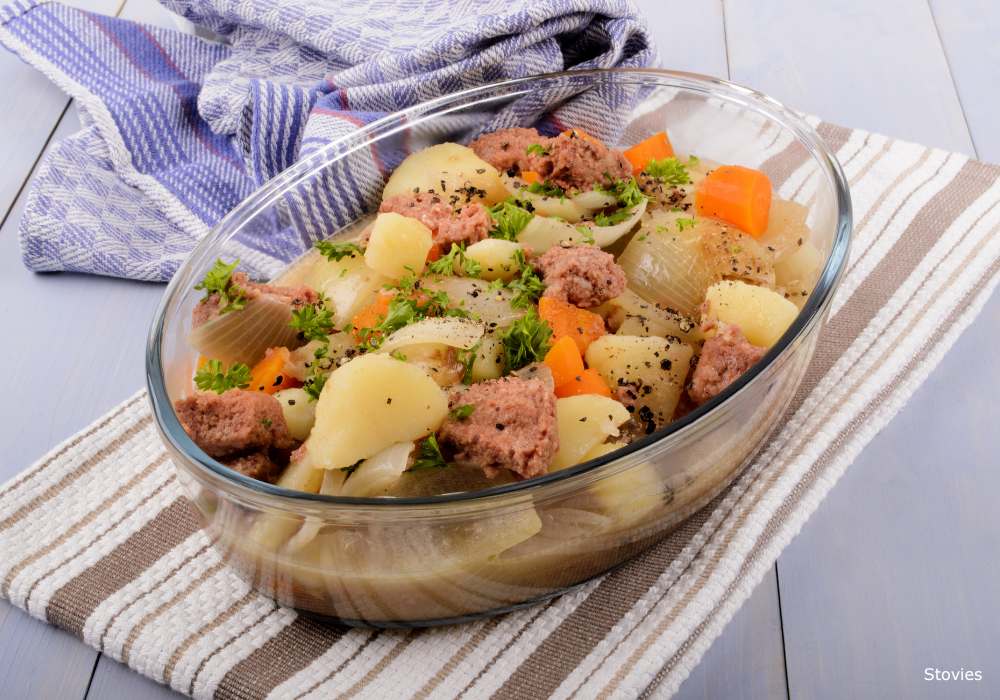
Every Scottish family seems to have its own recipe for stovies. The essentials are potatoes and onions cooked slowly with fat, gravy and, usually, leftover roast meat.

It is unfussy, filling Scottish comfort food.

Most often found on pub-special boards, at food markets or in cafés serving Scottish home cooking.

Stovies

Mince and tatties

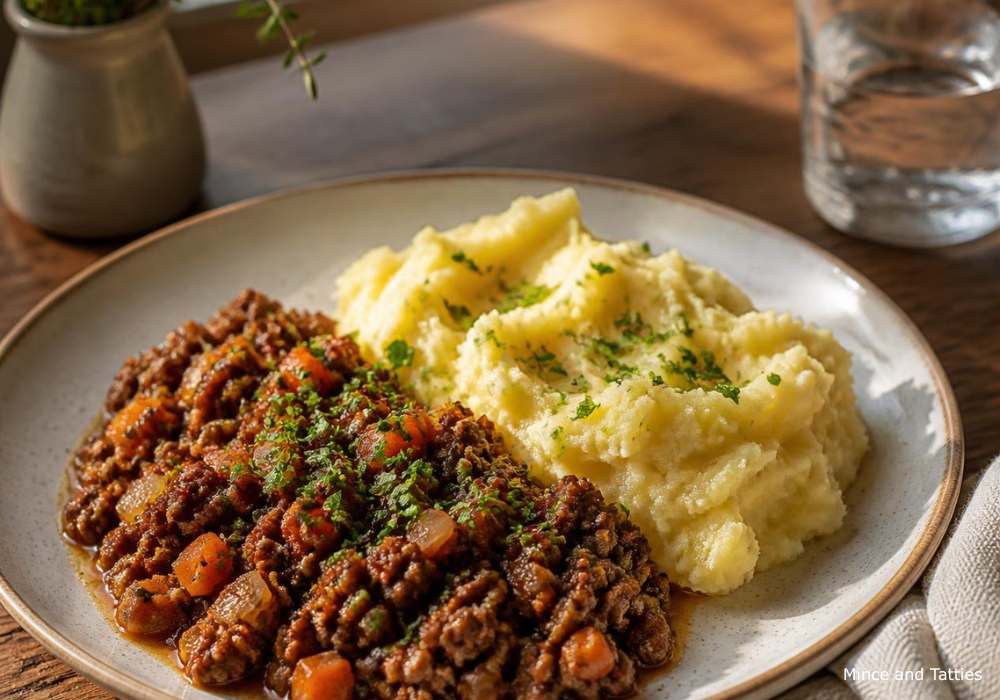
Minced beef is cooked in a rich onion gravy, sometimes with carrots, and served beside creamy mashed potatoes.

It may sound simple, but mince and tatties is a nostalgic favourite in many Scottish households.

Try traditional cafés and casual Scottish restaurants, or look for ready-meal versions in larger supermarkets.

Mince and Tatties

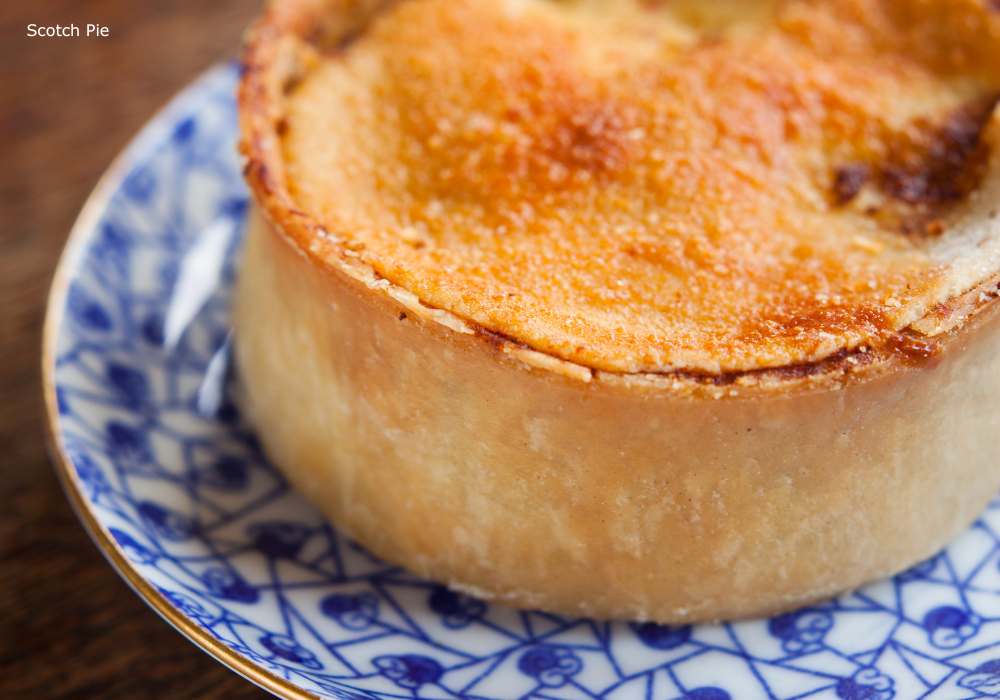
Scotch pie

A Scotch pie is a small, round, double-crust pie traditionally filled with spiced minced mutton. Beef fillings are also common.

Its sturdy pastry makes it particularly suitable for eating at football matches—or while hurrying between Fringe shows.

Available from Scottish bakeries, butchers, football grounds and supermarkets such as Tesco and Sainsbury’s.

Scotch Pie

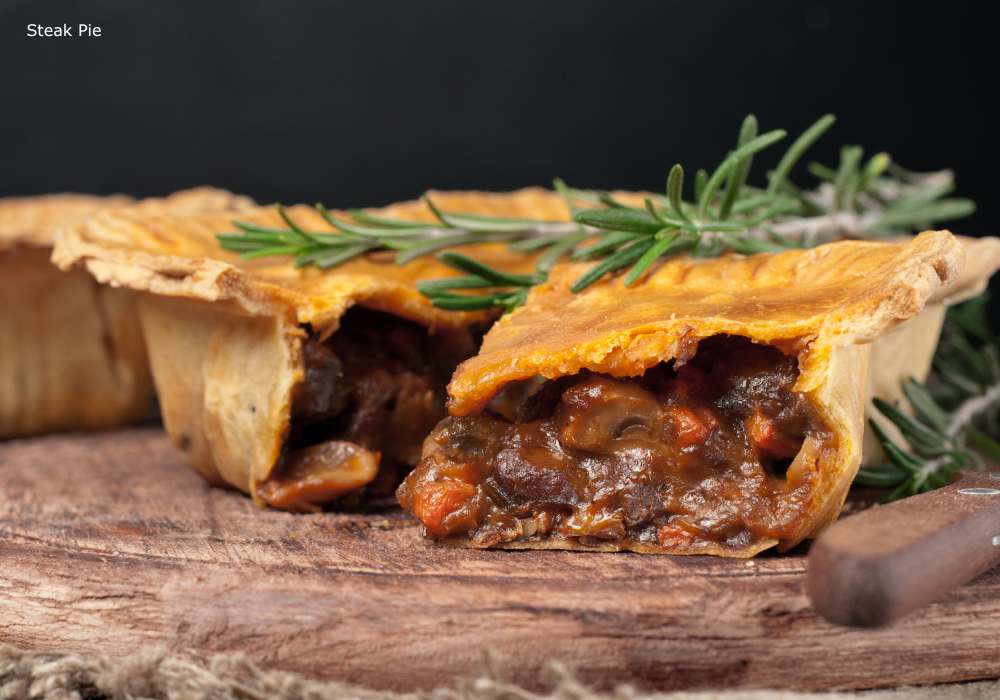
Steak pie

Steak pie is not exclusive to Scotland, but it is hugely popular here, especially around New Year. Expect tender pieces of beef in thick gravy beneath or inside a pastry crust.

Order it in traditional pubs or buy one to heat at home from Scottish butchers, bakeries and supermarkets.

Steak Pie

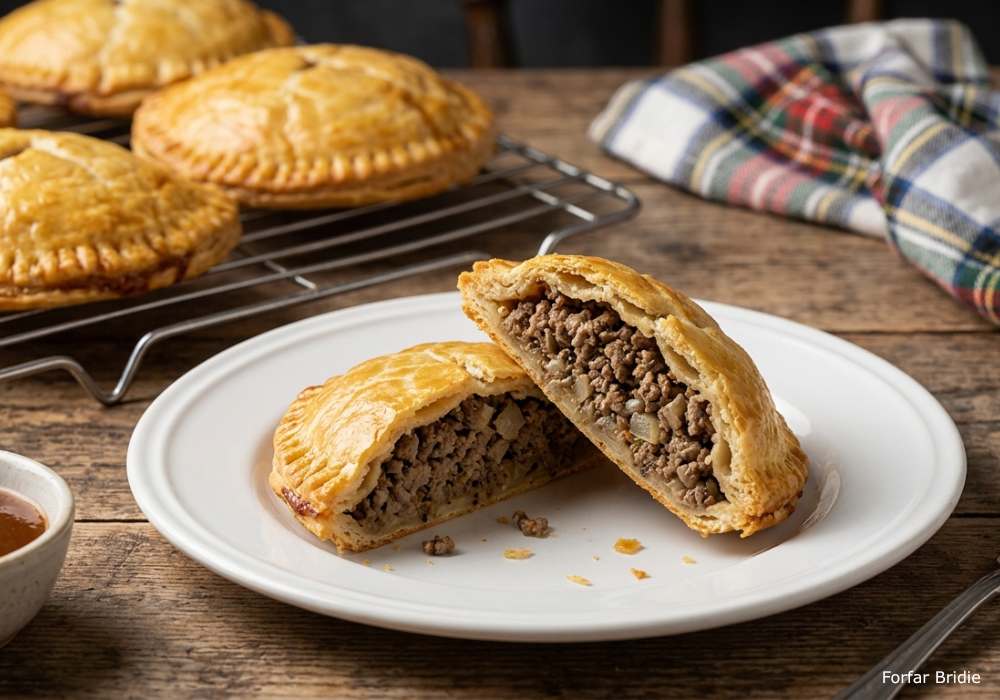
Forfar bridie

This regional pastry from Angus is traditionally filled with minced beef, onion and seasoning.

Unlike a Scotch pie, a bridie is usually shaped like a horseshoe and does not contain gravy.

Look in traditional Scottish bakeries; they are even easier to find if you travel north towards Angus.

Forfar Bridie

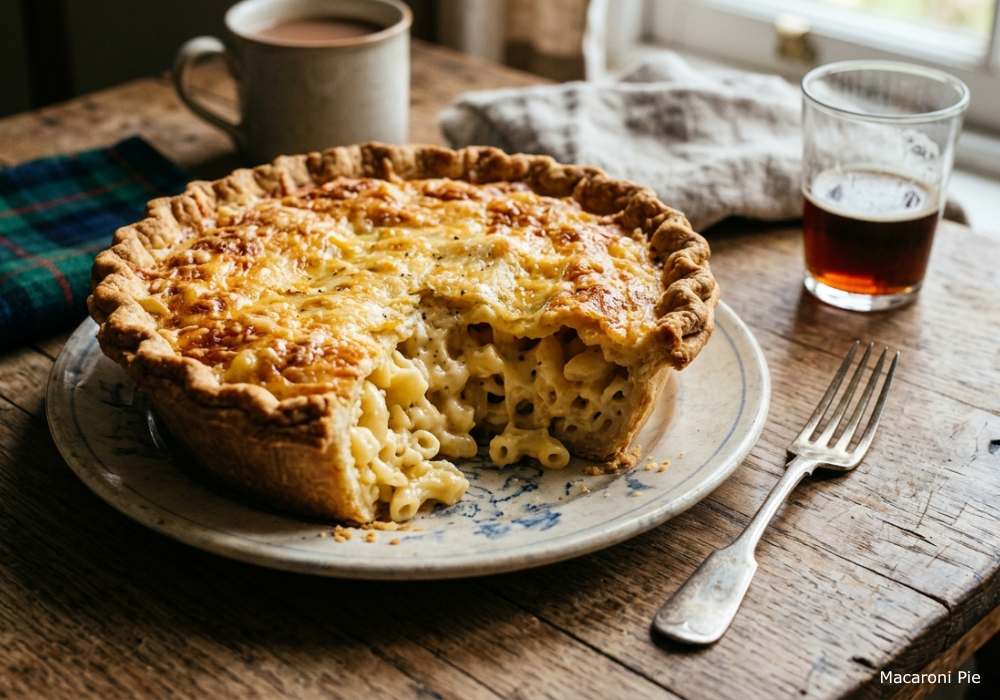
Macaroni pie

A crisp pastry case filled with macaroni cheese may sound like carbohydrates wrapped in more carbohydrates. That is exactly what it is—and Scottish bakeries remain unapologetic about it.

Available from many Scottish bakery shops and some supermarket bakery counters.

Macaroni Pie

The full Scottish breakfast

A full Scottish breakfast shares eggs, bacon, beans, mushrooms and tomatoes with other cooked breakfasts around Britain. Its more distinctive additions are where things become interesting.

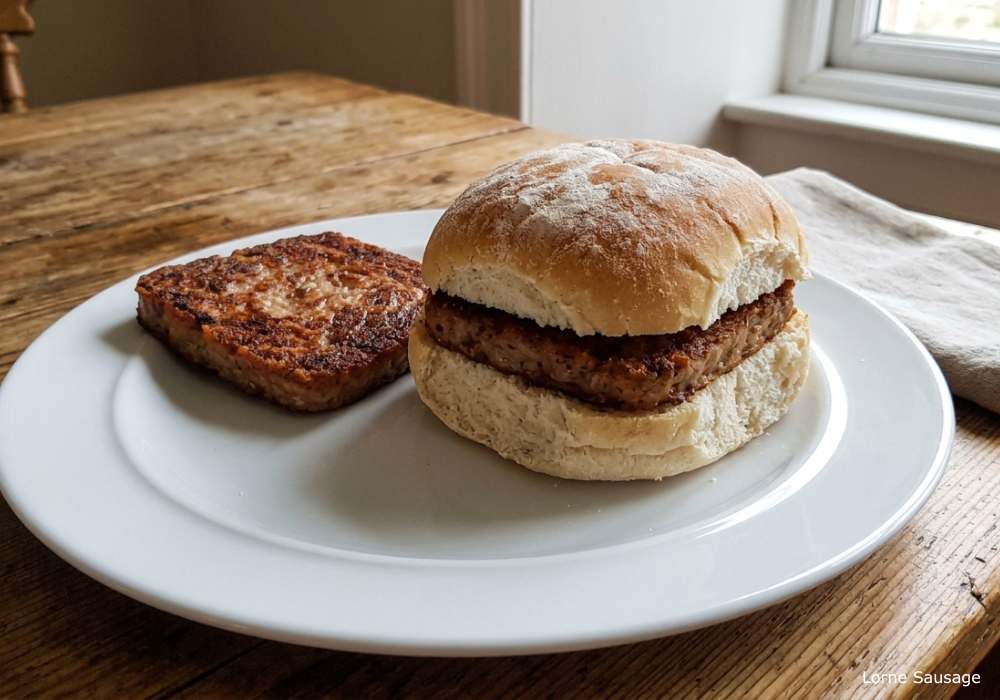
Lorne sausage

Also called square or sliced sausage, Lorne sausage is seasoned minced meat pressed into a rectangular block, sliced and fried.

You will find it in full Scottish breakfasts and inside morning rolls.

Lorne Sausage

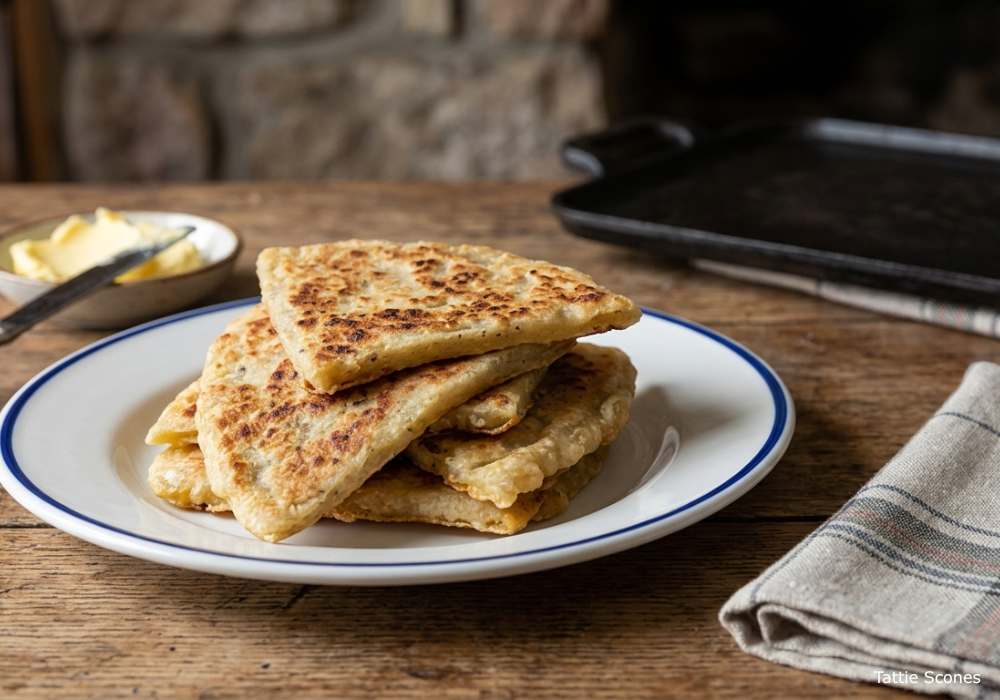
Tattie scones

These thin potato scones are cooked on a griddle before being warmed or fried. They are soft, slightly chewy and particularly good with eggs or inside a breakfast roll.

Served with most full Scottish breakfasts and sold in the bread or chilled section of supermarket

Tattie Scones

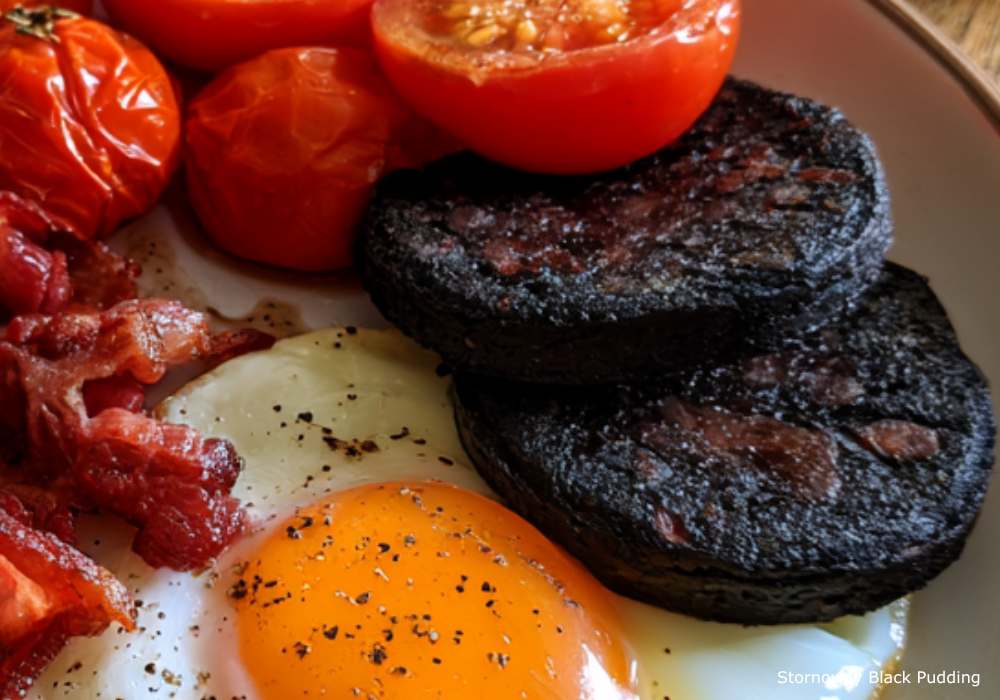
Stornoway black pudding

Black pudding is a type of blood sausage, but authentic Stornoway Black Pudding is a protected regional product from the Isle of Lewis.

It contains blood, beef suet, oatmeal, onion and seasoning. Only qualifying puddings made in the Stornoway area can use the protected name.

Try it with a full Scottish breakfast or buy an authentic version from a butcher, deli or larger supermarket.

Stornoway Black Pudding

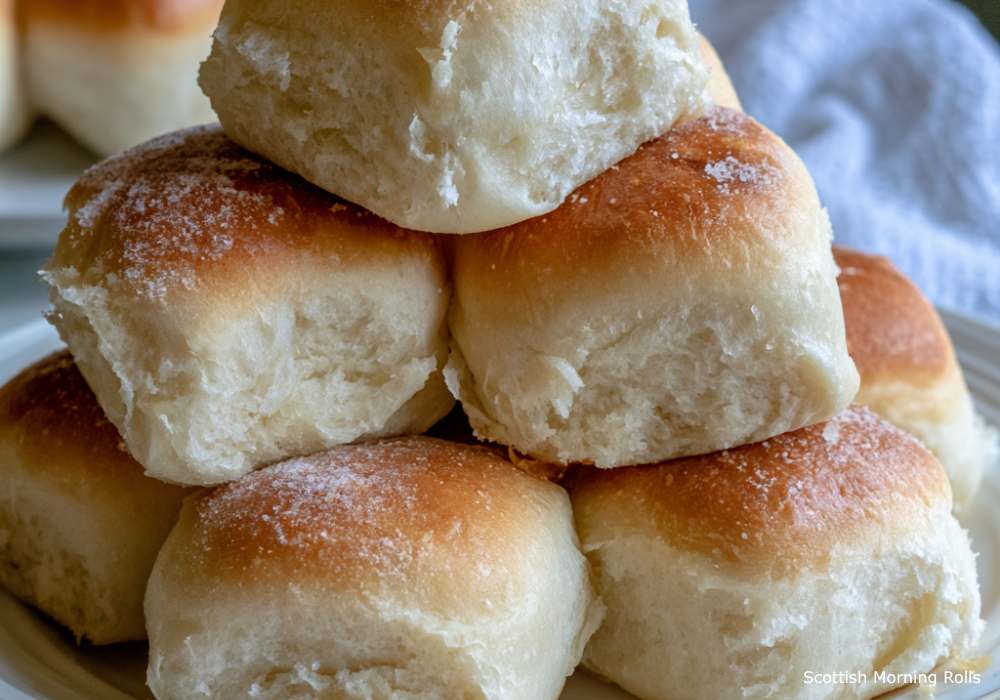
The Scottish morning roll

The Scottish morning roll has a crisp or well-fired outside and a light, chewy interior. Fill it with Lorne sausage, bacon, haggis, black pudding or a tattie scone for an inexpensive breakfast.

Ordering a “roll and square” will usually get you a roll filled with Lorne sausage.

Pick one up from a bakery or café, filled with bacon, Lorne sausage, haggis or a tattie scone.

Scottish Morning Rolls

Seafood and chip-shop favourites

A fish supper with salt and sauce

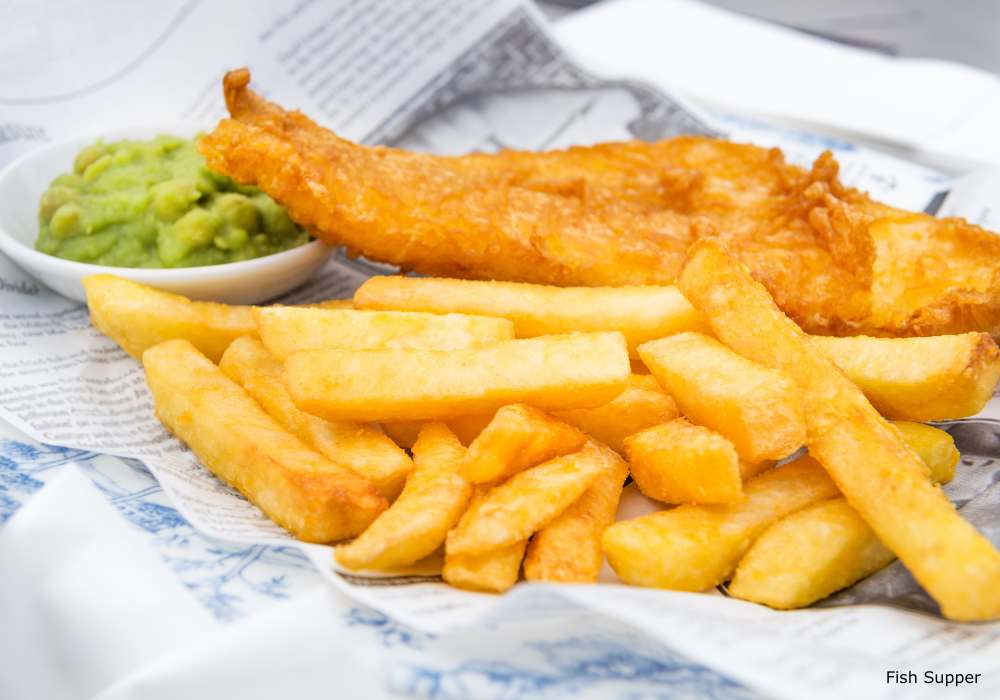
In Scotland, fish and chips is called a fish supper.

Edinburgh adds its own ritual: “salt and sauce.” The sauce is a thin, tangy mixture related to brown sauce and vinegar. Asking for it will make your order feel distinctly local.

Order it from almost any Edinburgh chip shop and ask for “salt and sauce.”

Fish Supper

Arbroath Smokies

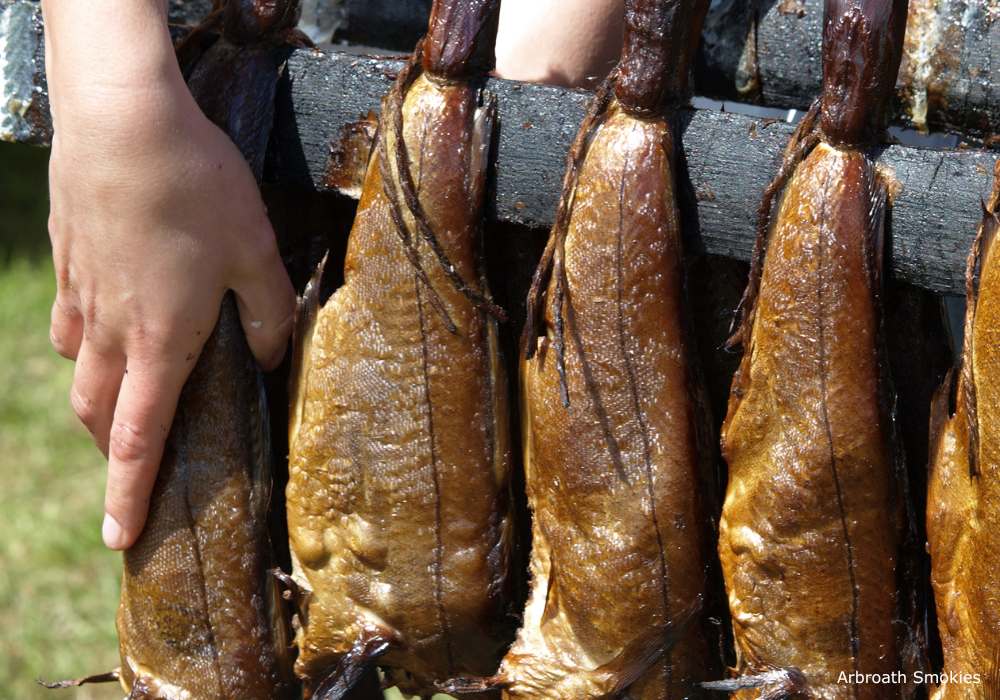
Arbroath Smokies are pairs of haddock traditionally hot-smoked over hardwood in and around Arbroath.

Like Stornoway Black Pudding, the name is legally protected, making this a genuinely regional Scottish product.

Look for them at Scottish fishmongers, food markets and specialist delis; they are easiest to find along Scotland’s east coast.

Arbroath Smokies

Scottish smoked salmon

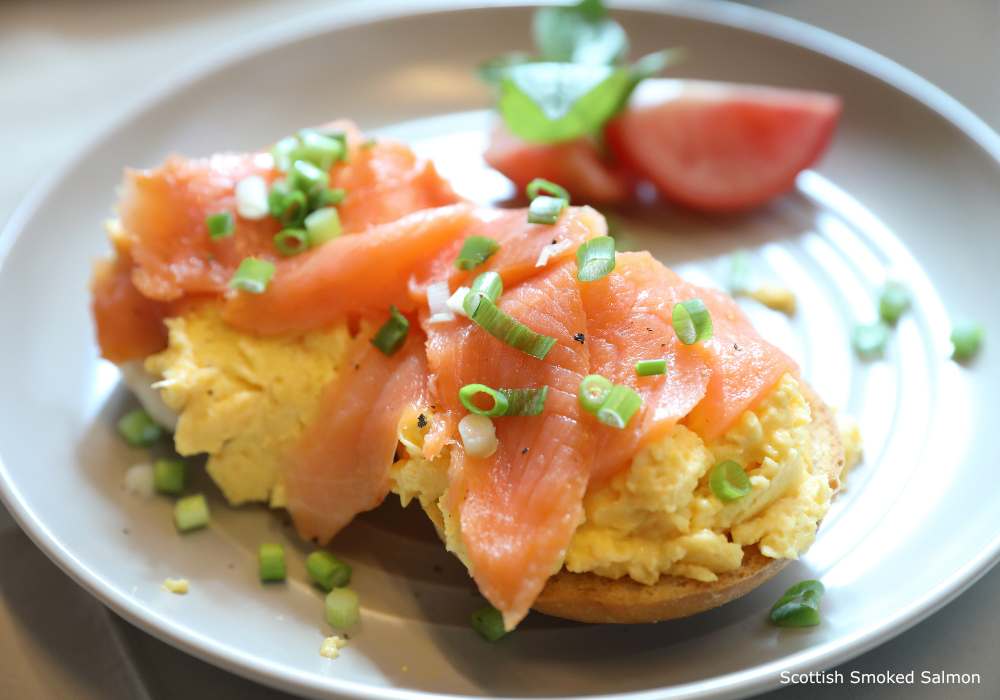
Scotland is closely associated with high-quality smoked salmon. Try it with scrambled eggs, on oatcakes or as part of a Scottish breakfast.

Widely available in supermarkets, delis, hotel breakfasts and seafood restaurants throughout the year.

Scottish Smoked Salmon

Deep-fried Mars bar

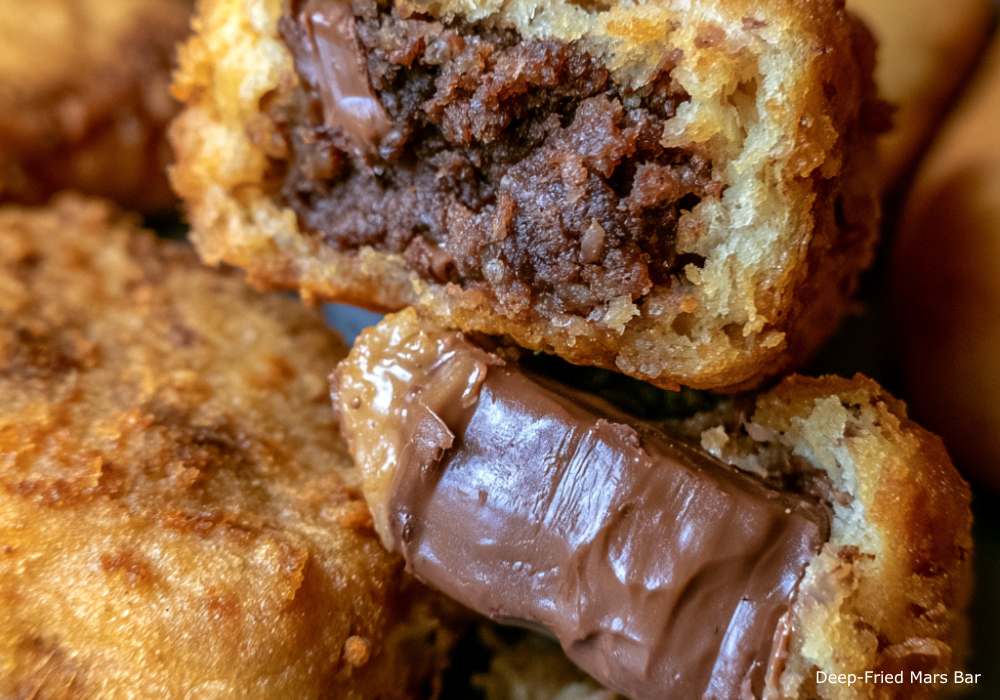
The deep-fried Mars bar is a modern Scottish chip-shop novelty rather than an ancient national recipe.

A chilled chocolate bar is coated in batter and dropped into hot oil, creating a crisp exterior and a molten, intensely sweet centre. You may only need to try it once—but you will remember it.

Some Edinburgh chip shops offer it on request; The Stenhouse Takeaway currently lists it on its menu.

Deep Fried Mars Bar

Regional foods you may have never heard of

These dishes are less likely to appear on every central Edinburgh menu, but they are worth watching for.

Rumbledethumps

This wonderfully named Borders dish combines mashed potato, cabbage and swede. It is often enriched with butter or topped with cheese.

This is a regional rarity, so look for it on seasonal menus in traditional Scottish restaurants or country pubs.

Clapshot

An Orcadian speciality made by mashing potatoes and swede together with butter, seasoning and sometimes chives.

Most commonly found in Orkney, although it occasionally appears beside haggis or game on Scottish restaurant menus.

Skirlie

Skirlie consists of oatmeal and onions toasted in butter or dripping. It can be served as a side dish or used as stuffing and is sometimes described as “poor man’s haggis.”

Look for it as a side dish or stuffing in traditional restaurants, butcher shops and specialist Scottish delis.

Rowies or butteries

These rich, salty, flaky rolls come from Aberdeen and north-east Scotland. They were traditionally made as an energy-dense food for fishermen.

Do not expect a sweet, soft bread roll: a buttery is closer to a flattened, savoury cousin of a croissant.

Buy them from Scottish bakeries and selected supermarkets; they are much easier to find in Aberdeen and north-east Scotland.

Oatcakes and crowdie

Scottish oatcakes are crisp, savoury biscuits that pair well with soup, smoked fish or cheese.

Crowdie is a soft, fresh Scottish cheese with a light, slightly tangy flavour. Together, they make an excellent Scottish snack.

Both are available from larger supermarkets and Scottish delis, usually near the cheese and cracker sections.

Scottish puddings and baked treats

Cranachan

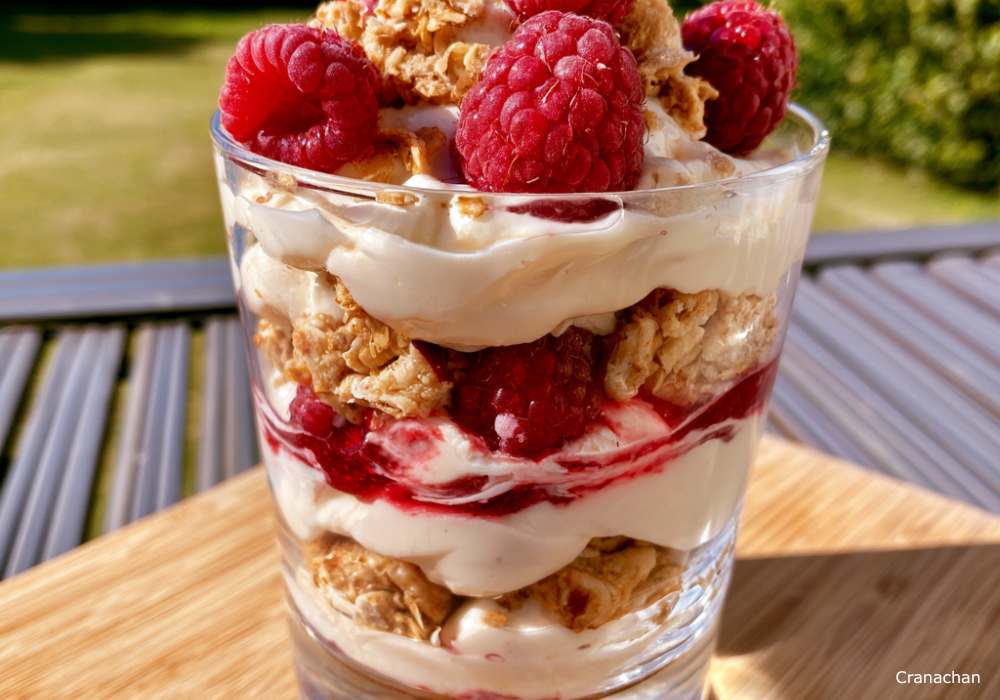
Cranachan combines cream, raspberries, toasted oats, honey and whisky. It showcases several classic Scottish ingredients in one very indulgent dessert.

It can be seasonal, so it will not appear on every menu.

Try it on Scottish restaurant dessert menus, especially during summer when Scottish raspberries are in season.


Cranachan

Clootie dumpling

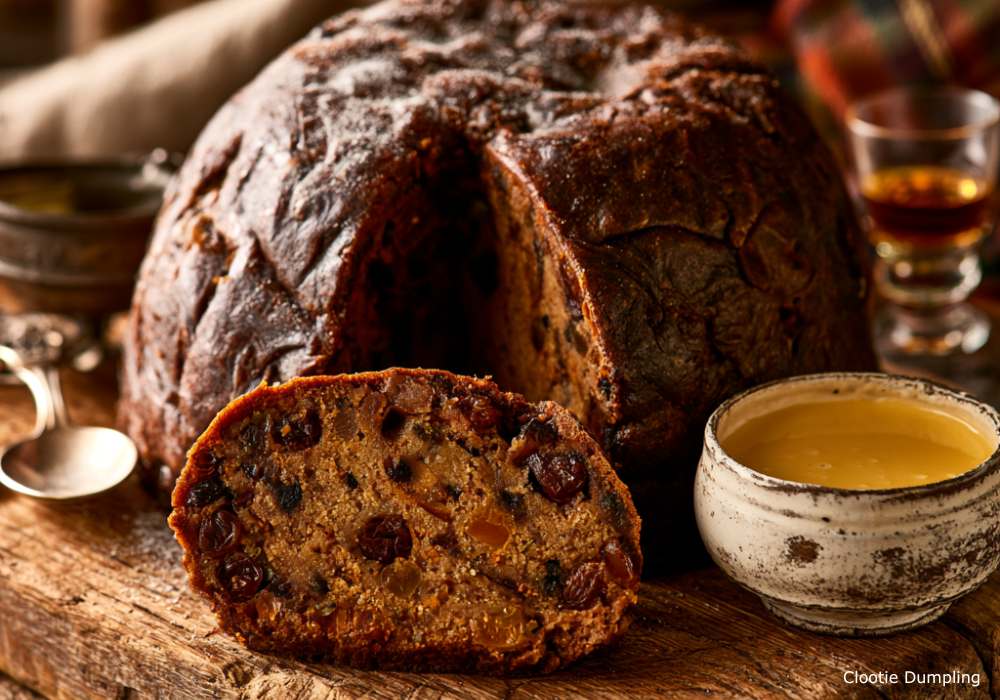
A clootie dumpling is a spiced fruit pudding traditionally wrapped in a cloth—the “cloot”—and simmered.

It is dense, comforting and often served warm with cream or custard.

Look in traditional bakeries, delis and farm shops, particularly during autumn and the Christmas season.
clootie dumpling

Dundee cake

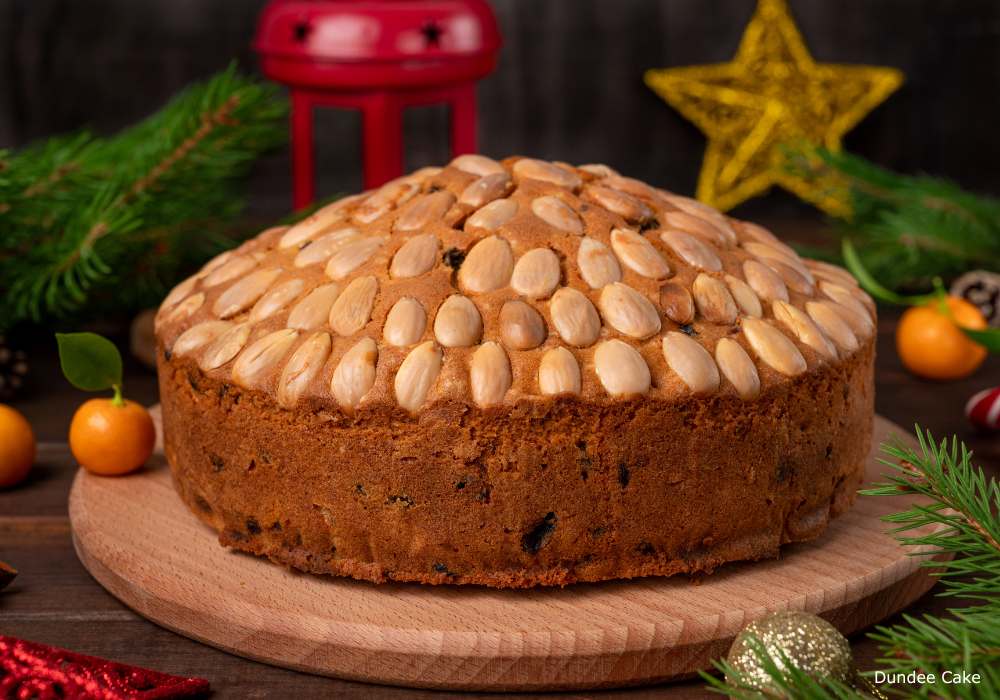
This traditional Scottish fruitcake contains dried fruit and is usually decorated with concentric circles of almonds.

Available throughout the year from supermarkets, bakeries, department-store food halls and Scottish gift shops.

Dundee Cake

Selkirk bannock

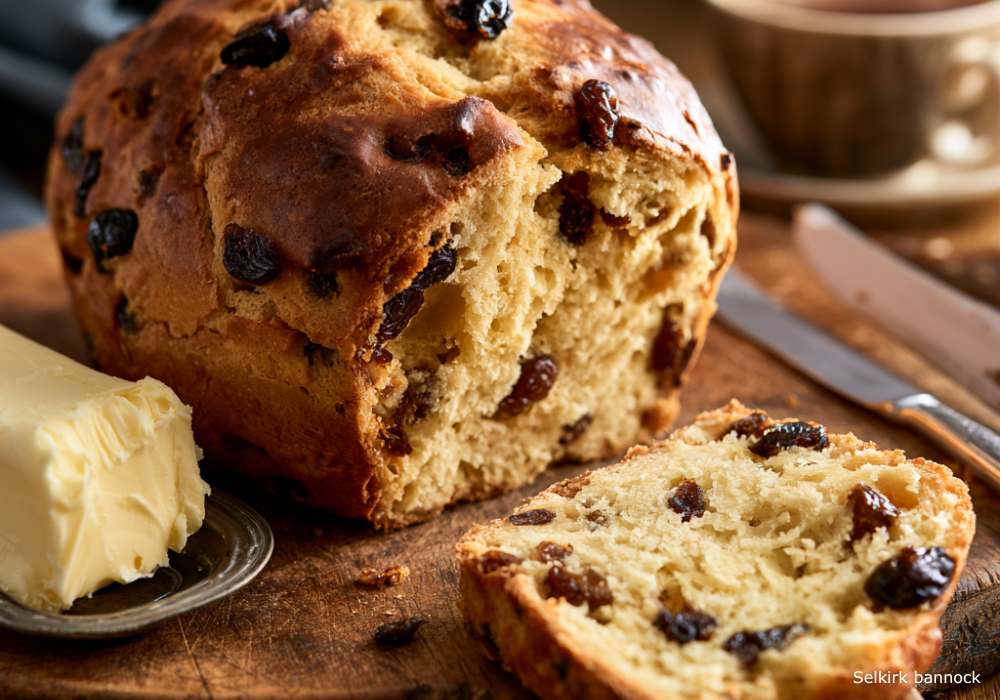
Despite the name, this is not a thin, plain bannock. The Borders speciality is a rich, buttery fruit bread packed with sultanas.

Look in specialist bakeries and Scottish food shops; it is more widely available in the Borders around Selkirk.

Selkirk bannock

Shortbread

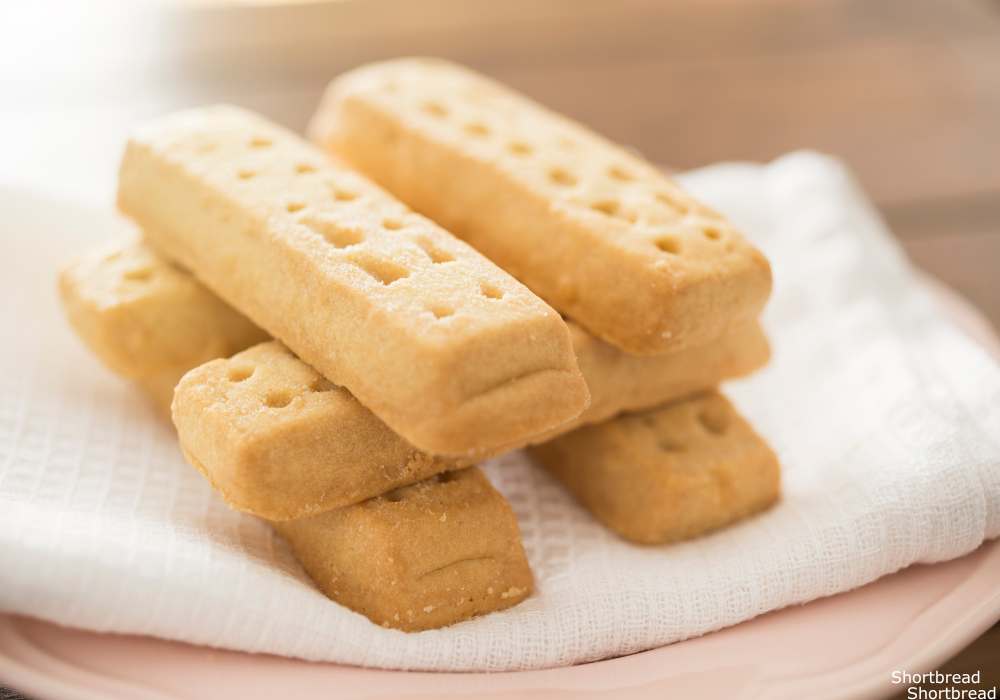
Traditional shortbread is made principally from flour, butter and sugar. The result should be rich, crumbly and unmistakably buttery.

Look for fingers, petticoat-tail wedges or rounds made by independent Scottish bakeries.

Easy to find in Tesco, Sainsbury’s, Scottish gift shops, Edinburgh Castle shops and independent bakeries.

Shortbread

Empire biscuit

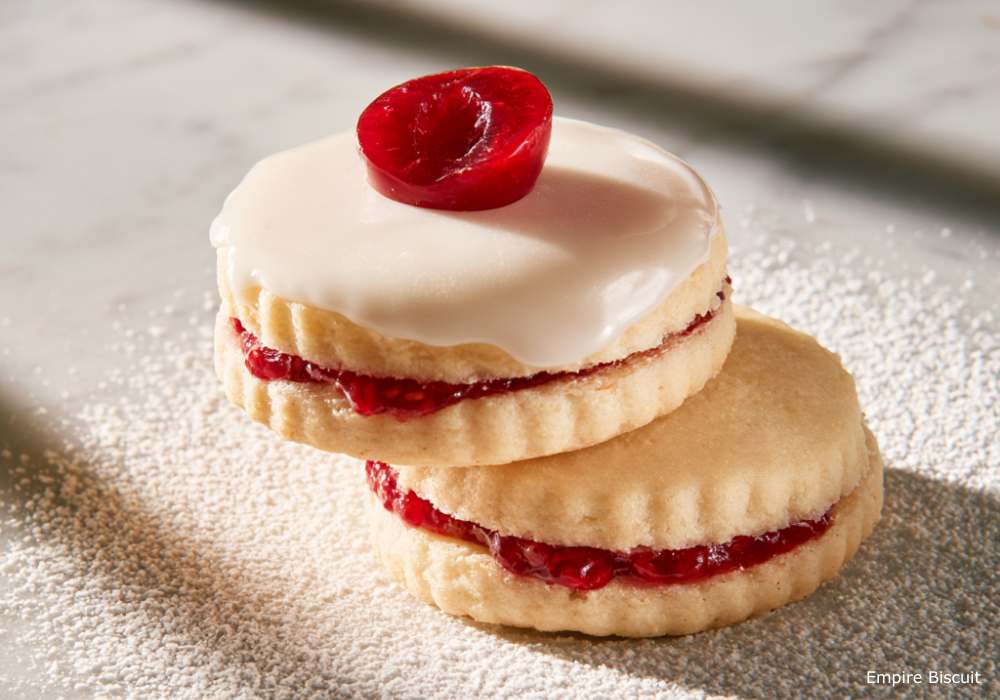
An Empire biscuit sandwiches jam between two short biscuits and finishes the whole thing with white icing and usually a glacé cherry.

Versions exist elsewhere, but it remains a familiar sight in Scottish bakery windows.

Empire Biscuit

Scottish confectionery and cult snacks

Scottish tablet

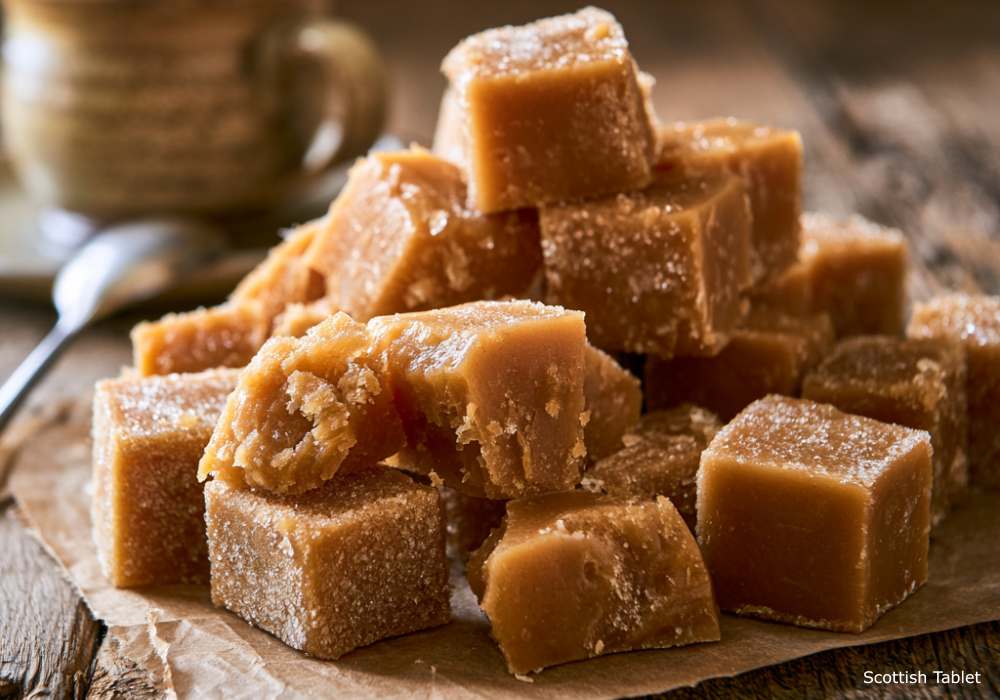
Tablet is made using sugar, condensed milk and butter. It is firmer, grainier and considerably more brittle than fudge, with an intense sweetness that demands a cup of tea.

Available from supermarkets, sweet shops, Scottish gift shops, delis and the shops at Edinburgh Castle.

Scottish Tablet

Scottish fudge

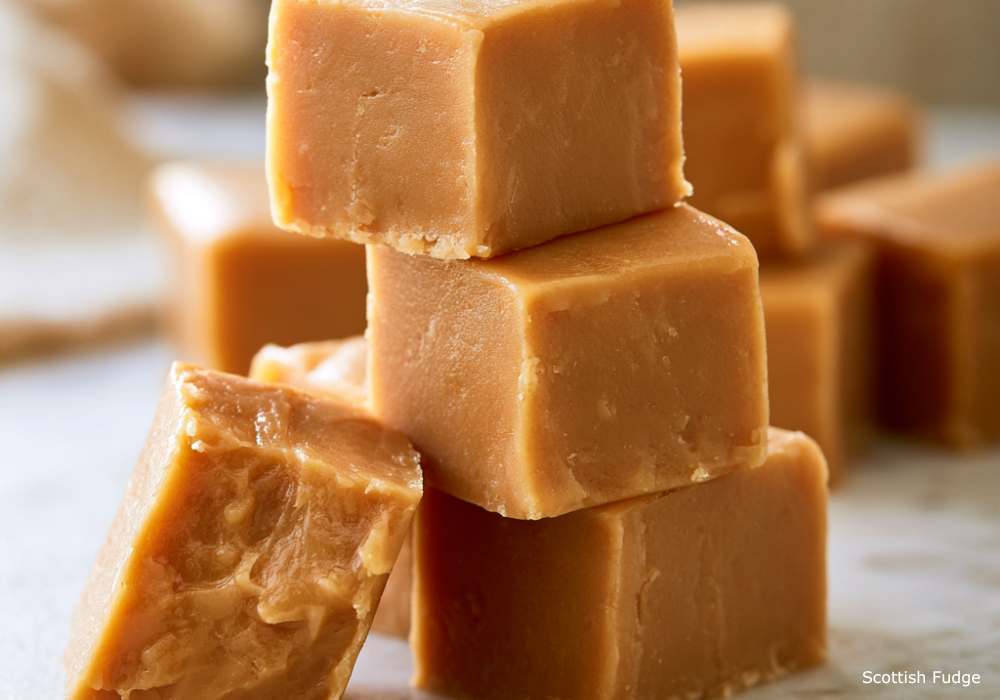
Fudge is not uniquely Scottish, but it is extremely popular in Scottish sweet shops and visitor attractions. Whisky, vanilla and sea-salt varieties are particularly common.

Unlike tablet, fudge is normally soft, smooth and creamy.

Widely sold in sweet shops, visitor attractions and gift shops, often in whisky or sea-salt flavours.

Scottish Fudge

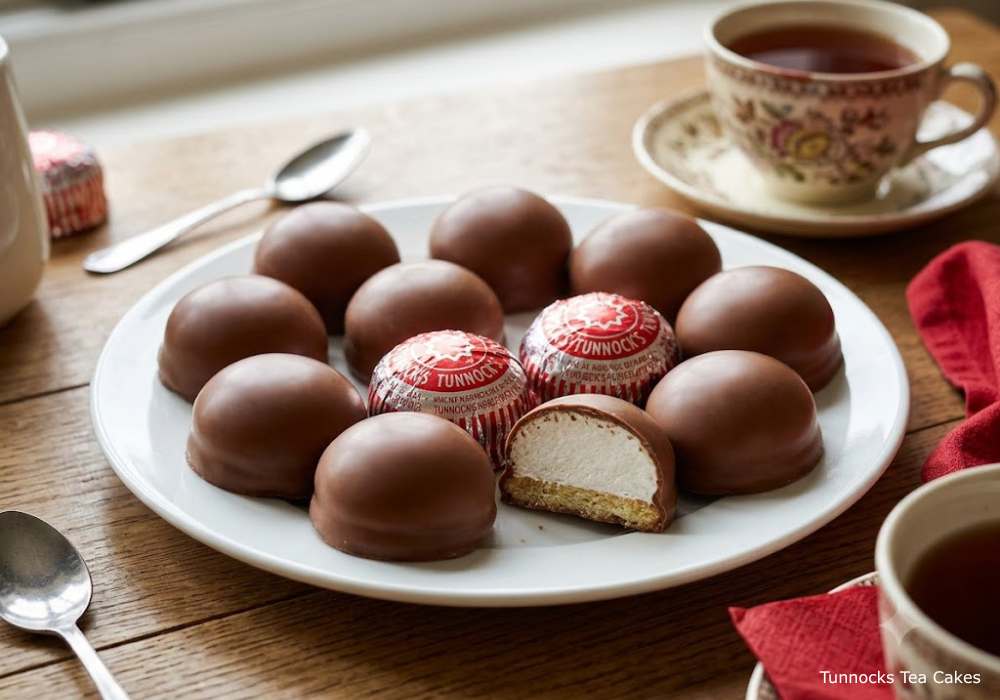
Tunnock’s Tea Cakes

A Tunnock’s Tea Cake has a biscuit base topped with soft marshmallow and covered in chocolate.

The silver-and-red wrappers are instantly recognisable in Scotland. The company also makes a dark-chocolate version in blue-and-gold foil.

Buy them from supermarkets and newsagents such as Tesco, Sainsbury’s, Scotmid and Co-op.

Tunnocks Tea Cakes

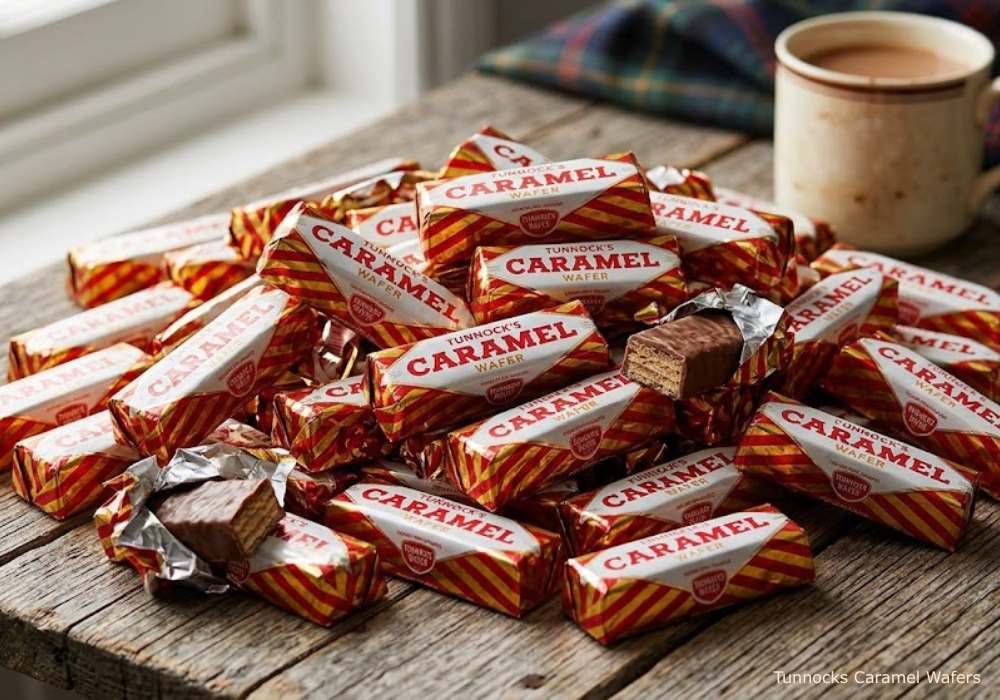
Tunnock’s Caramel Wafers

Another Scottish cupboard classic, the Caramel Wafer layers crisp wafer and caramel beneath a milk-chocolate coating.

Tea Cakes and Caramel Wafers are easy to find in Edinburgh supermarkets and newsagents, making them excellent edible souvenirs.

Caramel Wafers

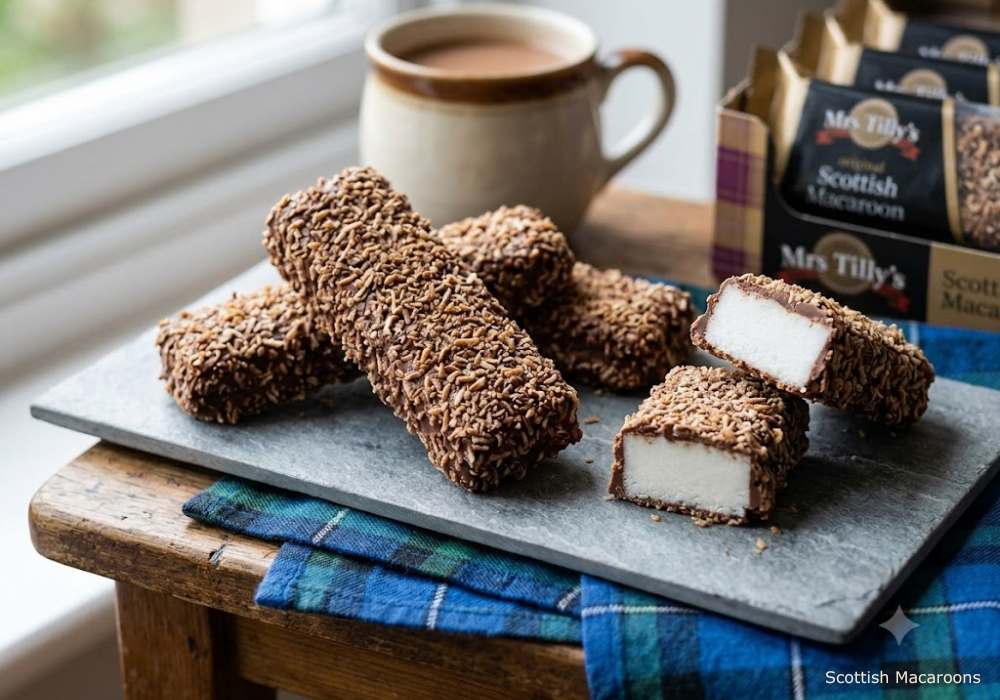
Scottish macaroon bars

Traditional Scottish macaroon bars are not the delicate almond macarons associated with France.

The soft centre can be made using mashed potato and icing sugar before being coated in chocolate and toasted coconut. Visitors rarely guess the secret ingredient.

Look for brands such as Lee’s in supermarkets, newsagents and traditional Scottish sweet shops.

Scottish Macaroons

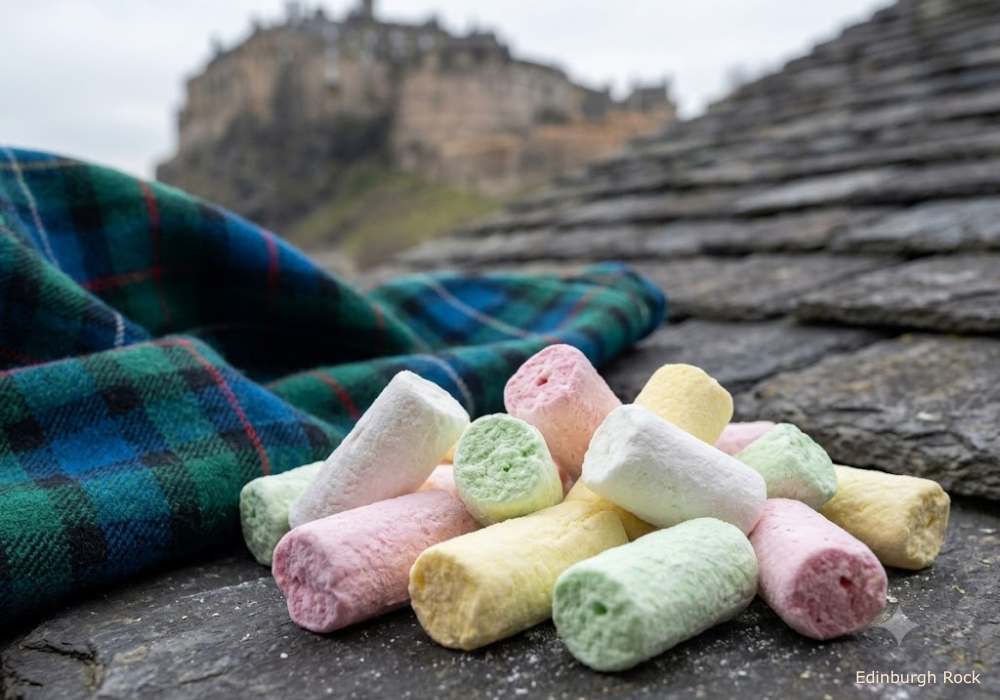
Edinburgh Rock

Edinburgh Rock is a crumbly, pastel-coloured confection often sold in sticks. It has a softer, more powdery texture than conventional boiled rock sweets.

Sold mainly in Royal Mile souvenir shops, traditional sweet shops and Scottish gift shops.

Edinburgh Rock

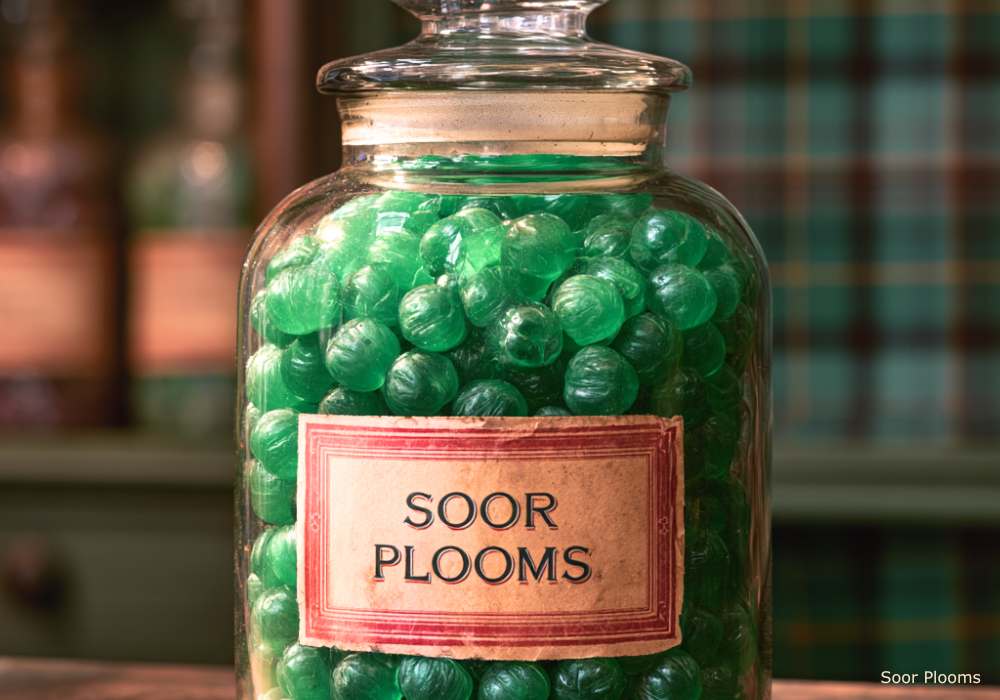
Soor Plooms

These sharp green boiled sweets are associated with the Borders town of Galashiels. “Soor” means sour and “plooms” means plums, giving you a fair warning about the flavour.

Look in specialist sweet shops or Scottish confectionery stores; they are easiest to find in the Borders.

Soor Plooms Sweets

Scotland’s other national drink

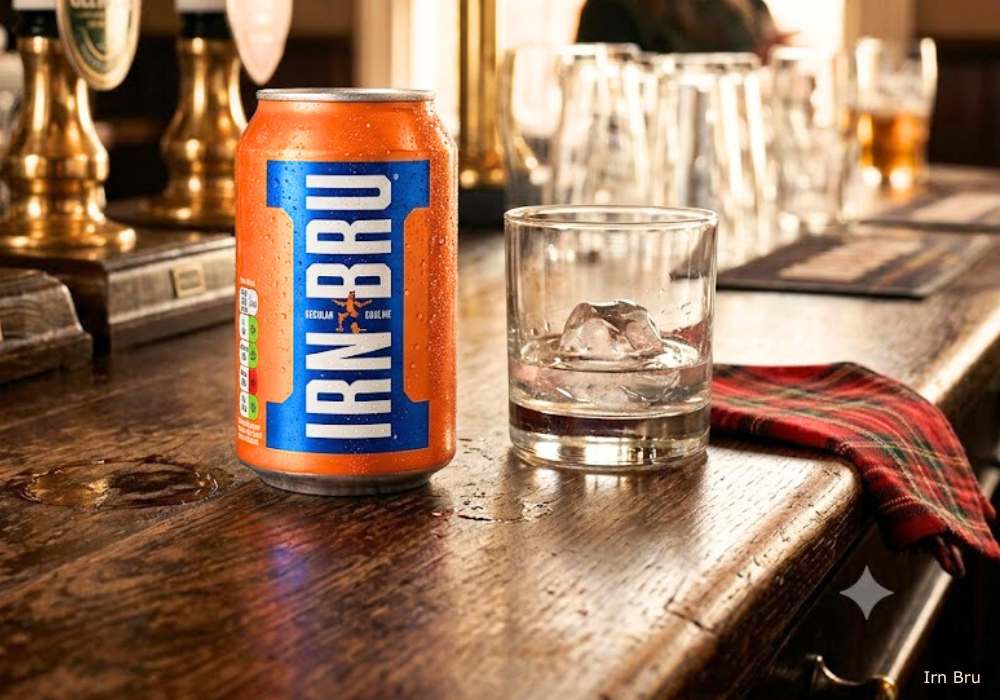
IRN-BRU

Bright orange IRN-BRU was launched in Scotland in 1901 and is still made using a closely guarded recipe.

People describe the flavour as everything from bubblegum to citrus and tutti-frutti, but nobody seems able to agree. Trying it for yourself is the only reasonable solution.
The original, 1901, Zero and sugar-free versions are widely available in supermarkets, cafés, chip shops and newsagents.
Available almost everywhere, including supermarkets, newsagents, cafés, pubs, takeaways and vending machines.

Irn Bru

Scotch whisky

Scotch whisky must meet specific legal production and maturation requirements. Scotland has five recognised whisky regions, each associated with different styles and flavour profiles.

If you are new to whisky, a guided tasting is much more illuminating than simply ordering the strongest-looking dram at the bar.

Scottish gin and locally brewed craft beer are also increasingly prominent, although their histories are less closely tied to traditional Scottish cooking.

Try a dram at Whisky Rooms or a specialist whisky bar, or buy a bottle from supermarkets, whisky shops and distillery stores.

Scotch Whisky

🏴󠁧󠁢󠁳󠁣󠁴󠁿 The Ultimate Scottish Food Bravery Meter

We've selected the weirdest and most unusual items from our menu. Are you brave enough?

Group 1 of 6 Haggis & Soups

Where to try Scottish food during the Fringe

For an informal plate of traditional or vegetarian haggis, try The Haggis Box inside the Scottish Storytelling Centre on the Royal Mile.

The current Taste of Scotland menu at Whiski Rooms includes Cullen skink, haggis with neeps and tatties, and whisky cranachan. Tolbooth Tavern on Canongate lists Cullen skink, steak-and-sausage pie, fish and chips and late-night haggis croquettes.

A full Scottish breakfast is another efficient way to taste several items at once. Look for one containing Lorne sausage, haggis, tattie scones and black pudding.

For packaged snacks, visit an Edinburgh supermarket, bakery or newsagent. You should have little difficulty finding IRN-BRU, Tunnock’s Tea Cakes, Caramel Wafers, shortbread, tablet and oatcakes.

Menus and opening times can change during the festival, so check directly and reserve tables where possible.

Try Scotland’s most unexpected chocolate flavour

Chocolate did not originate in Scotland—but we have certainly found some unusual things to do with it.

At The Chocolatarium, just off the Royal Mile, our 90-minute Tour of Chocolate includes more than 40 flavours in the Tasting Room. The selection includes distinctly Scottish curiosities such as haggis chocolate and whisky chocolate.

You will also learn how chocolate is made and create your own bar to take home. Scottish-themed moulds can include Edinburgh Castle, Nessie and Greyfriars Bobby.

It is an indoor, hands-on break from the Fringe crowds—and perhaps the only opportunity on your visit to compare haggis chocolate with the real thing.

How many Scottish foods can you try?

If 40 sounds ambitious, begin with this ten-item Fringe challenge:

  1. Haggis, neeps and tatties
  2. Cullen skink
  3. A Lorne-sausage roll
  4. A tattie scone
  5. A fish supper with salt and sauce
  6. Scottish tablet
  7. A Tunnock’s Tea Cake
  8. Shortbread
  9. IRN-BRU
  10. A Scottish-inspired chocolate at The Chocolatarium

Traditional haggis and black pudding contain meat or animal products, but vegetarian haggis is widely available. Always check ingredients and allergen information directly with the restaurant, shop or producer.

The Fringe may be the reason you came to Edinburgh—but Scotland’s wonderfully unusual food could be what you remember most.


Information checked on 1 August 2026. Background information was verified using VisitScotland’s traditional food guide, the National Trust for Scotland and official producer and venue sources.

Add a Chocolate Tour to Your Fringe Itinerary

Edinburgh is exceptionally busy during the Fringe, and our chocolate tours can fill up quickly. Reserve your preferred time now and enjoy 90 delicious minutes away from the crowds.
How to Taste Chocolate Like a Pro
Cacao Shell Tea A Hidden Gem for Chocolate Lovers and Wellness Enthusiasts
Coffee and Chocolate The Perfect Pairing in Every Bite
Best work Christmas party ideas in Edinburgh
Chocolate myths and facts What is actually true
Top 8 Autumn Chocolate Flavours — From Cinnamon to Maple
Team building ideas in Edinburgh for small teams
Dog chocolate treats Can dogs really eat chocolate
Scottish Foods & Drinks you should try
Where to Eat at the Edinburgh Fringe 2026