Open daily | Book in advance to secure your place
If you’re reading this, I’m sure you already consider yourself an expert chocolate taster. Who am I to say otherwise?
However, the way you eat chocolate may not be the best way to fully experience it. There’s an entire range of tastes, aromas and textures you could be missing out on.
In this guide, we’ll show you how to taste chocolate properly, using your senses to notice far more than just whether it tastes good. Follow these simple steps and you’ll be a chocolate-tasting whizz in no time!
When talking about chocolate, we first need to identify the different variations available.
Chocolate generally comes in three main categories: dark, milk and white. Some people would argue there are four, but we’ll come to that another time.
I know what you’re already thinking. White chocolate isn’t chocolate. But I’ll rebuke that later on. For now, let’s treat it as an equal among its chocolatey peers.

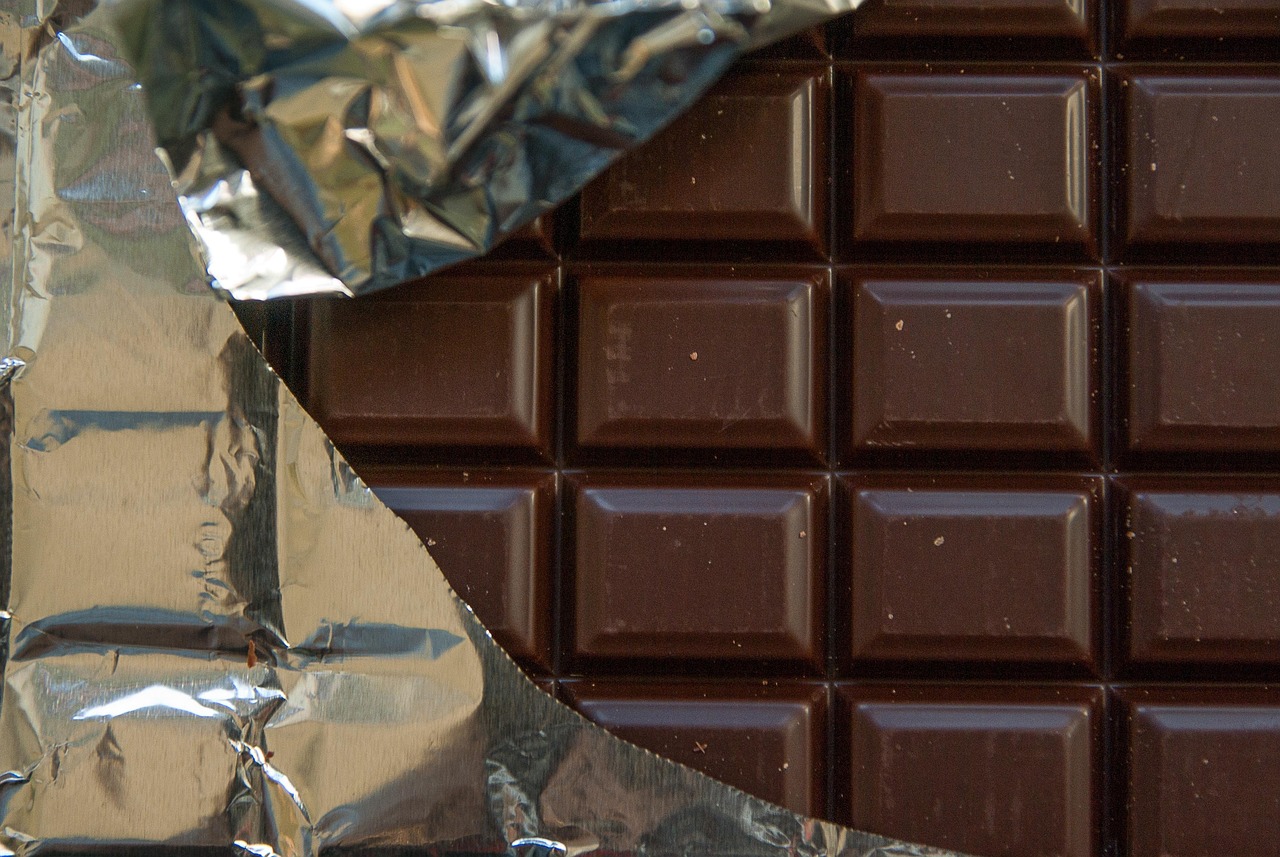
Dark chocolate has the highest cocoa content of the three main types. It is made from cocoa solids, cocoa butter and sugar, but generally contains little or no milk.
The higher the cocoa percentage, the stronger and more intense the chocolate tends to taste. Dark chocolate can range from relatively sweet to distinctly bitter, with plenty of different flavours in between.
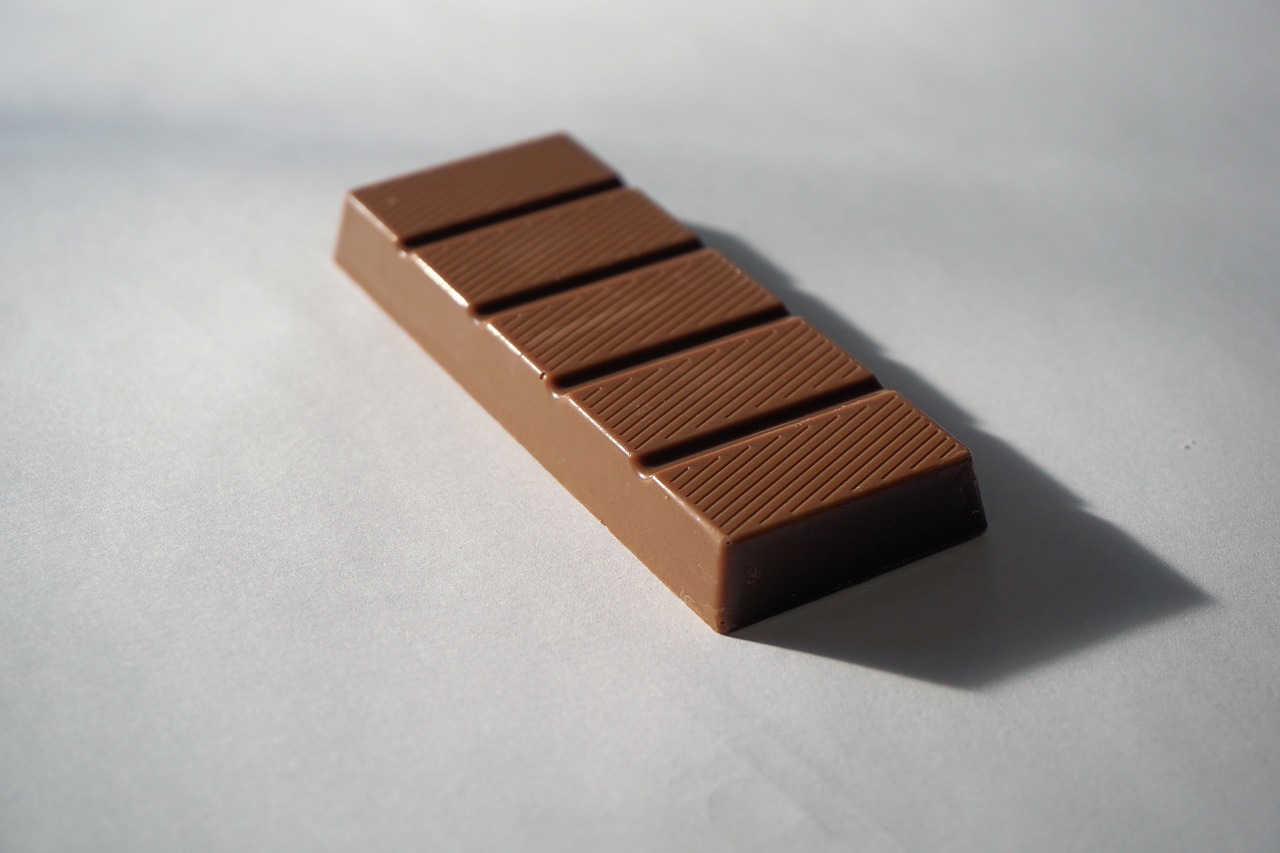
Milk chocolate contains cocoa solids, cocoa butter, sugar and milk. Adding milk gives it a creamier texture and generally a sweeter, milder flavour than dark chocolate.
The amount of cocoa can vary considerably between different milk chocolates, so don't assume they'll all taste the same.
And now to settle that argument: yes, white chocolate really is chocolate.
White chocolate doesn't contain cocoa solids, which give dark and milk chocolate their familiar brown colour. However, it does contain cocoa butter from the cocoa bean, along with sugar and milk.
That gives white chocolate its creamy texture and sweet flavour, while still earning it a place in the chocolate family.

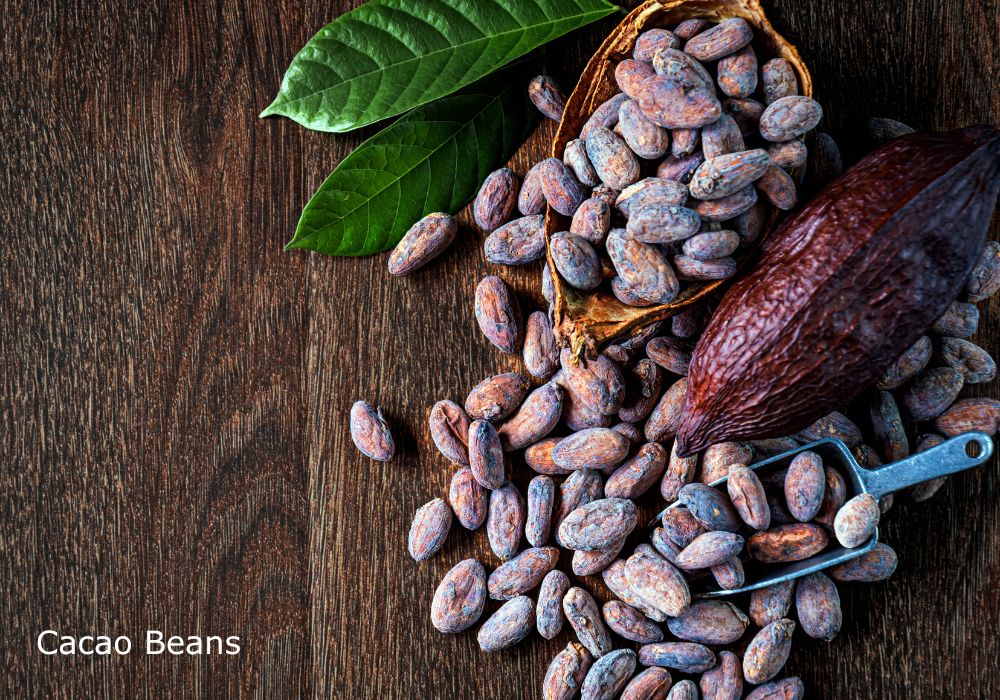
Just like coffee or wine, where cocoa beans come from can strongly affect how chocolate tastes.
Single-origin chocolate is made using cocoa beans from one particular country, region or sometimes even a single estate. This allows the natural flavours of those cocoa beans to stand out.
Depending on where the cocoa was grown, you might notice fruity, floral, nutty, earthy or spicy flavours.
Blended chocolate uses cocoa beans from different origins. By combining them, chocolate makers can create a more consistent flavour or balance different characteristics.
Neither is necessarily better than the other, but tasting different origins side by side is a great way to discover just how varied chocolate can be.
Now that we know a little more about the chocolate itself, it’s time for the important part: tasting it.
Chocolate tasting involves much more than simply popping a piece into your mouth and deciding whether you like it. To really appreciate chocolate, you should use as many of your senses as possible.
Before you start, make sure your chocolate is at room temperature. Chocolate that is too cold won’t release its aromas and flavours as effectively.
Take your time with each piece and pay attention to what changes as you work through the following steps.

First, take a good look at your chocolate. What colour is it? Is the surface shiny or dull? Does it have any marks, bubbles or streaks?
Well-tempered chocolate should generally have a smooth, glossy appearance, although the exact colour will vary depending on the type of chocolate and the cocoa beans used.
Break off a piece and listen to the sound it makes. Dark chocolate in particular should produce a clean, crisp snap when it is well tempered.
Milk and white chocolate tend to have a softer snap because they contain more milk and sugar, so don't judge every chocolate by the same standard.
Before you eat it, bring the chocolate close to your nose and take a good sniff. You might notice aromas that are fruity, floral, nutty, earthy, spicy or roasted.
Don't worry if all you can smell at first is chocolate! Identifying individual aromas becomes easier the more chocolates you taste.
Now for the bit you've been waiting for. Place a small piece of chocolate on your tongue, but resist the temptation to chew it straight away.
Let it melt slowly and notice the flavours as they develop. What do you taste first? Does the flavour change as the chocolate melts?
Pay attention to how the chocolate feels in your mouth. Is it smooth and creamy, or slightly grainy? Does it melt quickly or slowly?
Texture is an important part of the chocolate-tasting experience and can vary considerably between different chocolates.
Finally, notice what happens after the chocolate has melted. Which flavours remain in your mouth, and how long do they last?
This lingering flavour is known as the finish. Some chocolates disappear quickly, while others leave flavours that continue to develop long after the chocolate itself has gone.


Chocolate can have a surprisingly wide range of flavours, and we're not talking about added ingredients like orange, mint, or caramel. The cocoa beans themselves can produce very different flavour notes depending on where they're grown and how they're processed.
As you let the chocolate melt in your mouth, see if you can pick out any of these:
There's no right or wrong answer. Two people can taste the same piece of chocolate and notice completely different flavours. That's part of the fun of chocolate tasting.
When tasting dark chocolate, you may notice bitterness, but you might also experience something called astringency. The two are easy to confuse.
Bitterness is a taste, while astringency is a sensation. Astringency is that dry, slightly puckering feeling you can get in your mouth, similar to drinking strong tea or some red wines.
Noticing the difference can help you describe what you're actually experiencing when you taste chocolate.
Chocolate is delicious on its own, but pairing it with the right food or drink can bring out flavours you might not otherwise notice.
Different types of chocolate work particularly well with different flavours:
There's plenty of room to experiment. Try a small piece of chocolate on its own first, then taste it again with your chosen pairing and see how the flavour changes.

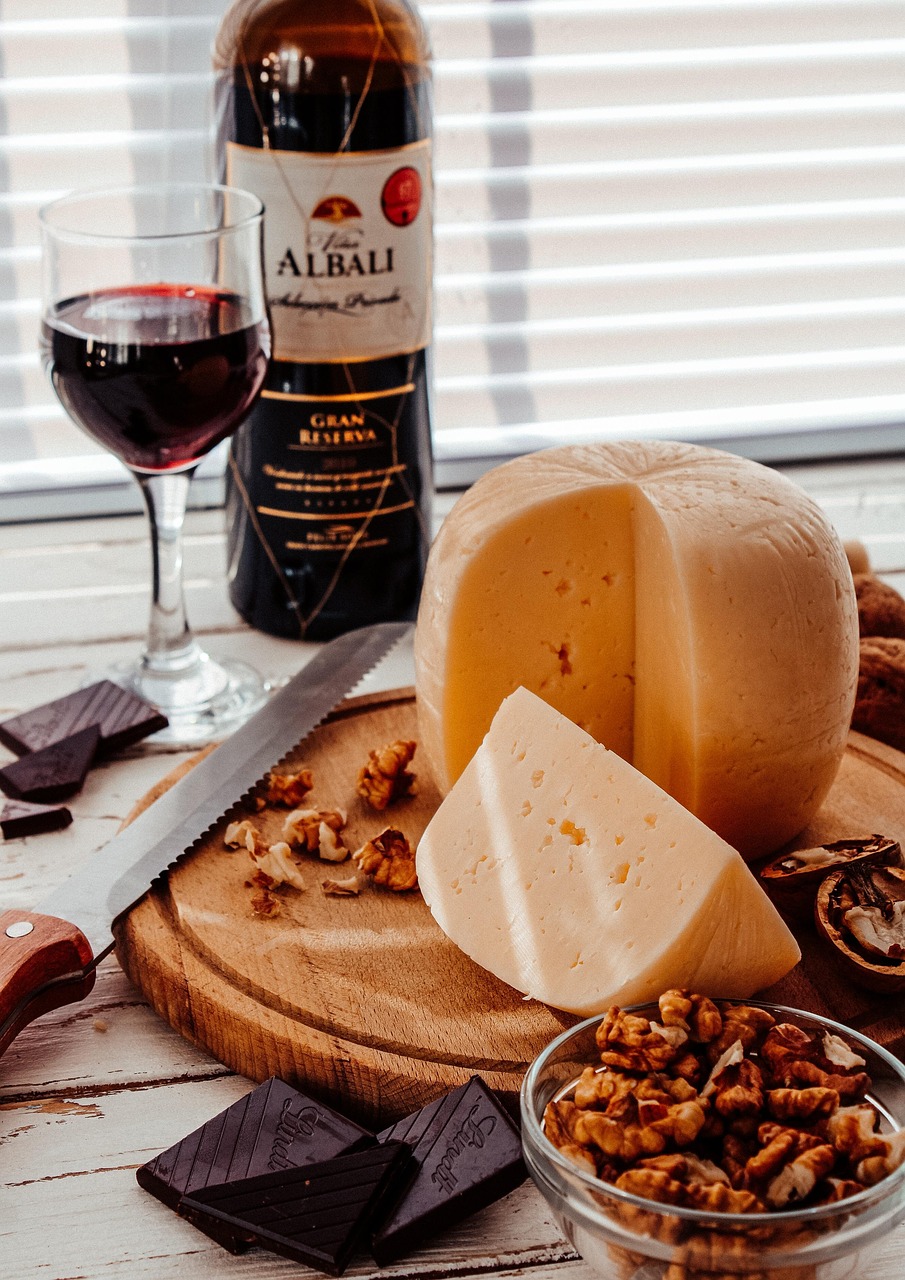
Try coffee. Both have robust, earthy flavours, and many bakers add coffee to chocolate desserts to heighten the chocolateyness. If you like alcohol, try wine with chocolate. Chocolate's intensity often pairs well with a red wine that isn't too high in tannins. We recommend merlots and cabernet sauvignons. An off-kilter pairing is cheese. The strong taste of some cheeses pairs well with the deep cocoa taste of dark chocolate. Looking for suggestions? A good-quality dark chocolate with blue cheese or Parmesan.
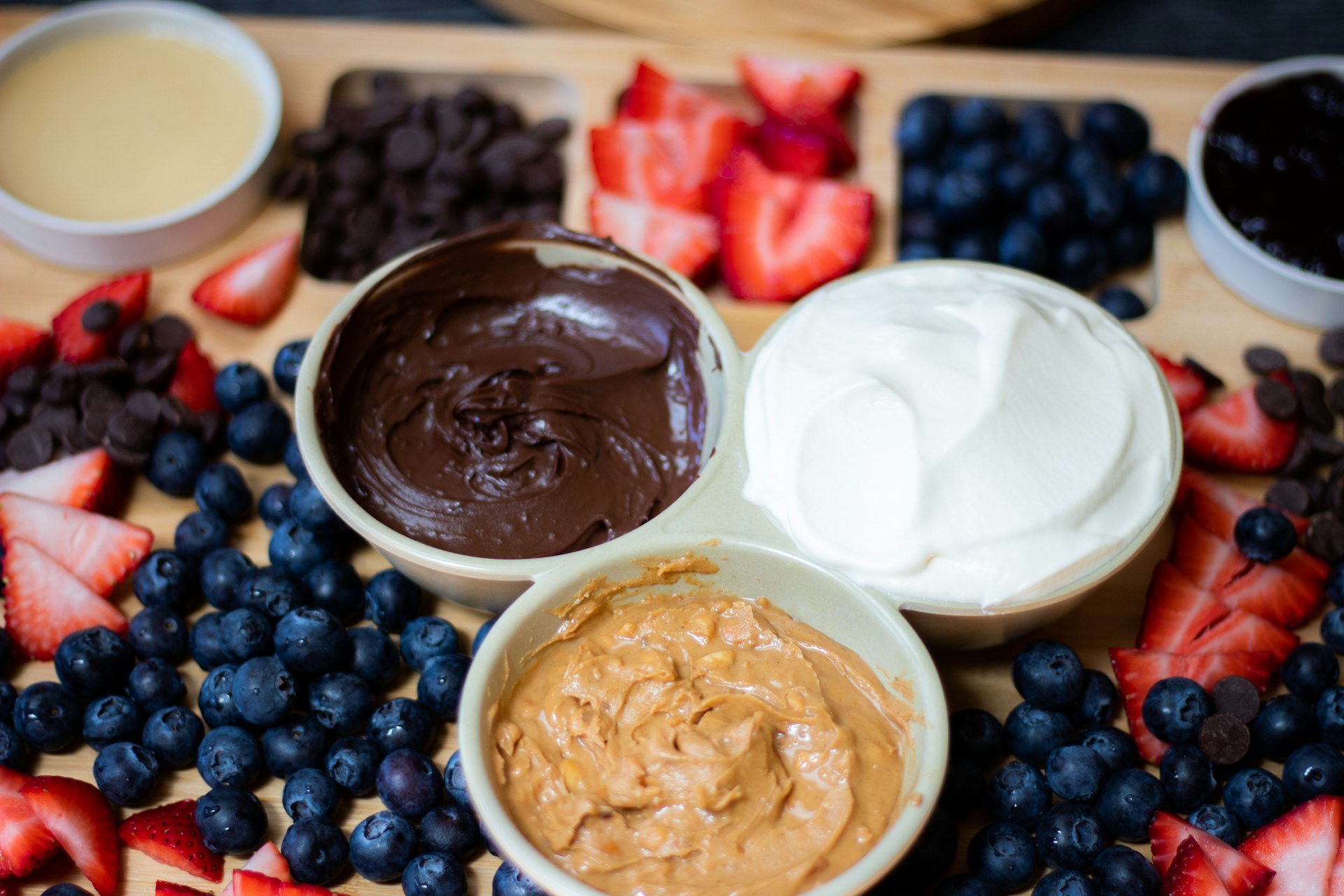
Lastly, for dark chocolate, try fresh fruit like cherries, bananas, coconut and strawberries. The sweetness cuts the depth of the dark chocolate and even heightens the fruity flavours in the chocolate itself. There’s a reason people dip strawberries in dark chocolate! This is a killer combo.

Milk chocolate: we recommend a whole host of pairings, starting with bacon. Yes, bacon. The salty fattiness of the bacon pairs perfectly with the sweetness of milk chocolate. Another pairing is nuts, specifically peanuts. Have a sprinkle alongside a bite of good-quality milk chocolate to amplify both. For drinks, try a spicy tea, such as chai or a smoky black tea like lapsang souchong, to contrast the milkiness with the darkness. When mentioning cheese, try a piece of brie with milk chocolate to have a complementary mix of creamy textures and tastes.

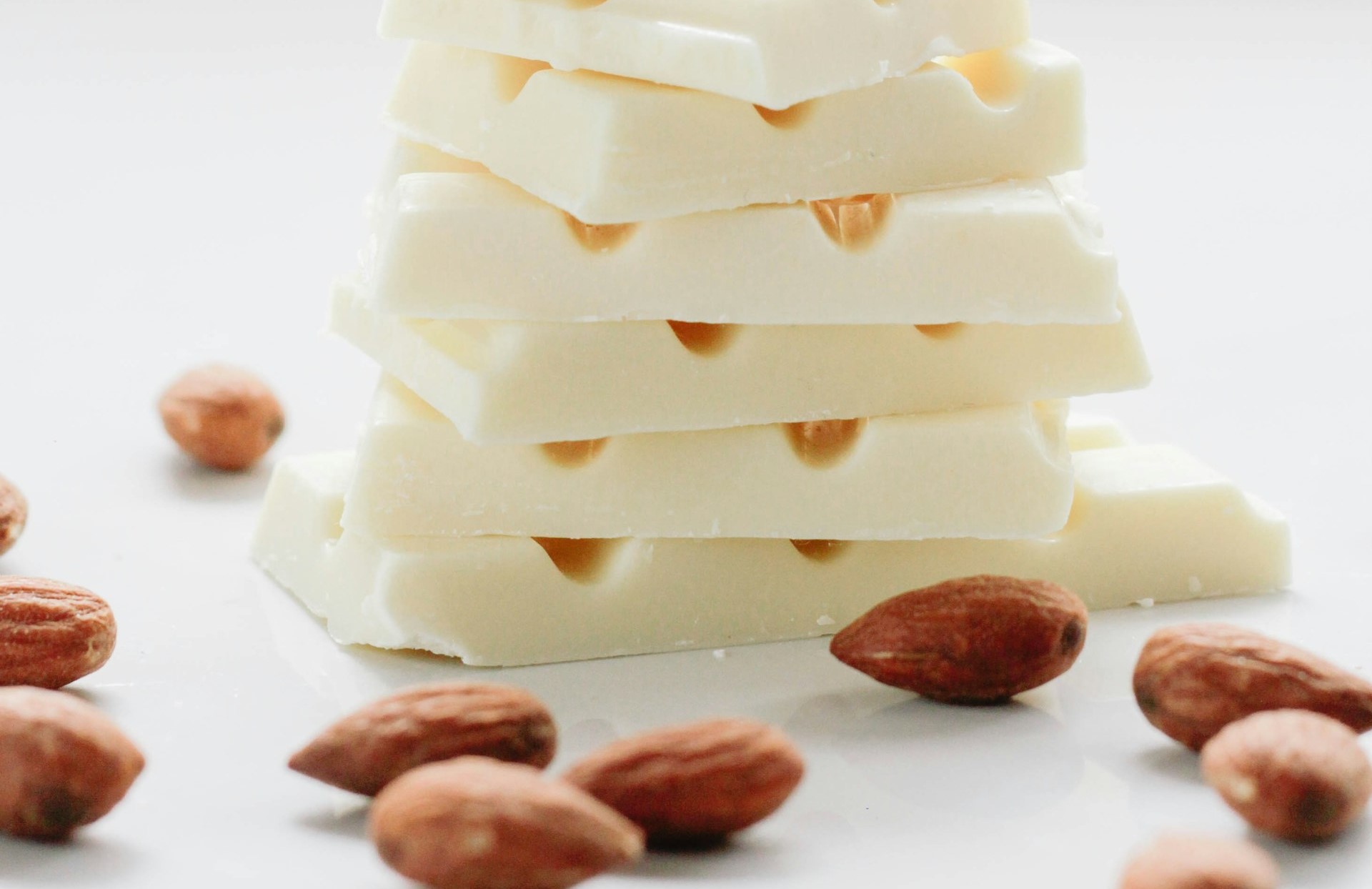
White chocolate: pair it with foods that complement its light, milky taste. Tart fruits, such as passionfruit and raspberries, work well, building on its creamy nature with zingy flavours. For cheeses, choose something lighter to match the white chocolate. We recommend cream cheese and feta so they don’t overpower the subtle taste too much. Nuts, in particular pistachios, almonds and macadamias, work very well, and regarding drinks, matcha and its earthy profile is the perfect ‘match-a’ made in heaven.
Food pairings are not a science, so feel free to sample and experiment. Everybody has different tastes and likes, so don’t be afraid of combinations. Marmite and white chocolate anybody? To see more chocolate pairings, check out our blog on the subject!
One of the easiest ways to improve your chocolate-tasting skills is to compare several chocolates side by side. Differences in flavour, aroma and texture are often much easier to notice when you can compare them directly.
Try choosing three different chocolates. You could compare:
Taste them one at a time and make a few notes about what you notice. Look at the appearance, listen to the snap, smell the chocolate and then let it melt slowly in your mouth.
Most importantly, don't read the tasting notes on the packet first. See what you can discover for yourself before finding out what the chocolate maker says you should be tasting.
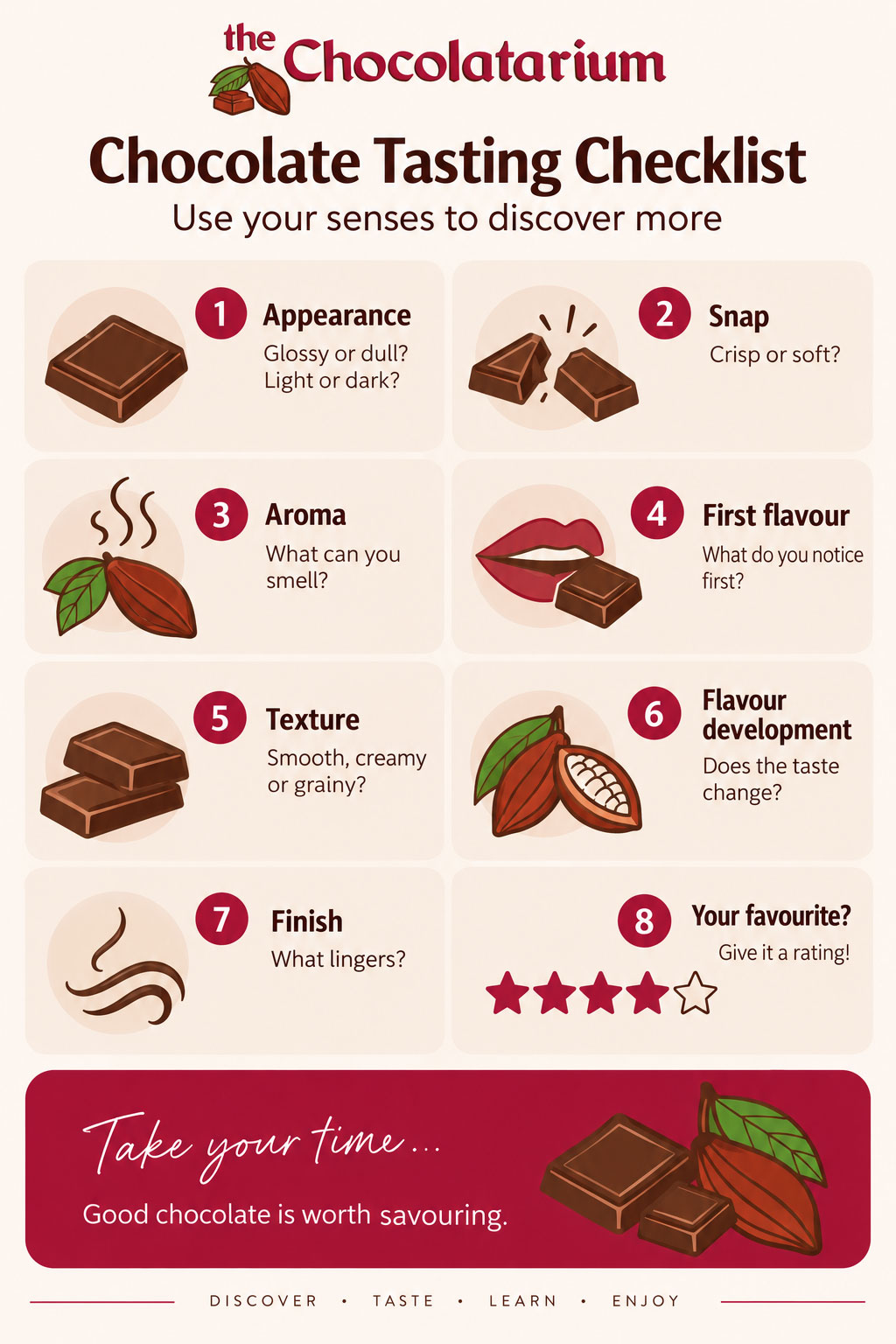
Not sure what to look for while you're tasting? Use this simple checklist to slow things down and pay attention to what your senses are telling you.
Think about the chocolate's appearance, snap and aroma before you taste it. Then notice the first flavours, how it feels in your mouth, how the flavour develops and what remains afterwards.
And finally, the most important question: how much did you actually like it?