The 2026 FIFA World Cup™ will feature 48 nations from every corner of the globe. At The Chocolatarium we celebrate their journey to the pitch with something a little sweeter: Chocolate! Each of the nations below has a cocoa‑related tale, tradition or treat that reveals how deeply intertwined the beautiful game and the world’s favourite confection can be.
Co‑hosts: North America
Canada
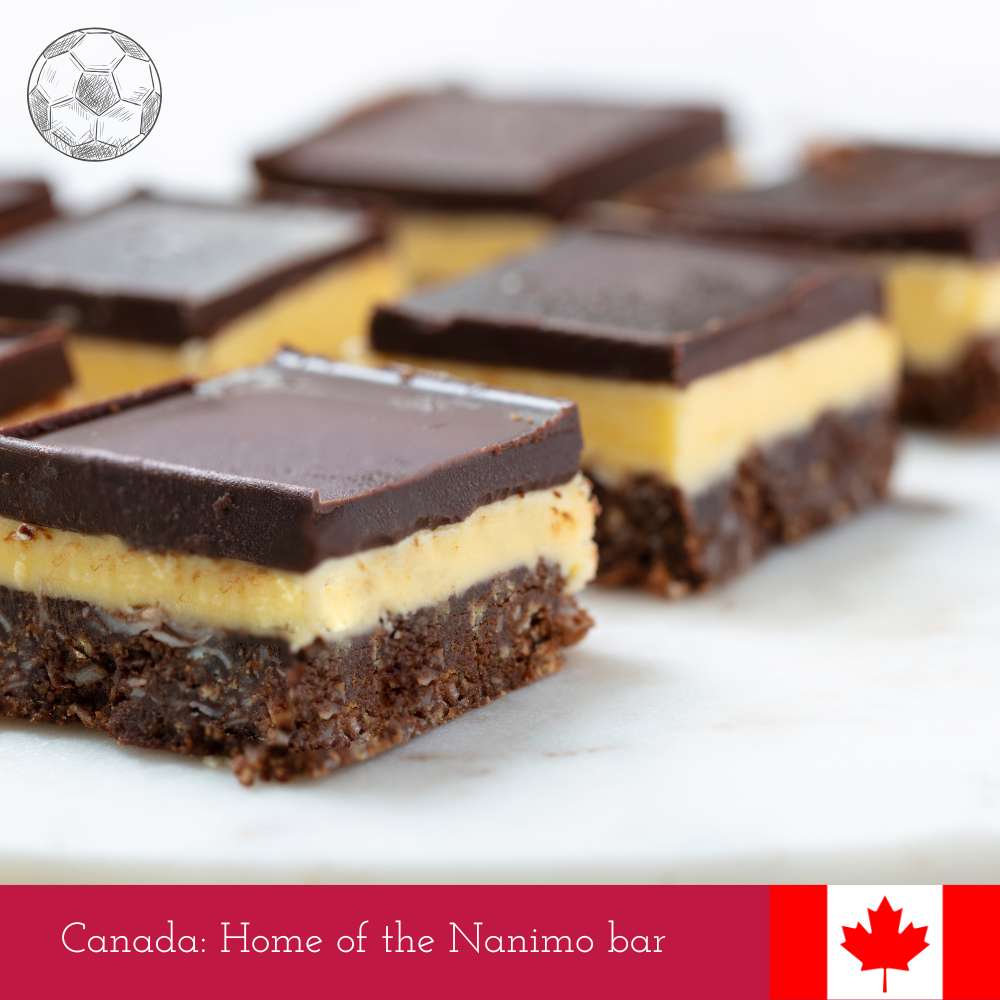
With all of its cocoa imported, Canada still loves chocolate: in 2023 Canadians spent an average CAD 119 on chocolate bars and the country imported more than 110 000 tonnes of cocoa beans (Statistics Canada). Even the city of Nanaimo claims ownership of the famous Nanaimo bar, holding a contest in 1986 to decide on the ultimate recipe (City of Nanaimo). When the Canucks take the field, there’s every chance their fans will be munching squares of that layered, chocolate‑topped slice.
Mexico
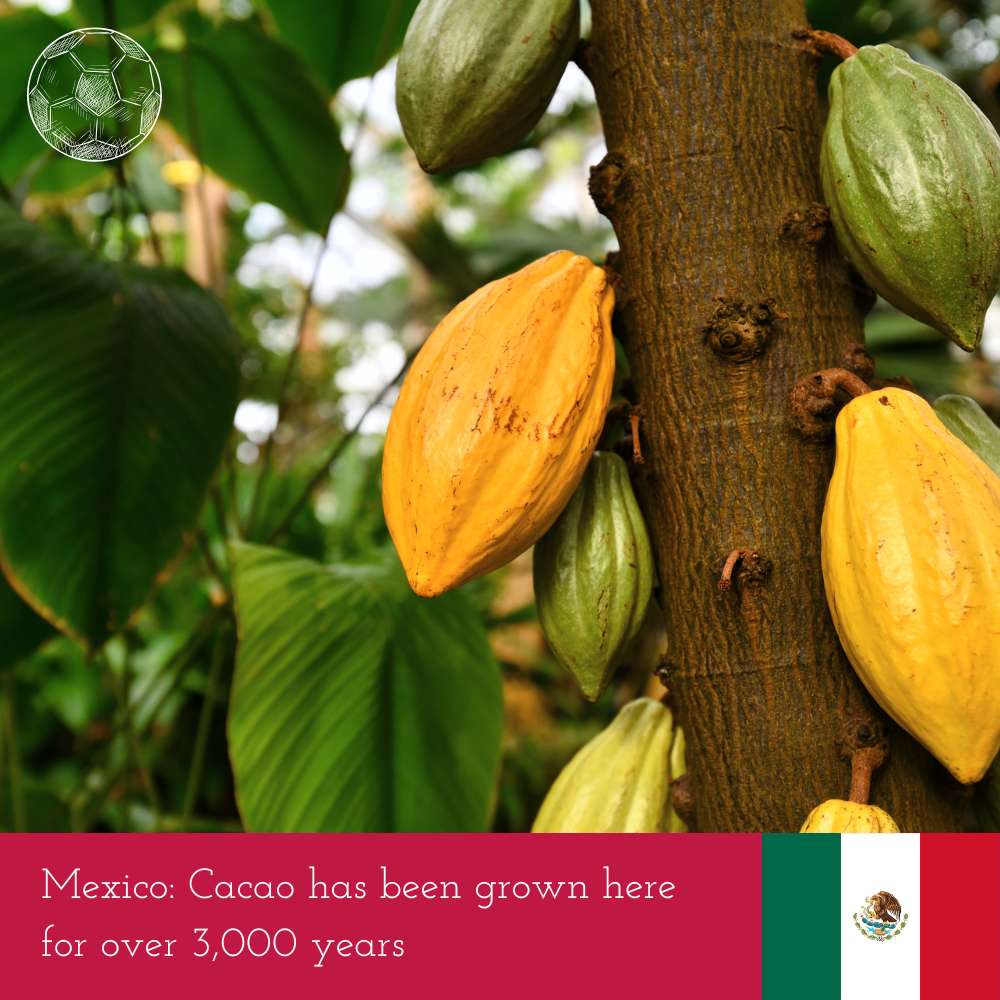
Cacao has been part of Mexican culture for millennia. Archaeological evidence shows the Mokaya people enjoyed a chocolate‑like drink as early as 1900 B.C. (Natural History Museum of Utah). Mole poblano, a sauce combining chilli peppers and cocoa, was reportedly created in a convent in Puebla in the 17th century (Alimentarium). When El Tri play at home, the roar of the crowd echoes across a land where the word “chocolate” itself comes from the Nahuatl xocoatl.
United States
The American chocolate industry truly began when Milton Hershey perfected milk chocolate and sold his first bars in 1900 (Hershey Community Archives). A few decades later, Ruth Wakefield’s Toll House recipe added chopped chocolate bars to cookie dough and became the world’s first chocolate-chip cookie in 1938 (Library of Congress). As the U.S. seeks a breakthrough on the world stage, remember that its own home-grown sweets changed the way we snack.
AFC (Asia & Australia)
Australia
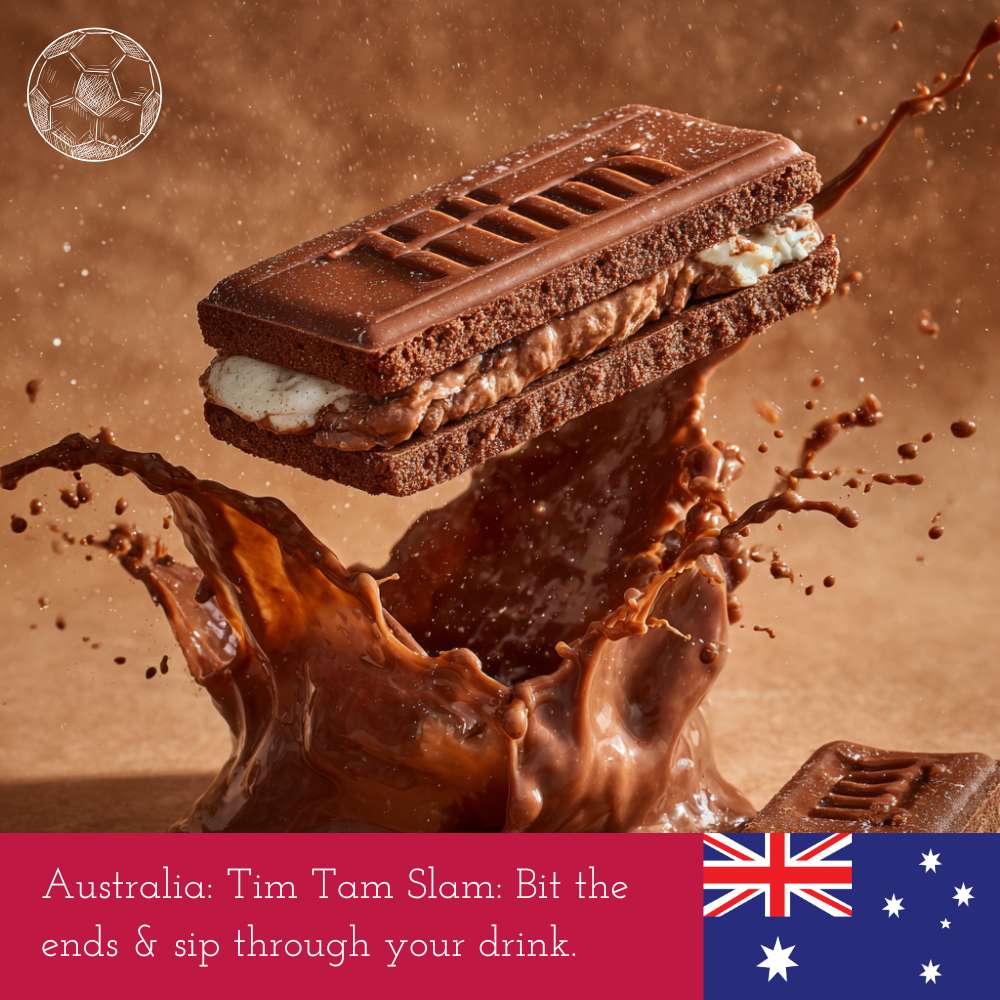
Down under, chocolate takes the form of the beloved Tim Tam biscuit: two malted cookies with a creamy filling, coated in chocolate. Arnott’s introduced this treat in 1964 and it has since become Australia’s most iconic chocolate biscuit (Arnott’s). Fans of the Socceroos know exactly how to celebrate a victory: bite off the ends of a Tim Tam and “slam” it through a cup of hot coffee.
Iraq
In Baghdad, the Al-Ghadeer Food Products Company has been making chocolates since the early 1970s. Its first product, the Lu’ay chocolate bar, remains a symbol of Iraqi chocolate tradition (Al-Ghadeer Food Products). After a long dry spell, the Lions of Mesopotamia return to football’s grand stage with sweet memories of their own confectionery heritage.
Iran
Iran is both one of the Middle East’s largest consumers and producers of chocolate. In 2024 the country consumed around 520,000 tonnes of chocolate and cocoa products and produced a similar amount (IndexBox). Perhaps Team Melli will draw inspiration from this abundance as they chase glory.
Japan
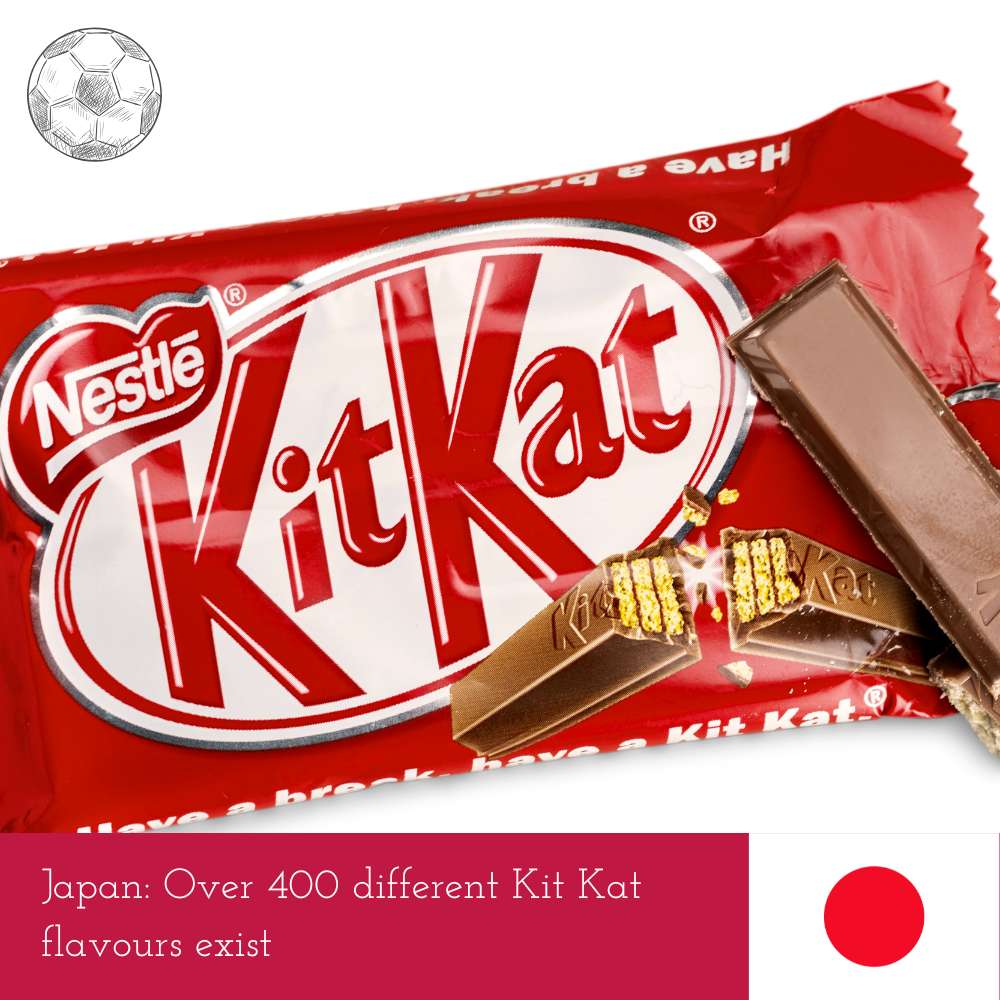
Japanese Valentine’s Day traditions revolve around chocolate: women give honmei choco
to their loved ones, giri choco to colleagues and
tomo choco to friends (Go! Go! Nihon). Another phenomenon is Kit Kat — its name sounds like the phrase kitto katsutoo (“you shall surely win”) and more than 400 unique flavours have been released over two decades (Japan House Illinois). Samurai Blue fans might tuck a lucky matcha Kit Kat into their jersey pocket before kick-off.
Jordan
Jordan’s artisan chocolate scene is young but ambitious. Amman’s Dopamine shop, opened in 2019, crafts Belgian-style chocolates in a family atelier (Dopamine Jordan). It’s proof that even a country making its World Cup debut can quickly develop a taste for the fine things.
Republic of Korea
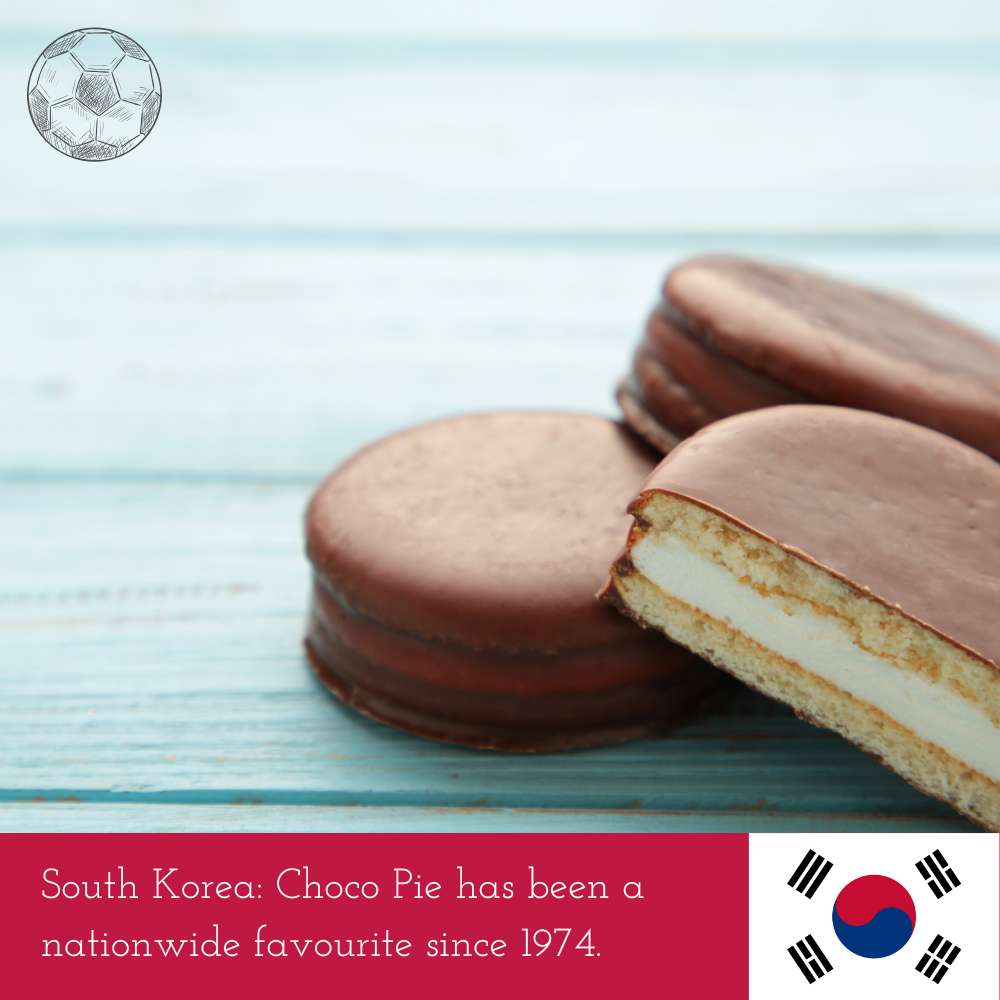
The classic Korean snack Choco Pie was introduced by Orion in 1974 and became an instant hit (Orion). Soft cakes filled with marshmallow and coated in chocolate, these treats are enjoyed across Asia. When the Taeguk Warriors play, share a Choco Pie in lieu of breaking bread.
Qatar
Qatar hosts the annual Coffee, Tea & Chocolate Festival, a ten-day event where 40 kiosks offer sweets and beverages amid stage performances and carnival rides (The Peninsula Qatar). As 2026 co-hosted matches bring football fans to North America, Qatar’s chocolate celebrations remind us of how sport and sweets go hand in hand.
Saudi Arabia
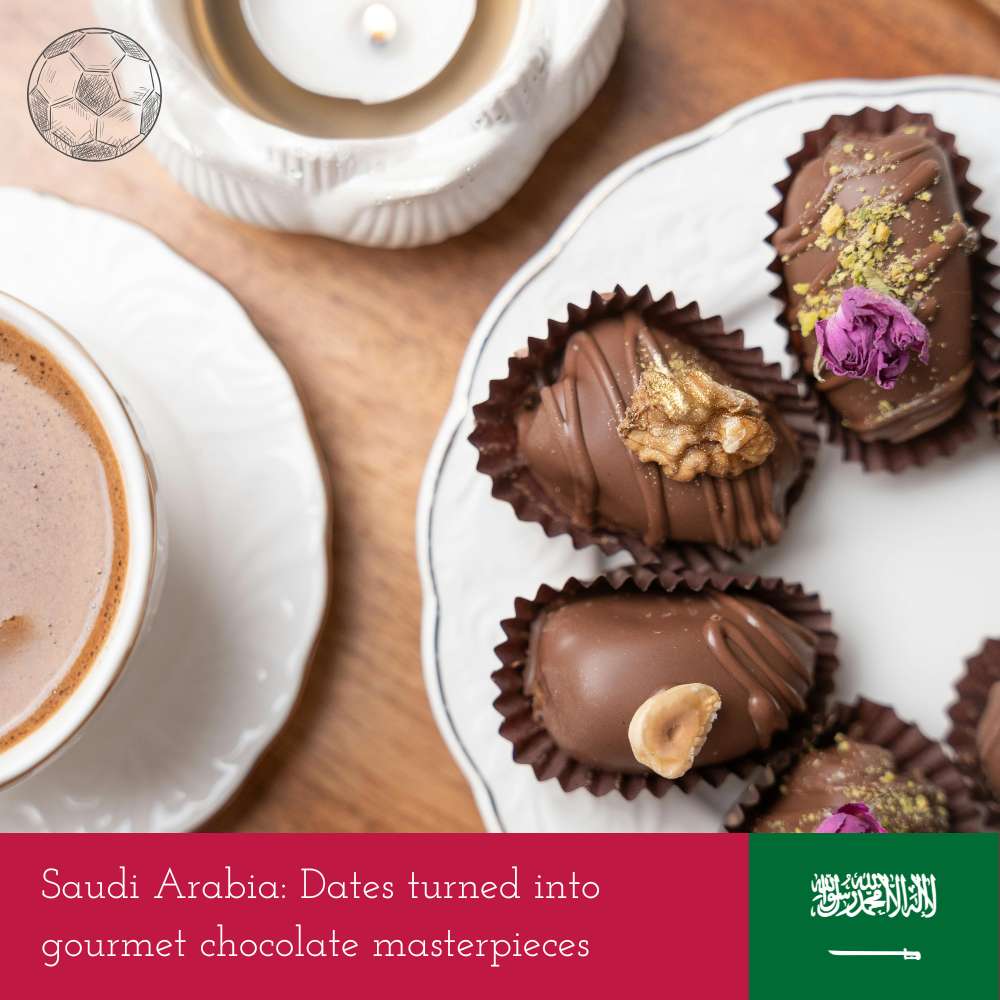
Saudi luxury brand Bateel turned dates into gourmet confections presented like chocolates. Though the farms date back to the 1930s, boutiques selling stuffed dates and their own pistachio-filled chocolates opened in the 1990s (Newsweek). When the Green Falcons soar, fans might savour a box of stuffed dates instead of traditional truffles.
Uzbekistan
Uzbekistan’s Crafers factory, built in 2016 and operational since 2018, produces more than 120 chocolate and confectionery products using natural ingredients (Crafers). With a capacity of over 46,000 tonnes per year and exports to more than 20 countries (Crafers), the company embodies Uzbekistan’s rapid rise on both the pitch and in the confectionery world.
CAF (Africa)
Algeria
Oran hosts the Salon International du Chocolat et du Café, a trade fair attracting around 60 companies. The 2026 edition showcased equipment, raw materials, finished products and culinary demonstrations (Le Courrier du Vietnam). Algerian supporters can find inspiration in seeing cocoa’s journey from bean to bar — just as their team journeys from qualifiers to the World Cup.
Cabo Verde
The island nation isn’t known for cocoa production, but its cuisine includes
gufong — a sweet fried pastry similar to a doughnut that’s often drizzled with chocolate and dusted with powdered sugar (International Cuisine). With their debut on the world stage, the Blue Sharks prove you don’t need cacao plantations to enjoy a chocolate-topped celebration.
Democratic Republic of the Congo
In Virunga National Park, famous for mountain gorillas, a chocolate factory called Virunga Origins processes local cocoa beans. The project prevents beans from being smuggled across borders and demonstrates that cocoa can be transformed locally (Africanews). By adding value at home, DR Congo’s chocolate mirrors its football team’s efforts to build success from within.
Côte d’Ivoire
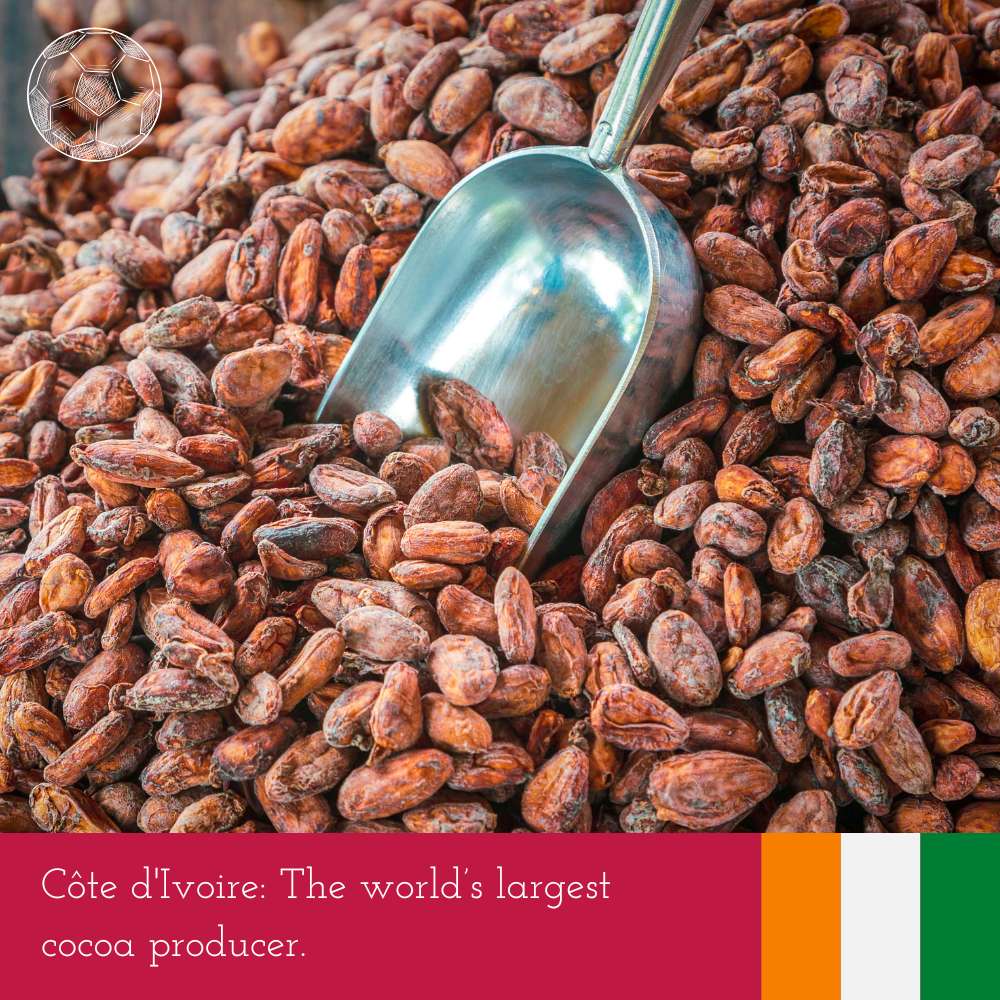
Africa’s largest cocoa producer is embracing craft chocolate. Le Chocolatier Ivoirien, founded by Axel Emmanuel, trains farmers’ wives in bean-to-bar production and has seen sales grow 27% over two years (GhanaWeb). The company exports about 100,000 bars annually and plans a factory that can process 100 tonnes per month (GhanaWeb). The Elephants’ quest for another World Cup appearance is accompanied by a home-grown chocolate renaissance.
Egypt
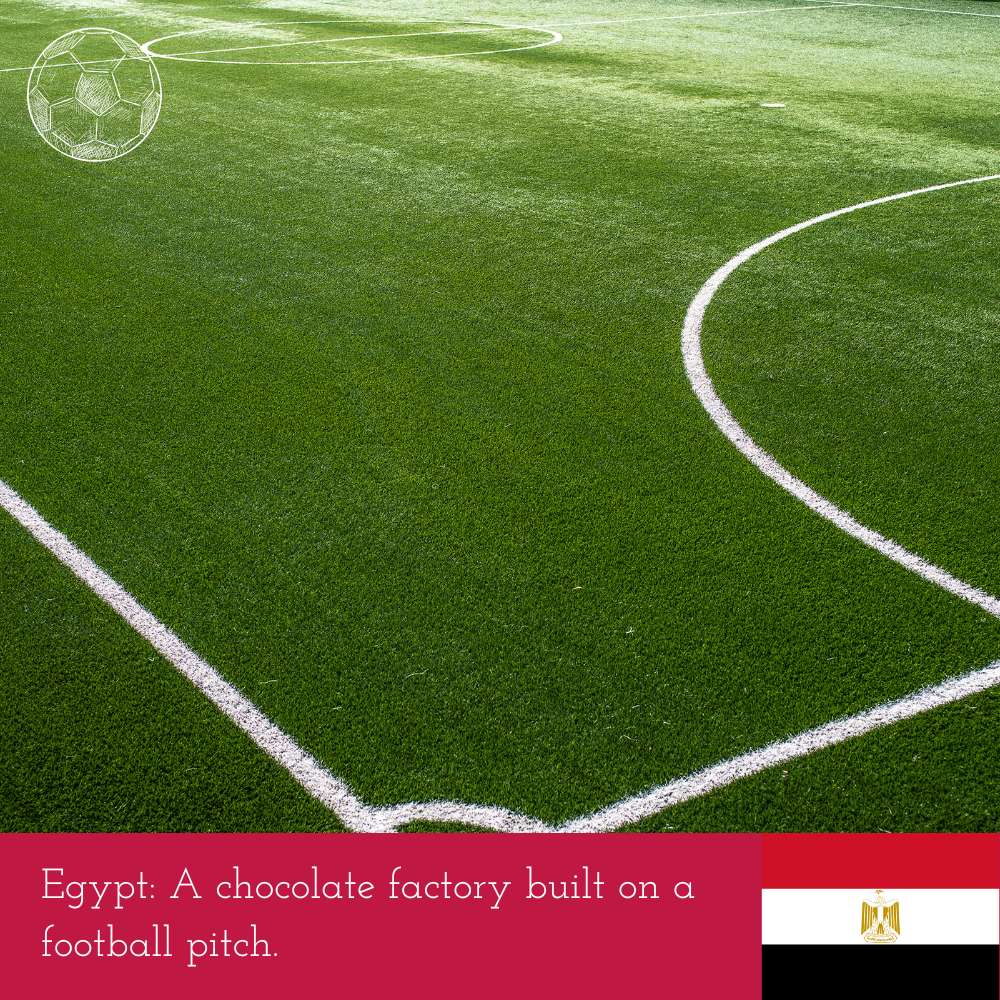
Egypt’s love affair with chocolate dates back to 1919 when Greek entrepreneur Tommy Christo founded the Royal Chocolate Company (later Corona) in Ismailia — the first chocolate factory in Egypt and the Near East. Christo placed a football pitch inside the factory grounds; a gazelle that wandered onto the pitch became the company’s beloved logo (Corona Egypt). Few national teams can claim such a literal link between chocolate and football.
Ghana
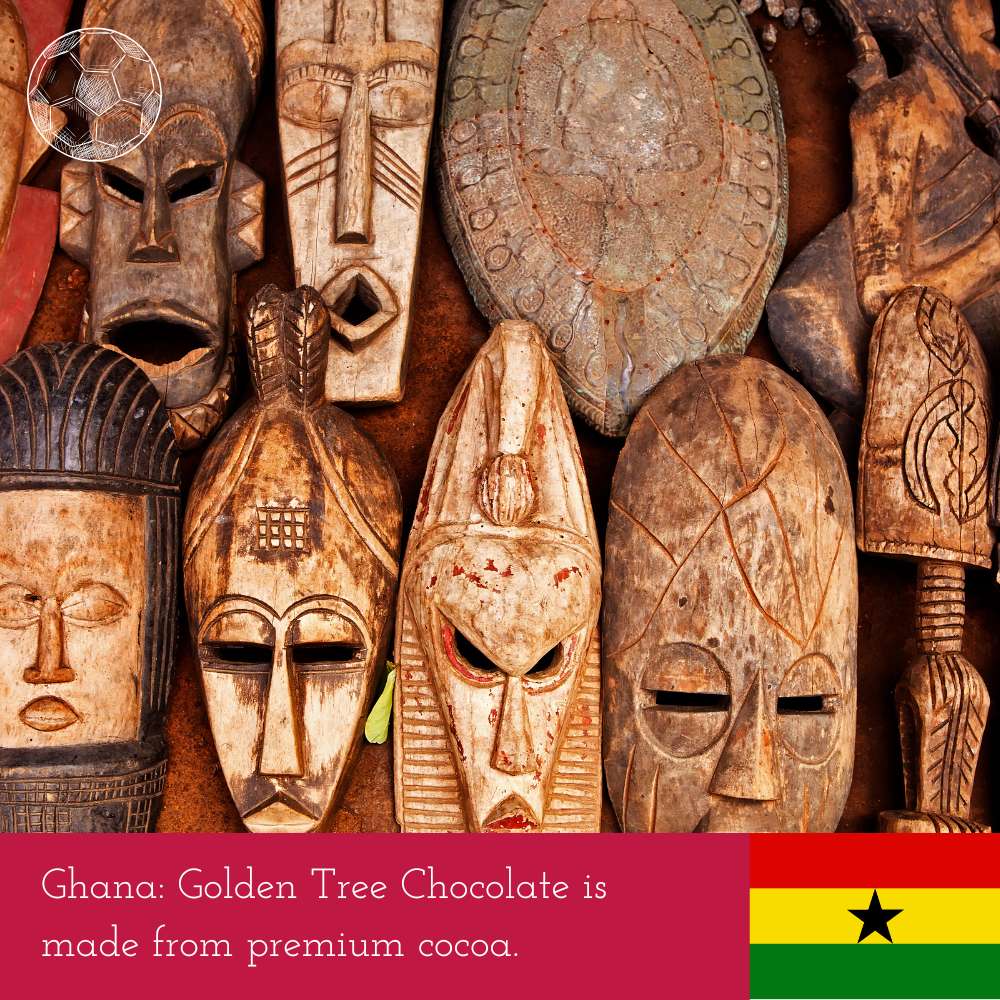
Ghana’s Cocoa Processing Company (CPC), established in 1965 and later incorporated as a limited liability company, processes premium Ghanaian cocoa into Golden Tree chocolate bars and other products (Cocoa Processing Company). The Black Stars represent a country where cocoa is both cash crop and national pride.
Morocco
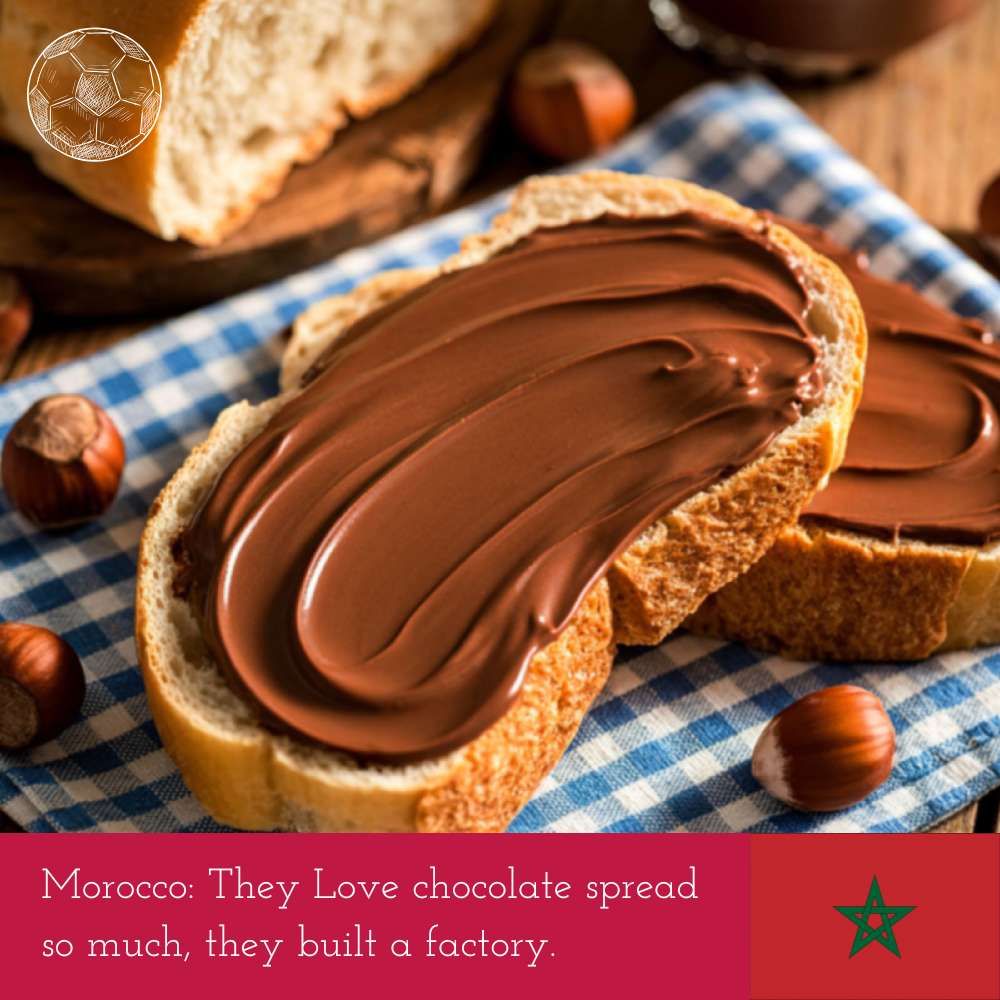
Moroccans adore Spanish chocolate brand Dulcinea so much that, before 2020, people smuggled its chocolate spreads across borders. In 2020 Dulcinea opened a factory in Tangiers, financed by a €450,000 loan, to meet rising local demand (European Investment Bank). Their Atlas Lions might be tough on the pitch, but when it comes to sweets, they’re known to sneak a jar or two.
Senegal
Following COVID-19, Belgian-Congolese chef Danuta Nganko opened Senegal’s first artisanal chocolate shop, Venko, in Dakar. She combines Belgian chocolate with local ingredients like hibiscus and moringa (Reuters). Her goal is to cultivate a chocolate-buying culture in a country without a strong cocoa tradition (Reuters) — a cultural shift as bold as the Lions of Teranga’s attacking style.
South Africa
Beacon Sweets & Chocolates began when immigrant Hymie Zulman bought a tiny Durban confectionery in 1931 and renamed it Beacon in 1936. By 1938 the firm had expanded to manufacture chocolates and eventually built major factories; it later introduced sweets like Fizz Pops and Marshmallow Eggs (SA Jewish Report). The Bafana Bafana may be chasing their first World Cup finals appearance in years, but South African chocolate makers have long been on the attack.
Tunisia
In 1988, Chama Cammoum opened Chamalo in La Marsa, one of Tunisia’s first chocolate shops. After the 2011 Tunisian Revolution, she returned to run the family business, emphasising artisanal techniques and quality ingredients (Valrhona). As the Carthage Eagles attempt to soar in 2026, their country’s chocolate craft is also on the rise.
CONCACAF (North America & Caribbean)
Curaçao
In Willemstad’s Kura Hulanda village, the boutique “It’s Better with Chocolate” crafts made-to-order chocolates using natural ingredients and offers creative bars, bonbons and vegan truffles flavoured with cherry rum and chipotle (My Curaçao Guide). The little Dutch Caribbean nation may be a debutant, but it already boasts sophisticated sweets.
Haiti
Les Chocolateries Askanya, founded in 2015, is Haiti’s first bean-to-bar chocolate company. It pays local farmers seven times the going rate and all of its chocolate makers are women (Good King Cacao). Askanya won a sustainability award in 2017 (Good King Cacao), proving that even without a long football tradition, Haiti leads by example off the field.
Panama
Although Panama’s cocoa output is modest, its rising speciality cacao is winning fans worldwide. Panamanian cacao varieties, including those cultivated by indigenous communities, have gained attention for their fine flavour (Panama Cacao). As Los Canaleros fight for recognition on the pitch, their cacao farmers quietly earn accolades in gourmet circles.
CONMEBOL (South America)
Argentina
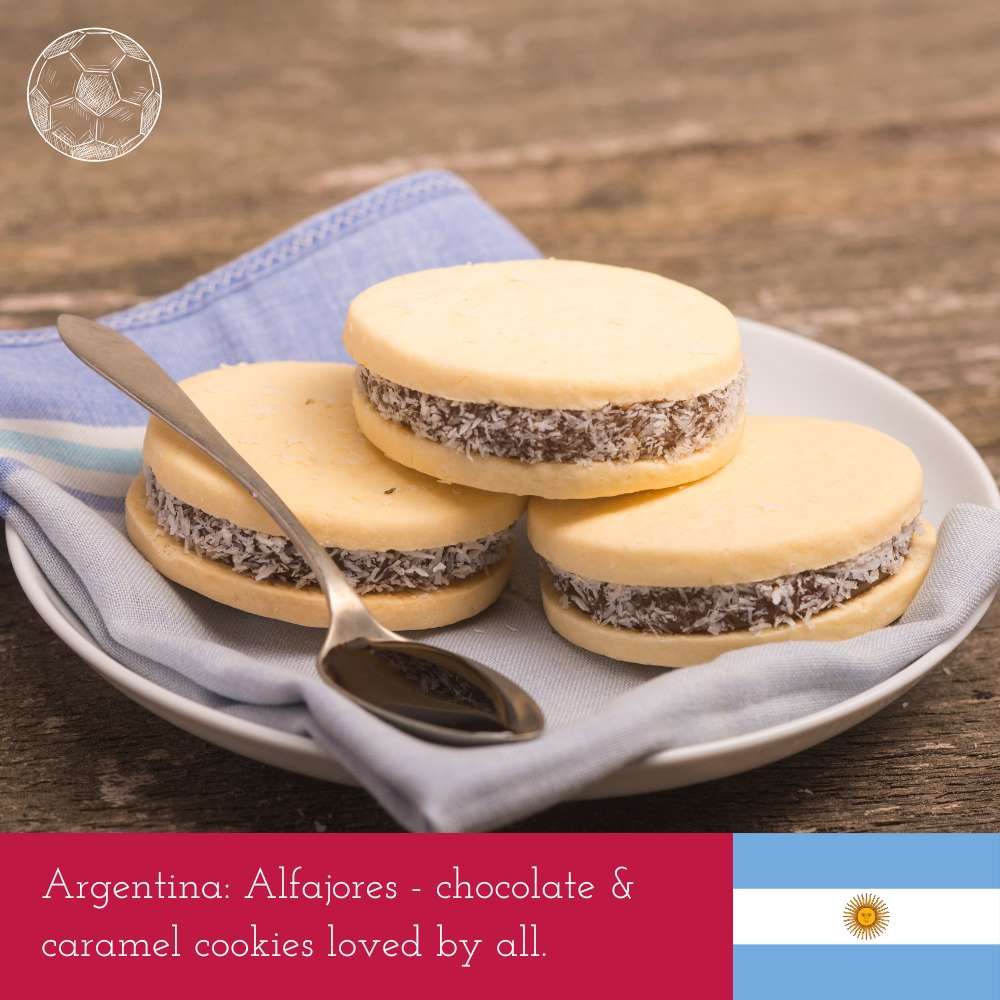
Argentina’s national sweet is the alfajor — two biscuits sandwiching dulce de leche, often coated in chocolate. The treat dates back to the 19th century and is enjoyed across the country, particularly after football matches (Argentina Government). As the world champions look to defend their title, fans will no doubt celebrate with a box of chocolate-covered alfajores.
Brazil
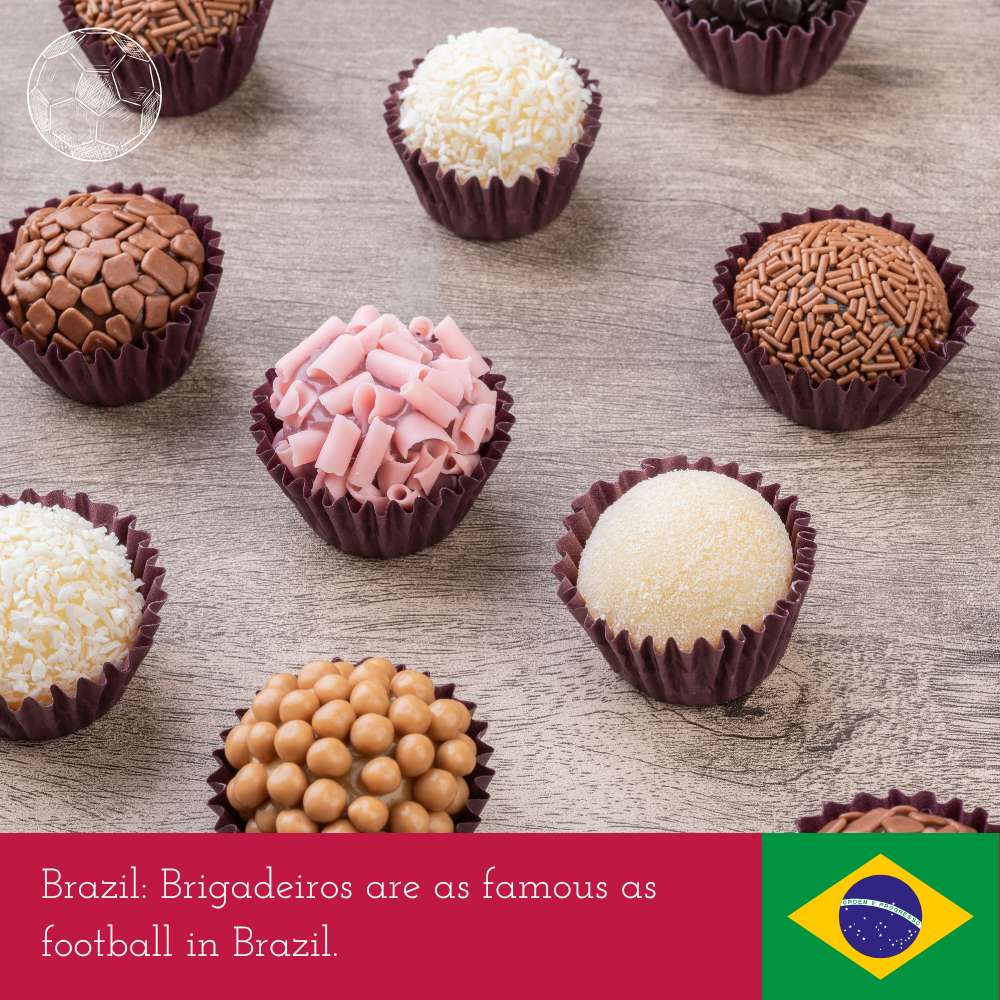
Brazil produces roughly a third of the world’s cocoa and is famed for the brigadeiro, a truffle-like ball made from condensed milk and cocoa powder. Invented in the 1940s, brigadeiros are served at parties and football celebrations across the country (TasteAtlas). When the Seleção score, expect handfuls of these sticky sweets to be passed around.
Colombia
Colombians enjoy hot chocolate with cheese — a thick, frothy drink poured over cubes of queso campesino. This comfort beverage is a staple at breakfast and during rainy football afternoons (Colombia Travel). Team Colombia’s fans might warm their voices with a mug of chocolate con queso before cheering their heroes.
Ecuador
Ecuador’s fine Arriba cacao is prized by chocolatiers worldwide. The country has embraced bean-to-bar production, and Quito hosts a vibrant chocolate festival (Ecuador Travel). La Tri’s attack may be electrifying, but their nation’s chocolate is equally world-class.
Paraguay
Paraguay’s Guaraní heritage includes mate cocido, an infusion of toasted yerba mate and sugar that is sometimes enriched with cocoa powder (Paraguay.com). While not as famous as its neighbours’ sweets, Paraguayans enjoy sipping this roasted beverage at football gatherings.
Uruguay
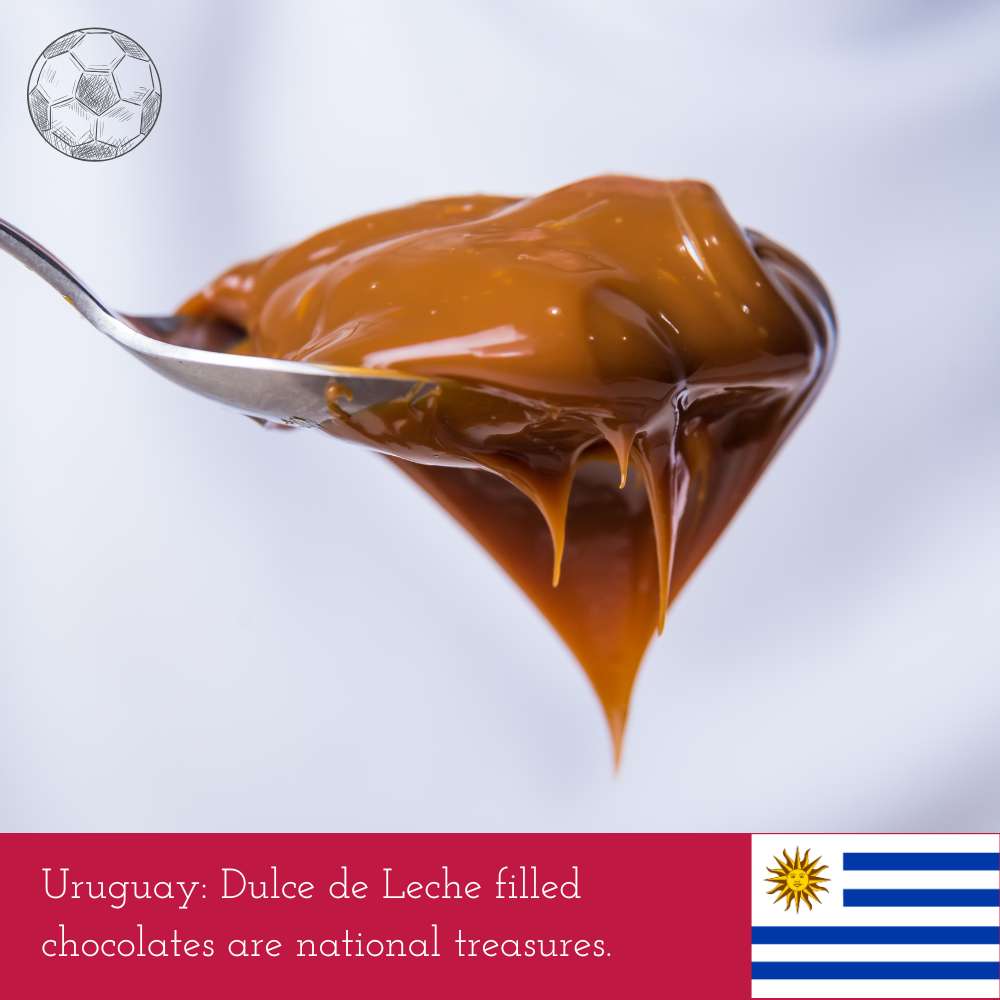
In Uruguay, dulce de leche flows as freely as wine. The country’s confectioners make bars and bonbons filled with the caramel spread and coated in chocolate (Uruguay XXI). For La Celeste’s fans, no match day is complete without biting into a chocolate shell that oozes sweet, gooey caramel.
OFC (Oceania)
New Zealand
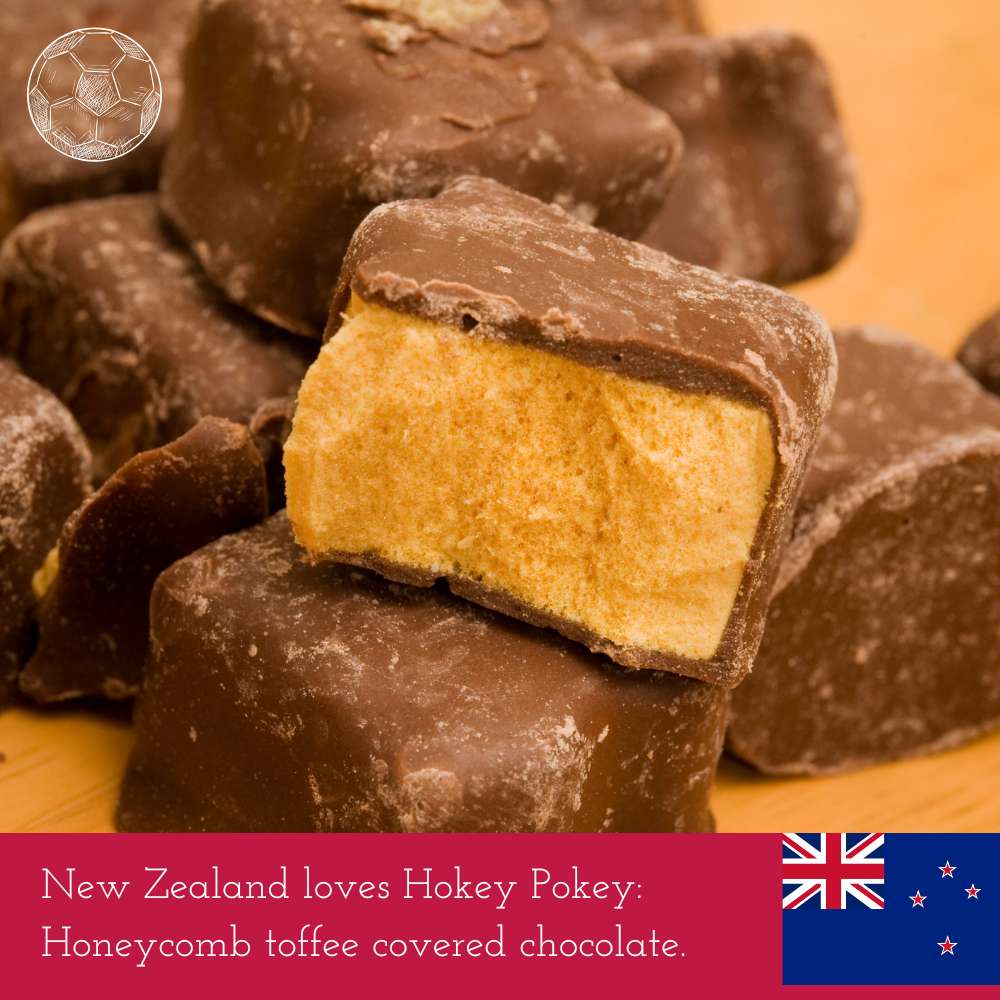
New Zealanders love their “hokey pokey” — honeycomb toffee covered in milk chocolate. Confectioner Whittaker’s produces a popular hokey-pokey chocolate bar that pairs especially well with rugby (and football) nights (Whittaker’s). When the All Whites take the field, chocolate-coated honeycomb will crunch along with the tackles.
UEFA (Europe)
Austria
Salzburg confectioner Paul Fürst invented the Original Mozartkugel around 1890 by forming pistachio marzipan around nougat, then dipping it in chocolate (Original Mozartkugel). Each was placed on a stick to coat evenly and named after the composer Mozart. The Austrian team knows a thing or two about precision — a good quality for both chocolate making and free kicks.
Belgium
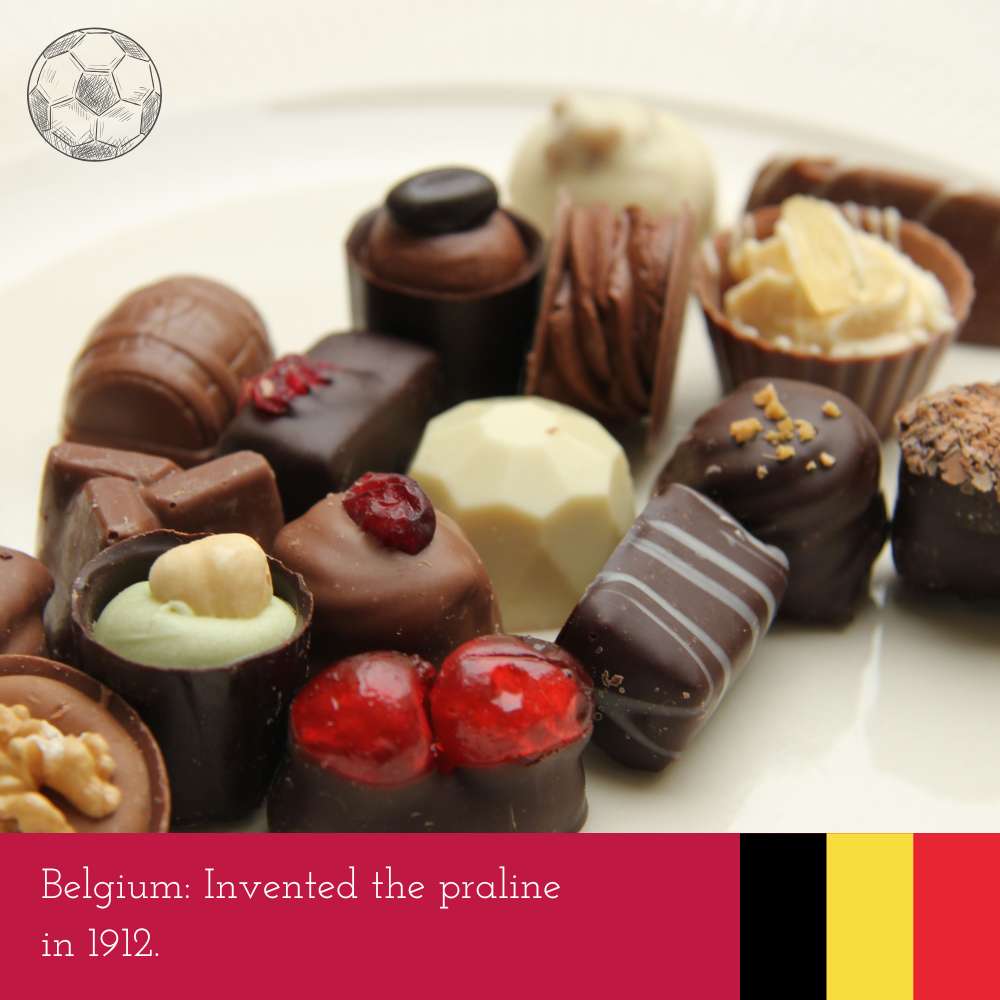
Belgium’s Jean Neuhaus Jr. created the first praline in 1912 at the Neuhaus boutique in Brussels (Neuhaus), and a law from 1884 requires Belgian chocolate to contain at least 35% cocoa (Slow Tours). With over 2,000 chocolatiers, it’s no wonder the Red Devils play with such flair — Belgium has refined the art of chocolate as well as the art of attack.
Bosnia & Herzegovina
In Sarajevo and Mostar, cafés serve bajadera, a layered nougat and biscuit confection inspired by Croatian pralines. While Bosnia and Herzegovina’s chocolate industry is small, local artisans produce hand-rolled truffles infused with wild forest fruits (Bosnia and Herzegovina Official Site). The country’s talented footballers hope to surprise the world just as their chocolatiers delight locals.
Croatia
Zagreb’s Union chocolate factory, founded in 1911, was one of south-eastern Europe’s first large-scale chocolate makers (Kraš). The company, now Kraš, created the famous Bajadera praline in 1954 and opened its first Bonbonnière in 1952 (Kraš). Croatian footballers may wear chequered shirts, but their chocolate history is anything but checkered.
Czechia
Prague’s largest chocolate maker, Orion, was founded at the end of the 19th century and is known for its Studentská pečeť bar — a 1970s invention stuffed with peanuts, raisins and colourful jelly (CzechiaFood). Like the Czech national team, this chocolate bar surprises opponents with unexpected combinations.
England
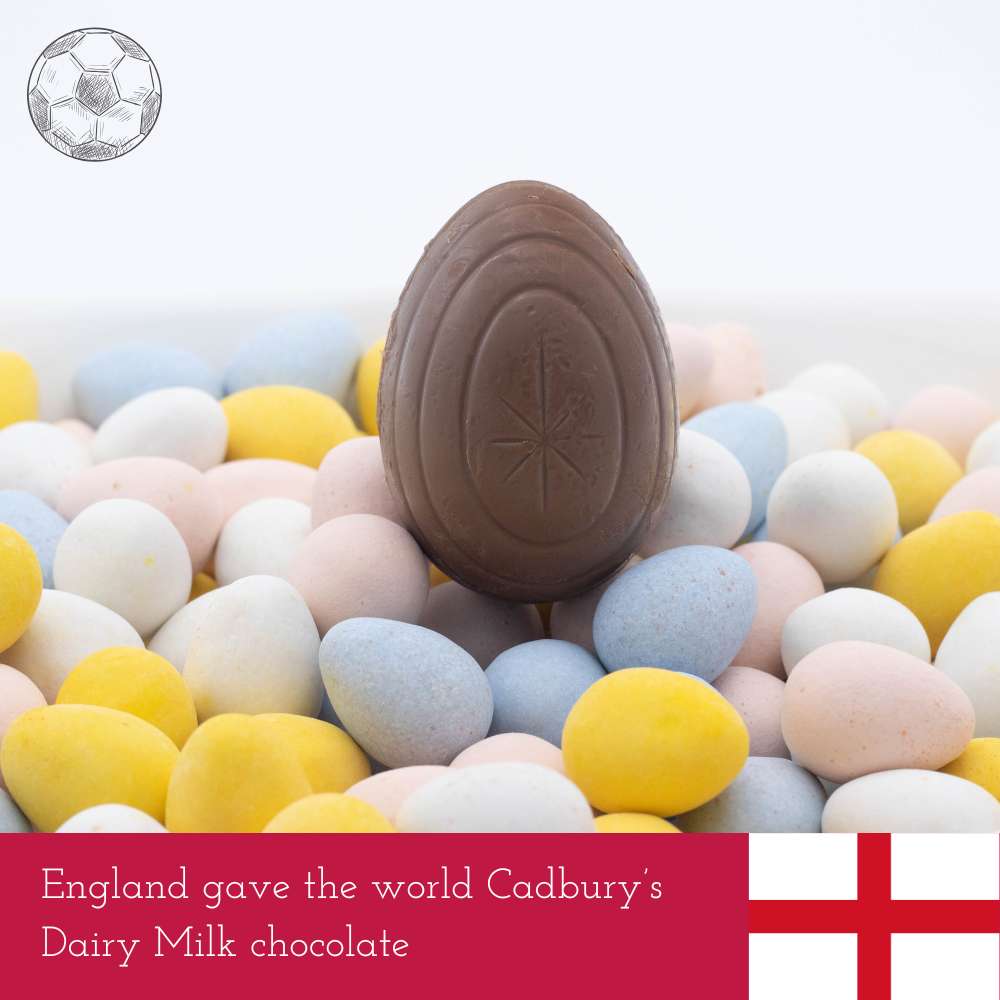
England introduced the world’s first mass-produced chocolate bar in the mid-19th century and later gave us the iconic Cadbury Dairy Milk (Cadbury). Fans of the Three Lions still debate whether the sport came home in 1966, but there is no doubt that chocolate had already found a home in British hearts.
France
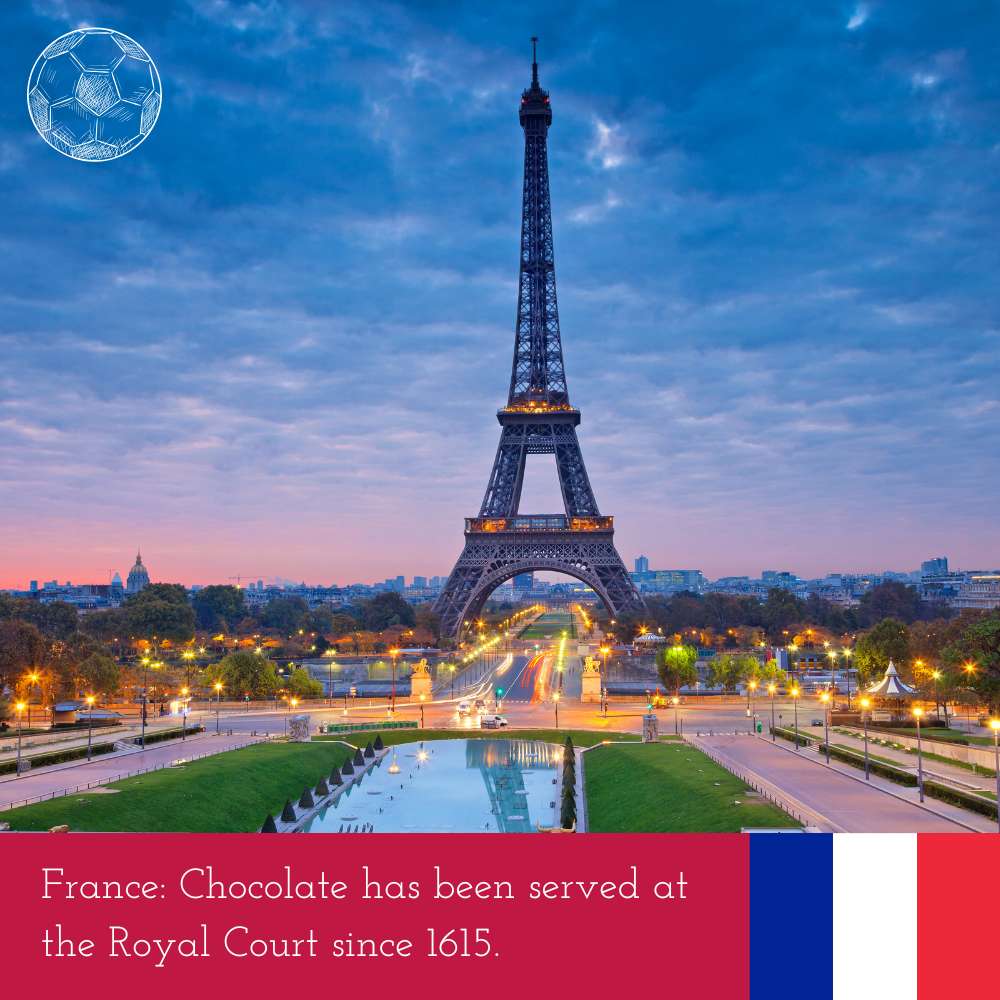
Chocolate arrived in France in 1615 for the wedding of Louis XIII and Anne of Austria and became popular at Louis XIV’s court (Château de Versailles). Louis XV even prepared hot chocolate himself, and Marie-Antoinette brought her own chocolatier. Les Bleus continue a royal tradition of excellence — both on the palate and on the pitch.
Germany
Germany is Europe’s second-largest cocoa grinder, importing around 19% of Europe’s cocoa beans and nearly 400,000 tonnes in 2024 (CBI Netherlands). In 1932 Clara Ritter introduced the square Ritter Sport bar designed to fit in a sports jacket pocket (Ritter Sport). Efficient, practical and delicious — exactly what you’d expect from Die Mannschaft.
Netherlands
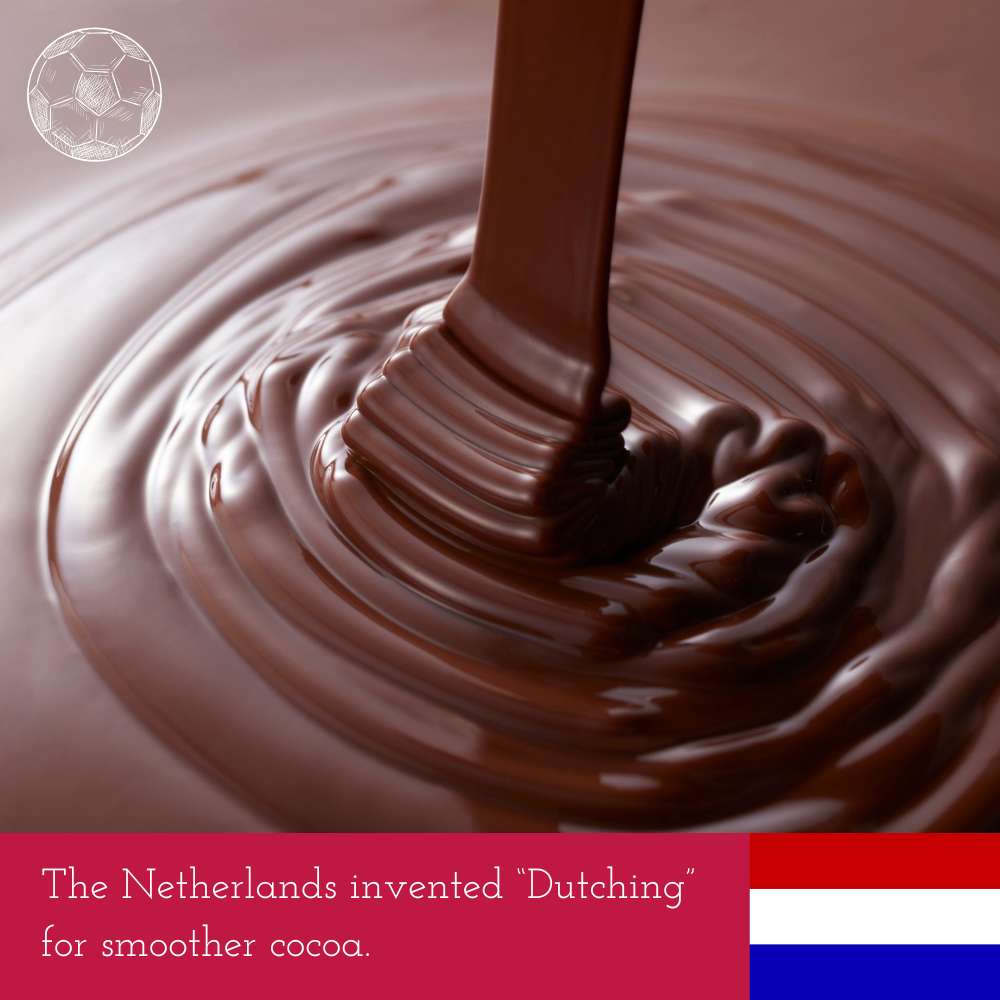
Dutch chemist Coenraad van Houten revolutionised chocolate in 1828 by inventing a hydraulic press to remove cocoa butter and by treating cocoa powder with alkaline salts, a process known as “Dutching” (Cornell University). Today the Netherlands imports around 20-25% of the world’s cocoa, with Amsterdam serving as a major global cocoa hub and per-capita chocolate consumption around 4.5 kg (CBI Netherlands). The Oranje’s total football owes something to total cocoa.
Norway
Norwegian chocolatier Freia launched the wafer-and-chocolate bar Kvikk Lunsj in 1937. Marketed as an energy snack for hikers and skiers, it became a cultural symbol; Norwegians consume roughly nine bars per person each year and associate them with Easter and skiing holidays (All Things Nordic). When the Norwegians hit the slopes or the football field, there is always a Kvikk Lunsj in the backpack.
Portugal
Portugal’s chocolate heritage includes Arcádia, crafting sweets since 1933 in Porto, and Avianense, one of the country’s oldest chocolatiers founded in 1914 (Catavino). The Óbidos International Chocolate Festival features sculptures and cooking classes (Catavino). With Cristiano Ronaldo out but new stars emerging, Portuguese fans can still indulge their sweet tooth at this delicious festival.
Scotland
Tunnock’s created its famous teacake in 1956: soft Italian meringue on a biscuit base, coated in milk chocolate (Tunnock’s). This treat is often enjoyed at Scottish football grounds alongside a mug of tea. Like the Tartan Army, Tunnock’s is small but spirited.
Spain
After the Spanish encountered cacao in the Americas, shipments of chocolate began arriving in the early 16th century, and the Spanish word “chocolate” derives from the Nahuatl xocolatl (Queen Sofía Spanish Institute). Spanish monks kept the recipe for hot chocolate secret, but it eventually spread across Europe (Queen Sofía Spanish Institute). Today, Spaniards enjoy thick hot chocolate with churros while cheering La Roja.
Sweden
The Marabou company, founded in Sweden in 1916 with production starting in 1919, initially used the same milk chocolate recipe as its Norwegian sister company Freia. In the mid-1950s the chocolate was caramelised, giving it a unique taste beloved by Swedes (Swedishness). Swedish fans might prefer a Marabou bar to Swedish meatballs when watching the Blågult play.
Switzerland
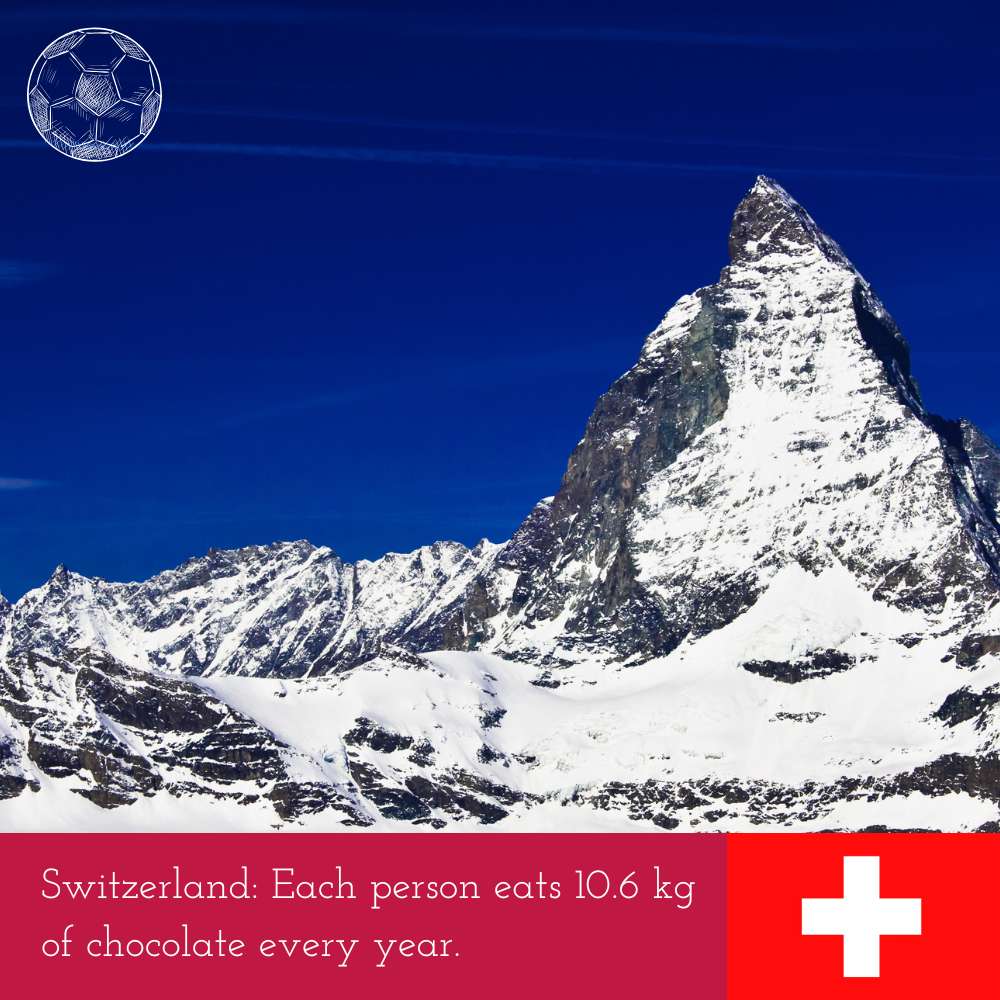
Swiss people consumed about 10.6 kg of chocolate per capita in 2024, down slightly from previous years, with 6.3 kg of domestic Swiss chocolate and 4.3 kg imported (ChocoSuisse). Switzerland imported 63,800 tonnes of cocoa beans worth €1.14 billion in 2024 (CBI Netherlands). The Swiss team may be neutral in politics, but their love of chocolate is passionate.
Türkiye
Turkish delight is world-famous, but modern Turkey also has an emerging chocolate scene. Istanbul hosts chocolate festivals and boutique chocolatiers craft truffles with pistachios, hazelnuts and figs (Turkish Cultural Foundation). When the Crescent-Stars take on Europe, they bring along a taste of Anatolian sweetness.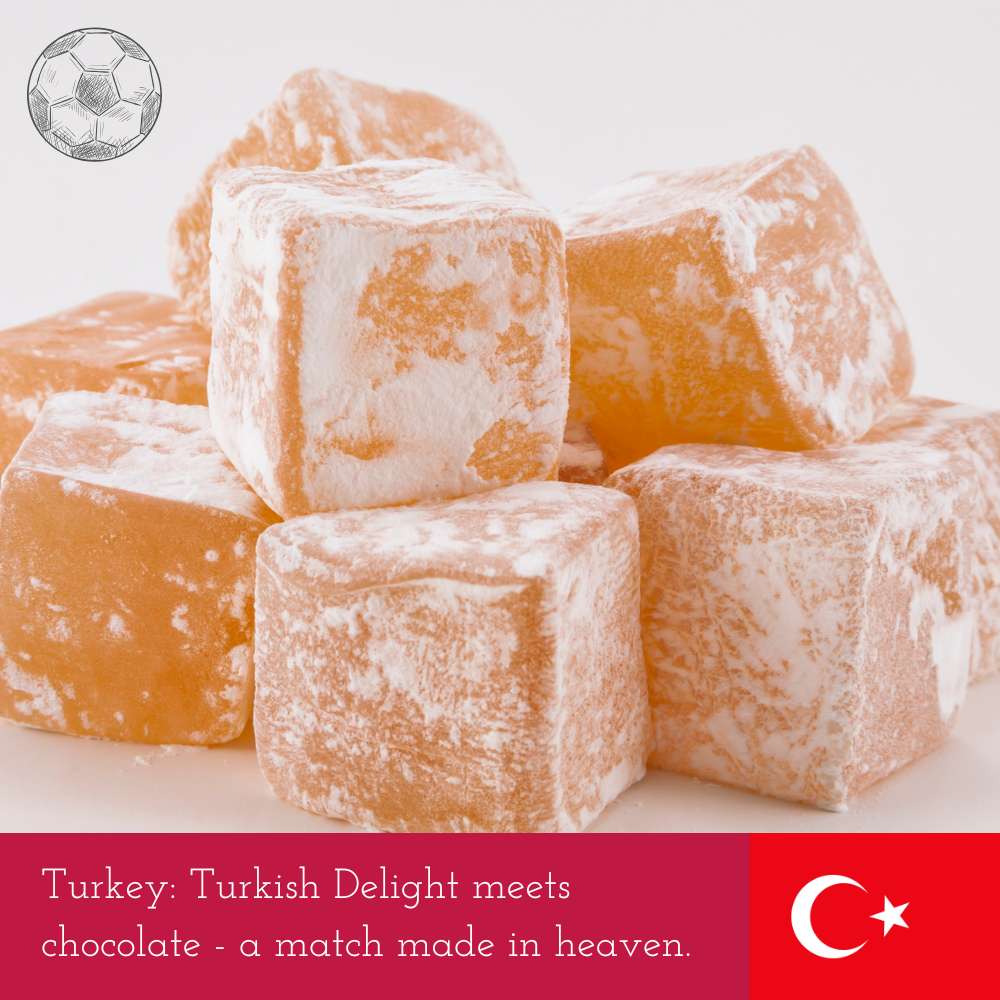
Wherever football travels, chocolate is never far behind
From the cacao heartlands of West Africa to the praline boutiques of Brussels, from Japan’s lucky Kit Kats to Argentina’s chocolate-coated alfajores, one thing is clear: wherever football travels, chocolate is never far behind. The 2026 FIFA World Cup brings together 48 nations, each carrying their own history, culture and as we’ve discovered their own sweet traditions. At The Chocolatarium, we’ll be cheering for every team, one chocolate at a time.