Growing up in the UK, the shelves of sweetshops and corner shops were full of chocolate bars that felt like part of childhood. Some are still easy to find today, while others have disappeared completely and now only live on in memories.
Classic UK Bars
| Chocolate bar | Year | Still available? |
|---|---|---|
| Fry’s Chocolate Cream | 1866 | Yes |
| Cadbury Dairy Milk | 1905 | Yes |
| Cadbury Flake | 1920 | Yes |
| Cadbury Crunchie | 1929 | Yes |
| Milky Way | 1924 | Yes |
| Mars Bar | 1932 | Yes |
| KitKat | 1935 | Yes |
| Aero | 1935 | Yes |
| Maltesers | 1936 | Yes |
| Milkybar | 1936 | Yes |
| Bounty | 1951 | Yes, dark chocolate version is harder to find |
| Galaxy | 1960 | Yes |
| Snickers / Marathon | 1930 (US), 1968 (UK as Marathon) | Yes |
| Twix | 1967 | Yes |
| Curly Wurly | 1970 | Yes |
| Yorkie | 1976 | Yes |
| Lion Bar | 1976 | Yes |
| Double Decker | 1976 | Yes |
| Starbar | 1976 | Yes |
| Wispa | 1981 | Yes |
| Boost | 1985 | Yes |
| Tunnock’s Caramel Wafer | 1952 | Yes |
| Tunnock’s Caramel Log | 1955 | Yes |
| Lees Macaroon Bar | 1931 | Yes |
Discontinued Bars
| Chocolate bar | Launch year | Discontinued |
|---|---|---|
| Cadbury Aztec | 1967 | 1978 |
| Texan Bar | 1970s | |
| Rumba | 1975 | |
| Banjo | 1976 | |
| Topic | 1962 | 2021 |
| Caramac | 1959 | 2023 |
| Highland Toffee | 2006 | |
| Irn-Bru Bar | 2006 |
Scottish Favourites
| Chocolate bar | Year | Still available? |
|---|---|---|
| Tunnock’s caramel wafer | 1952 | Yes |
| Tunnock’s caramel log | 1955 | Yes |
| Lees macaroon bar | 1931 | Yes |
| Highland toffee | No, discontinued 2006 | |
| Irn-Bru bar | No, discontinued 2006 |
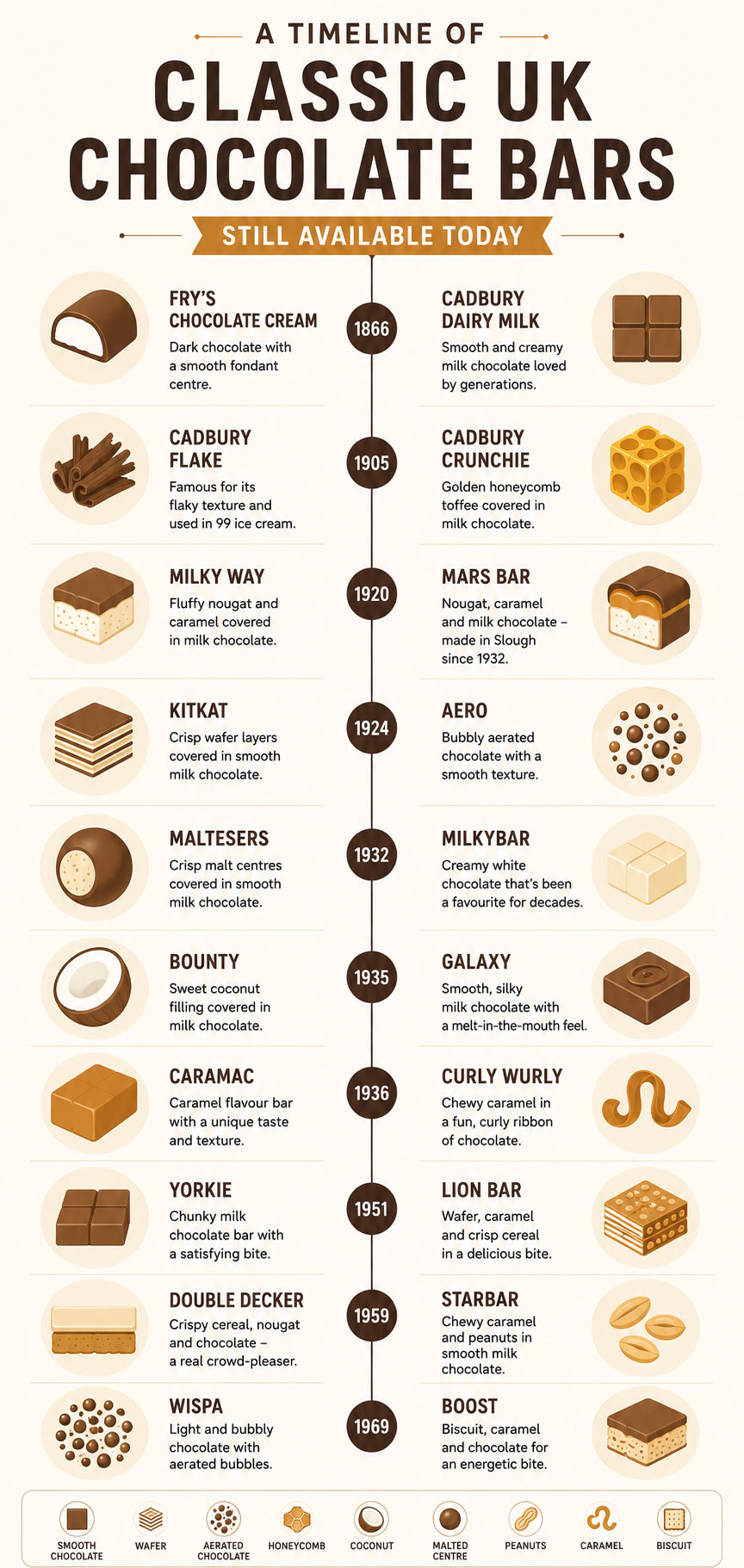
Classic UK chocolate bars
Fry’s Chocolate Cream – 1866
Fry’s Chocolate Cream is a dark chocolate bar with a smooth fondant centre. It was officially launched in 1866, making it one of the oldest chocolate bars still being made today. [Tasting Table]
Still available? Yes, Fry’s Chocolate Cream is still sold today.
Cadbury Dairy Milk – introduced in 1905
Cadbury Dairy Milk was introduced in 1905 and became famous for its creamy milk chocolate. It quickly became one of the UK’s best-loved chocolate bars and is still one of Cadbury’s main products today. [Cadbury]
Still available? Yes, very widely available.
Cadbury Flake – launched in 1920
Cadbury Flake was launched in 1920. It is known for its crumbly, folded chocolate texture and became especially famous as the chocolate stick used in a 99 ice cream. [Cadbury]
Still available? Yes.
Cadbury Crunchie – first made in 1929
Crunchie was first made in 1929 by J.S. Fry & Sons. It has a golden honeycomb toffee centre covered in milk chocolate. [Snack History]
Still available? Yes.
Milky Way – first sold in 1924
Milky Way was first sold in 1924. It contains fluffy nougat, caramel and chocolate, and Mars describes it as the oldest Mars chocolate bar brand still around. [Milky Way]
Still available? Yes.
Mars Bar – first handmade in 1932
The Mars Bar was first handmade in 1932 in Slough, England. It combines nougat, caramel and milk chocolate. Mars says the bar is still made at the same factory where it was originally produced. [Mars Bar]
Still available? Yes.
KitKat – 1935
KitKat began in 1935 as Rowntree’s Chocolate Crisp before being renamed Kit Kat Chocolate Crisp in 1937. Its wafer fingers and “Have a break” message made it one of the most recognisable chocolate bars in the UK. [Hersheyland]
Still available? Yes.
Aero – 1935
Aero was launched by Rowntree in 1935 as “the new chocolate”. It became famous for its bubbly, aerated texture. [Wikipedia]
Still available? Yes.
Maltesers – created in 1936
Maltesers were created by Forrest Mars Sr. in 1936 and first sold in 1937. They were originally sold in a box and marketed as “energy balls”. [Maltesers]
Still available? Yes.
Milkybar – arrived in 1936
Milkybar arrived in 1936 after Nestlé developed white chocolate. It became one of the UK and Ireland’s best-loved white chocolate brands. [Wikipedia]
Still available? Yes.
Bounty – launched in 1951
Bounty was launched by Mars in the UK in 1951. It has a sweet shredded coconut filling covered in chocolate. [Wikipedia]
Still available? Yes, although the dark chocolate version has become harder to find.
Caramac – launched in 1959
Caramac was launched in 1959. It was a caramel-flavoured bar made without cocoa, so it was not technically a chocolate bar. Nestlé discontinued it in 2023 after declining sales. [The Guardian]
Still available? No, it was discontinued in 2023.
Galaxy – introduced in 1960
Galaxy launched in 1960 and became known for its smooth, finely milled milk chocolate. [Galaxy]
Still available? Yes.
Topic – 1962
Topic was introduced by Mars in 1962. It contained hazelnuts, nougat and caramel, and was advertised with the slogan “A hazelnut in every bite.” It was quietly discontinued in 2021. [Manchester Evening News]
Still available? No.
Snickers / Marathon – first made in 1930
Snickers was first made in the USA in 1930. It came to the UK in 1968 under the name Marathon, before being renamed Snickers in 1990. [Snickers]
Still available? Yes.
Twix – launched in 1967
Twix was launched in the UK in 1967 under the name Raider. It was introduced in the US as Twix in 1979, and the Raider name was retired worldwide by 1991. [Wikipedia]
Still available? Yes.
Curly Wurly – created in 1970
Curly Wurly was created in 1970 by Cadbury research confectioner David John Parfitt. It is a ladder-shaped bar of chewy caramel covered in milk chocolate. [A Quarter Of]
Still available? Yes.
Yorkie – launched in 1976
Yorkie was launched by Rowntree’s in 1976. It was created in York and became known as a chunky, no-nonsense milk chocolate bar. [Nestlé Confectionery]
Still available? Yes.
Lion Bar – 1976
Lion Bar was launched by Rowntree’s in 1976. It contains wafer, caramel and crispy cereal covered in milk chocolate. [Nestlé Confectionery]
Still available? Yes.
Double Decker – 1976
Double Decker was launched by Cadbury in 1976. It has a crunchy cereal base, nougat layer and milk chocolate coating. [The Print]
Still available? Yes.
Starbar – first appeared 1976
Starbar first appeared in 1976. It contains caramel and roasted peanuts covered in milk chocolate. [Wikipedia]
Still available? Yes.
Wispa – first trialled in 1981
Wispa was trialled in 1981 and launched nationally in 1983. Cadbury discontinued it in 2003, but fan campaigns helped bring it back permanently in 2008. [Cadbury’s]
Still available? Yes.
Boost – 1985
Boost first appeared in the UK in 1985 as Coconut Boost. The biscuit and caramel version later became the main Boost bar we know today. [Wikipedia]
Still available? Yes.
Fancy tasting something a bit more grown up than a childhood favourite?
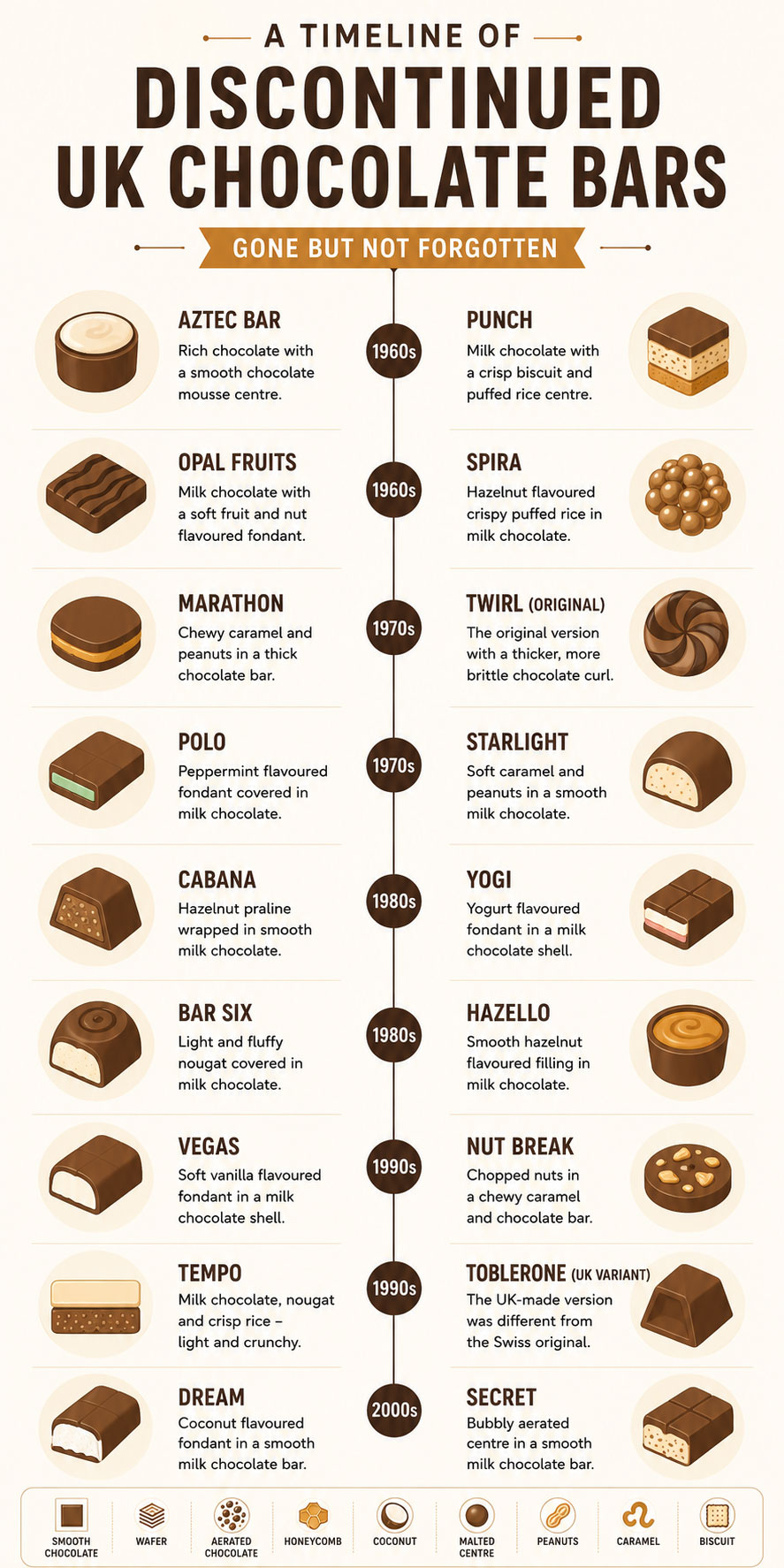
Discontinued chocolate bars many people still remember
Cadbury Aztec – 1967
Cadbury Aztec launched in 1967 and was made with milk chocolate, nougatine and caramel. It was often seen as Cadbury’s answer to the Mars Bar, but it was discontinued in 1978. [Manchester Evening News]
Still available? No.
Texan Bar – 1970s
The Texan Bar was a chewy nougat and toffee bar covered in chocolate. It was popular in the 1970s and 1980s, discontinued towards the end of the 1980s, and briefly brought back in 2005. [Manchester Evening News]
Still available? No.
Rumba – 1975
Rumba was launched in 1975 and was aimed more at adults. It had a fudge and rum flavour filling and came as two chocolate-covered fingers. [Cocoa & Heart]
Still available? No.
Banjo – 1976
Banjo was a two-finger chocolate bar with crispy wafer, nutty cream and either roast nut or coconut flavour. It was reintroduced in 1976 but phased out again in the mid-1980s. [A Quarter Of]
Still available? No.
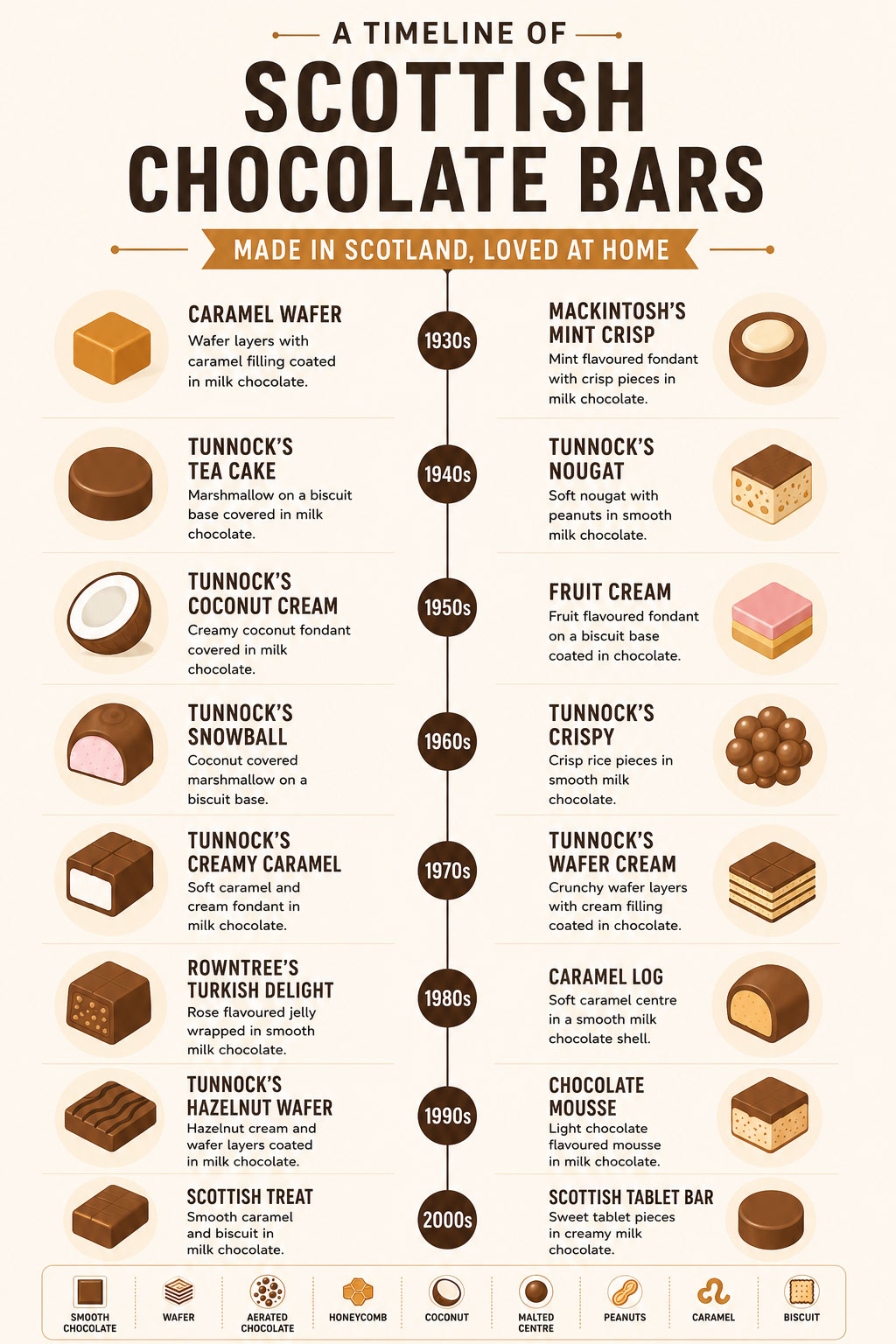
Scottish chocolate and sweet favourites
No list of childhood favourites would be complete without a nod to the bars that were made right here in Scotland.
Tunnock’s Caramel Wafer – 1952
Tunnock’s Caramel Wafer was introduced in 1952. It has layers of wafer and caramel covered in milk chocolate. It is still made in Uddingston, Scotland, and remains one of Scotland’s best-known sweet treats. [CooksInfo]
Still available? Yes.
Tunnock’s Caramel Log – 1955
The Tunnock’s Caramel Log launched in 1955. It is similar to the Caramel Wafer but coated in toasted coconut. [CooksInfo]
Still available? Yes.
Lees Macaroon Bar – 1931
The Lees Macaroon Bar was invented in 1931 by John Justice Lees. It has a fondant centre covered in chocolate and rolled in coconut. [The Scotsman]
Still available? Yes.
Highland Toffee – 2006
Highland Toffee was a chewy Scottish toffee bar made by McCowan’s. It disappeared after McCowan’s went out of business in 2006. [Daily Record]
Still available? No.
Irn-Bru Bar – 2006
The Irn-Bru Bar was a chewy bar flavoured with Scotland’s famous fizzy drink. It was made by McCowan’s and disappeared when the company closed in 2006. [Daily Record]
Still available? No.
Why these bars still matter
Chocolate bars are more than just sweet treats. They remind people of school lunchboxes, pocket money, Saturday errands, visits to grandparents and the corner shop. A favourite chocolate bar from childhood often brings back a very specific memory: the wrapper, the smell, the texture and the little ritual of how you ate it.
For some people, that might be snapping a KitKat finger. For others, it might be stretching a Curly Wurly, biting into a Tunnock’s Caramel Wafer, or remembering the chewy battle of a Highland Toffee bar.
Some of these bars are still with us. Others have disappeared, which may be exactly why people remember them so fondly.