In short, the global water crisis is having huge repercussions on our planet and civilisation, and while it is easy to get stuck in the weeds and feel powerless, by taking small steps every day, we can reduce the impact. While we can’t affect global change and agriculture, we can work together to reduce where we can to leave water more readily available.
How Much Water is in Chocolate?
To understand how much water we use at The Chocolatarium, we need to first understand its use in the production of chocolate. Water from rain is used to grow cacao, and as cacao is grown in the equatorial regions, it receives a lot of rain. About 70% of the world’s water is withdrawn for agriculture, and with cacao requiring 1.5-2.5 metres of water a year, it’s quite a thirsty plant.
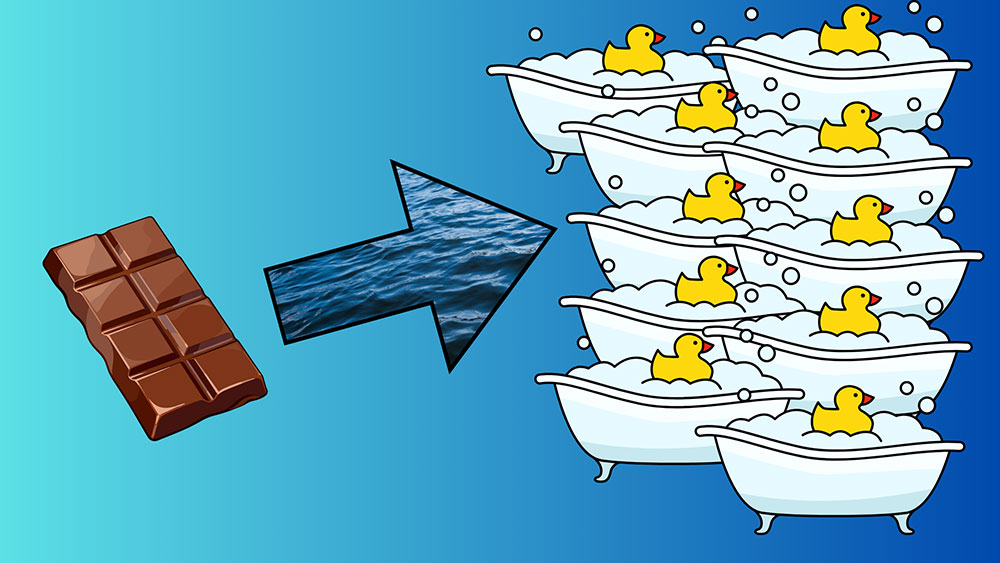
One 350gram bar of chocolate requires about 1700 litres of water to make, so roughly ten bathtubs of water per bar. This staggering amount of water usage shows how water-hungry cacao is, so we like to do our part to offset this. That’s not to mention the amount of water used in the production of packaging and transport to get the chocolate bars to our shelves.
Washing Hands and Checking Taps
Working with food requires a lot of handwashing. This safeguards the public and our employees from illness and cross-contamination of food sources. Therefore, we wash our hands a lot. However, we try our best to turn taps off once our hands have been initially wetted and only turned on again to rinse off the suds created from rubbing our hands together.
We perform regular checks on taps to ensure none are leaky, and we are all aware of turning off taps if they have been left on accidentally.
Reducing Chocolate Waste
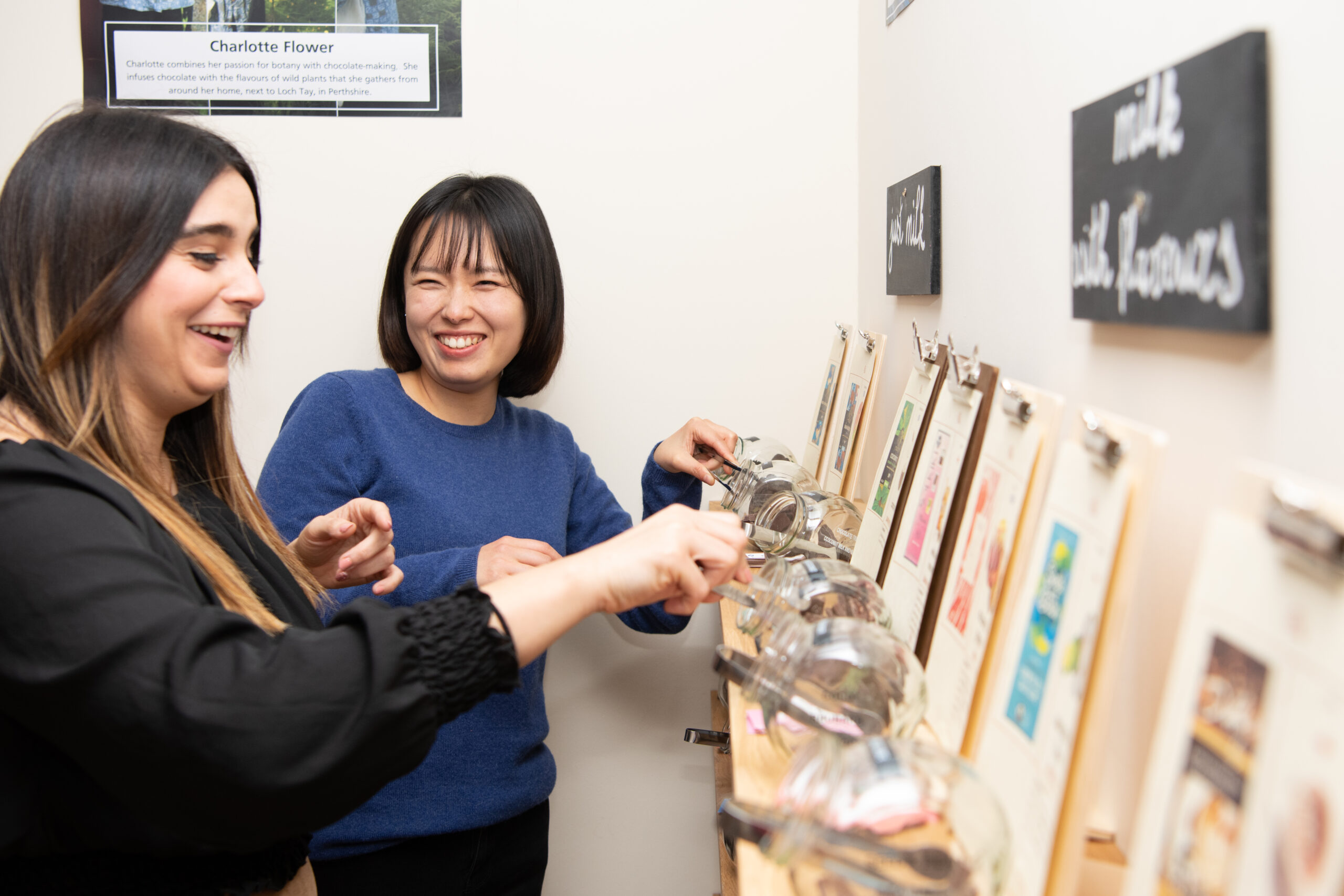
Our visitors are given a huge amount of chocolate to eat on our experiences, which is a great thing. We don’t want to take away those opportunities to try new and exciting chocolates or limit those offered, but we can mitigate our water usage by ensuring less chocolate is thrown away. When we waste chocolate, we are technically wasting water.
We recommend our visitors to only eat and take what chocolate they are fit for from our wall of fame in our tasting room. That can be as many pieces as they want, but by bringing it to their attention, the problem with food waste, we hope that they keep this in front of their minds and help us with wasting less chocolate.
Cleaning the Kitchen
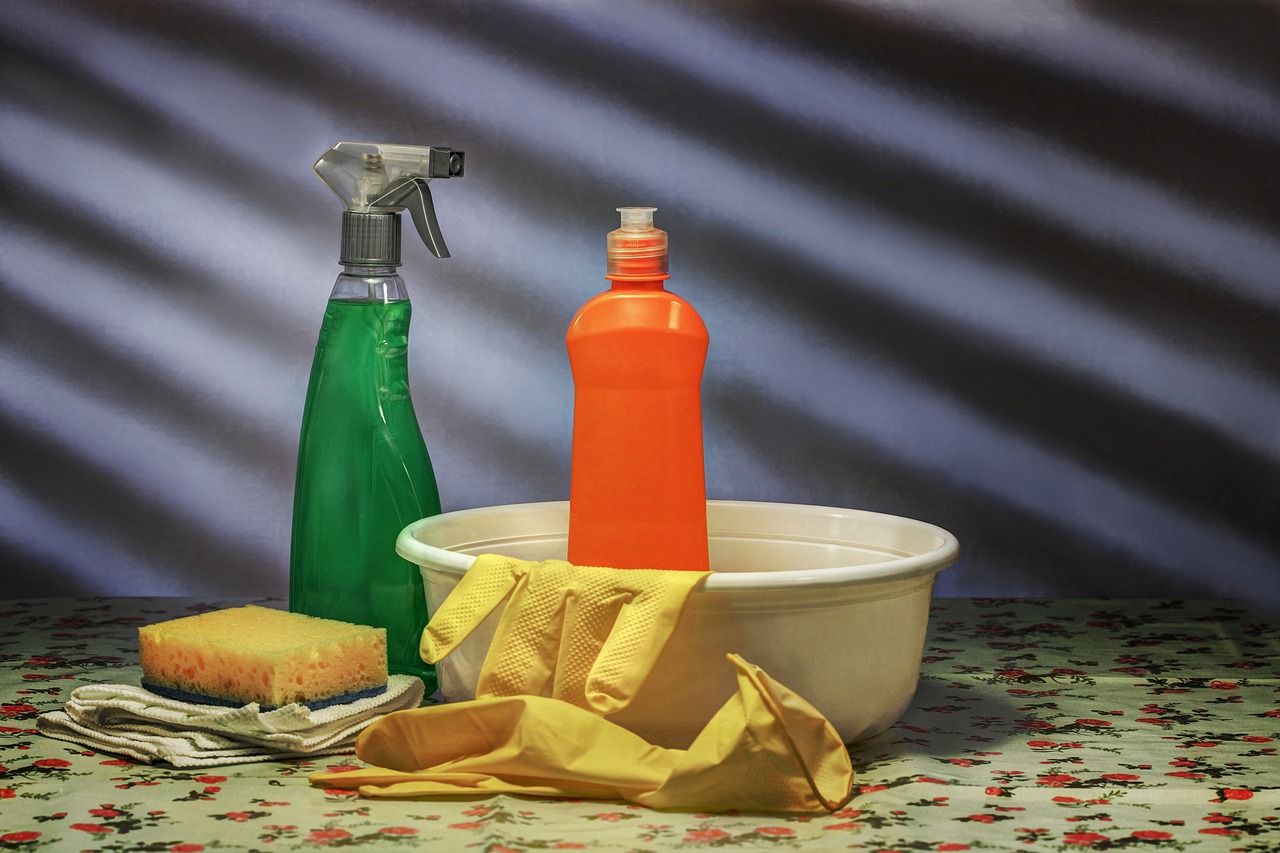
Between each and every tour, we thoroughly clean our kitchen. When we demould chocolate bars that visitors have created, their moulds are often left with residual chocolate. Rather than using running water to clean the moulds, we follow a routine of filling a basin with a small amount of water and dunking each mould enough just to wet and soften the chocolate. We then scrub the moulds clean and sterilise them in our dishwasher as normal.
Getting Rid of Carafes
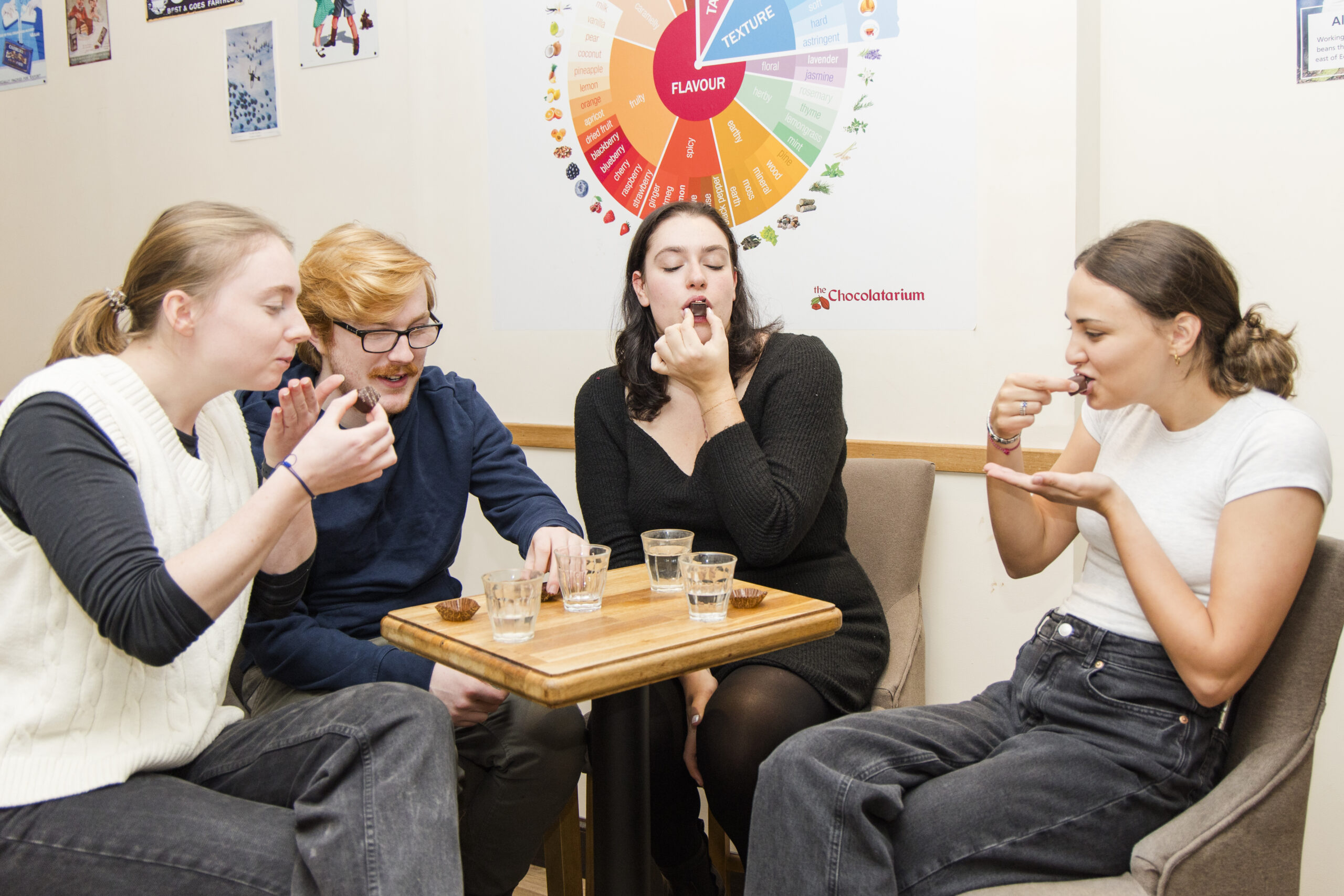
In our tasting room, visitors are given carafes of water to take away their thirst when trying a variety of our chocolates. Without reducing their access to water, we have considered removing carafes completely. This does multiple things to aid our water use. With many guests not using their carafes, we end up with a lot of wastewater, and more carafes means more dishes to wash every tour.
By getting rid of them and just filling glasses of water with jugs on hand, we can better control our water output and reduce our dishes. On a separate note, we also wait until our dishwasher is full before running it on a cleaning cycle, so we incrementally reduce our use.
Piping Bag Waste
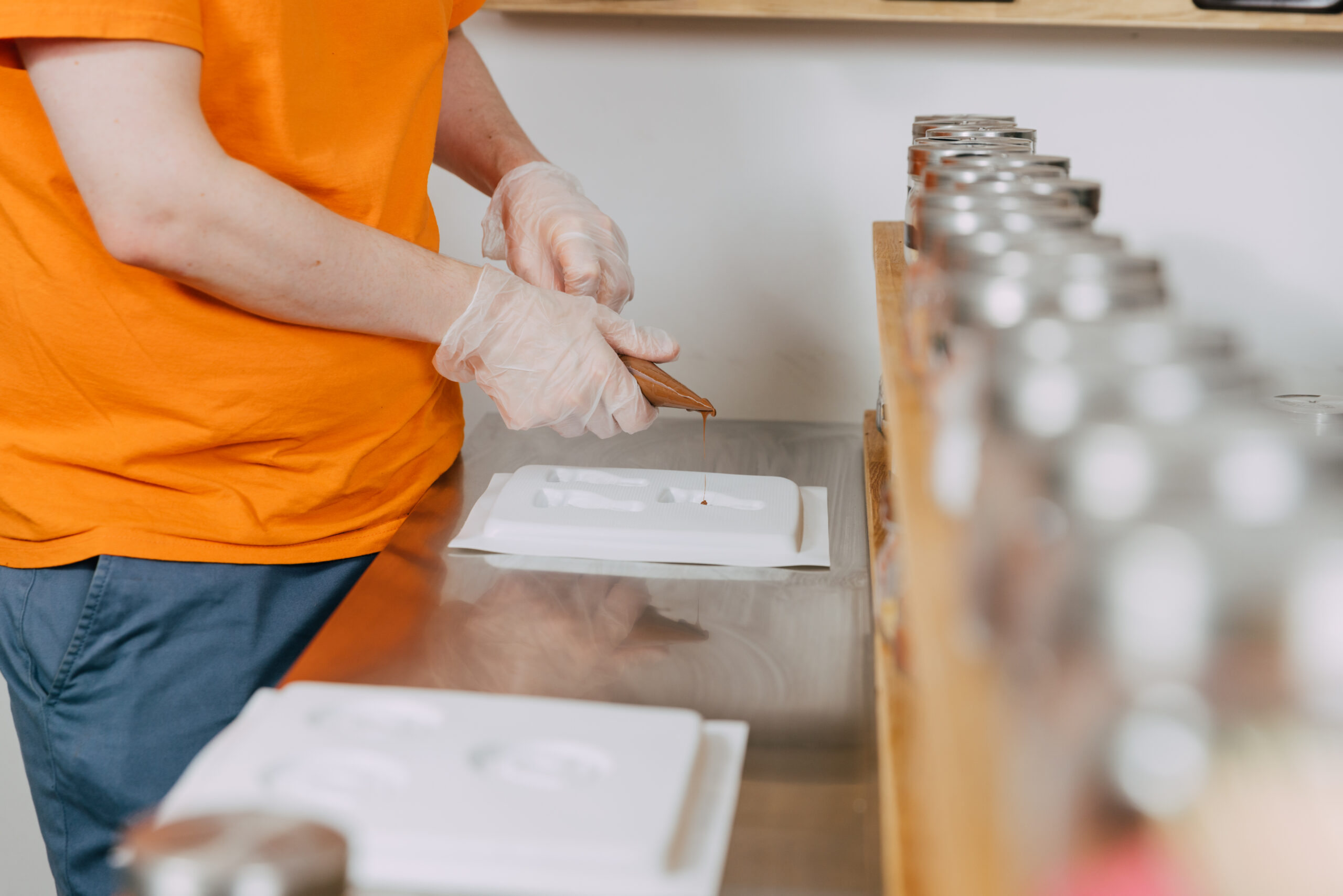
On a similar note to eating chocolate, when we give our visitors piping bags of chocolate to make their own chocolate bars, we encourage them to eat the excess chocolate in the bag, as it all must go to the bin afterwards for food safety reasons. It’s a win-win situation, with guests enjoying a sneaky and fun way of eating tasty chocolate, while also helping us to limit our food waste and therefore water waste.
While these techniques and strategies are useful, we are aware that mistakes are made and reducing your waste is a gradual process. At The Chocolatarium, we want the best for our planet, its people and everything that calls it home, and while it’s impossible to fix the water crisis on our own, if we try our best at work and at home as individuals, we can try to improve this issue.